





 English
  Francês
  Alemão
  Italiano
  Japonês
  Norueguês
  Portuguese
  Spanish
  4 min of reading
  0 comments


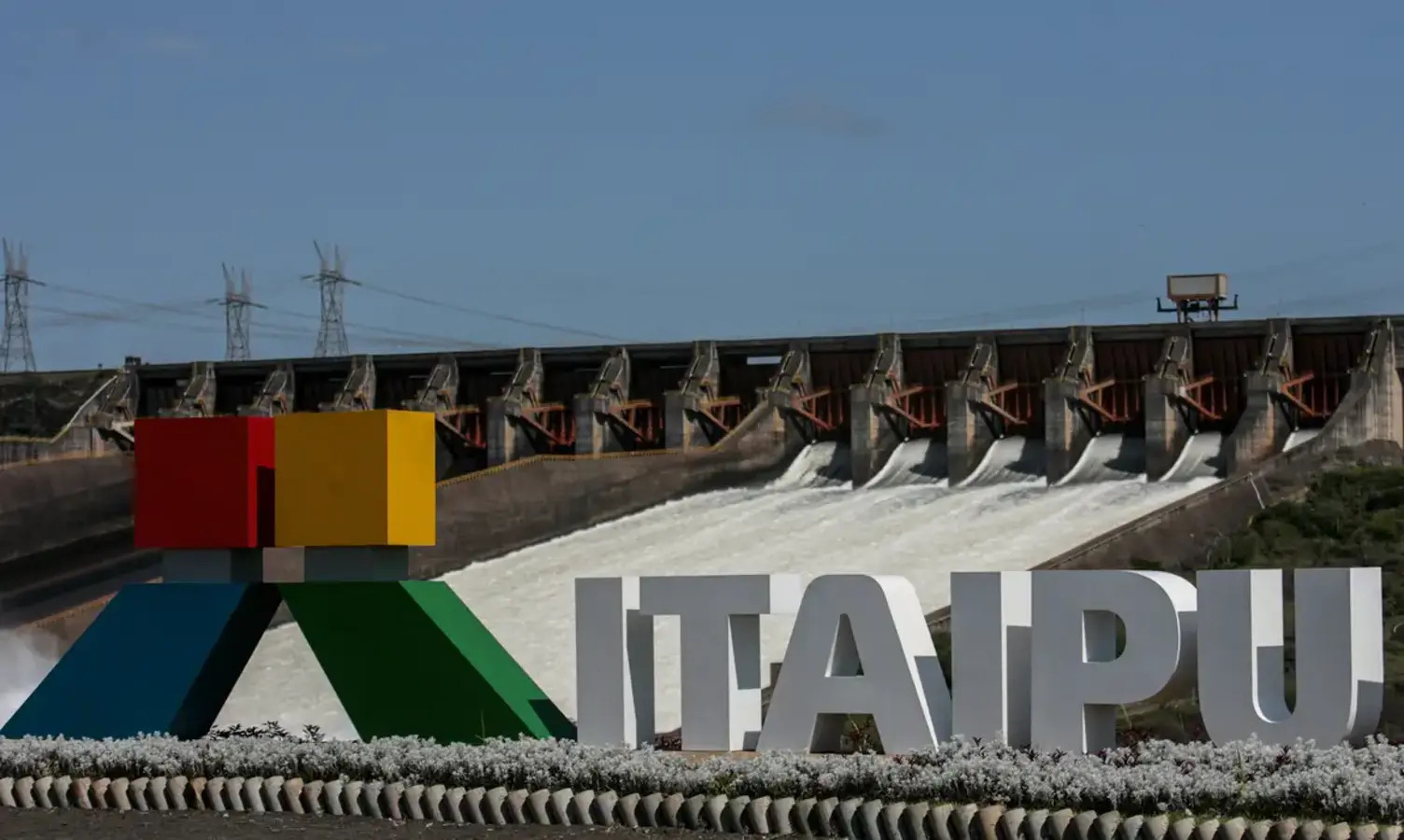
Itaipu Surplus Energy Attracts US Interest in AI, Raising Alerts About Digital Sovereignty, Water Resources, and Regional Integration
The Itaipulhydroelectric plant between Brazil and Paraguay is a symbol of South-South cooperation. Inaugurated in 1984, it has become one of the largest producers of clean energy in the world. Built on the banks of the Paraná River, it was the result of a bilateral treaty in 1973, which combined cutting-edge engineering with diplomacy.
For decades, it ensured supply for both countries and allowed Paraguay to sell surplus energy to Brazil.
With the end, in 2023, of the clauses that required exclusive sales to Brazil, space opened for other interests.
-
Renewable energy advances over protected areas in Brazil, and a survey by the Energy Transition Observatory reveals silent impacts that challenge environmental conservation and pressure sensitive traditional territories.

-
Rio Grande do Sul accelerates energy transition: State invests in renewable technologies and consolidates decarbonization strategies and pathways to attract billions in new industrial investments.

-
With 160,000 m² of collectors, an area larger than 20 football fields, Silkeborg, in Denmark, hosts a solar thermal plant that heats 19,500 homes and could become the largest solar heating plant in the world.

-
A study reveals the expansion of renewable energy procurement in Brazil and shows how companies are taking advantage of opportunities to reduce expenses, ensure energy efficiency, and strengthen strategic environmental commitments.


In the US Senate, Secretary of State Marco Rubio argued that Paraguay is ideal for the installation of data centers, taking advantage of its abundant energy that cannot be easily stored or exported.
The proposal reveals a goal: to transform Paraguayan energy surplus into input for the United States’ Artificial Intelligence infrastructure, creating a model of technological dependency.
Meta-Trumpism and the Political Use of Energy
Rubio aligns with the agenda of so-called Meta-Trumpism, which seeks to position Global South countries as subordinate suppliers to the North.
Data centers, essential for AI, demand constant and ample energy. With the expansion of language models and computer vision, they have become industrial structures that strain electrical networks and water resources.
Giants like Google, Amazon, and Microsoft already admit that the lack of energy is the main bottleneck for growth in AI.
In addition to electricity, these centers consume large amounts of water for cooling, a factor often overlooked.
Hydric Impacts Already Detected
In the United States, the effect is visible. In The Dalles, Oregon, Google used, in one year, a quarter of the city’s water.
In Arizona and Virginia, communities face the risk of water scarcity due to server cooling.
The accelerated expansion, without transparency or regulation, threatens aquifers and local supply.
In this scenario, the clean and cheap surplus from Itaipu emerges as a target. Instead of stimulating local industrialization or meeting social demands, the energy may feed foreign digital infrastructures.
The Risk of Digital Dependency
In Brazil, similar choices have already been costly. According to a study with USP and UnB, the country spent R$ 23 billion on imported IT solutions when it could have built at least 86 tier 3 data centers of its own.
Imported infrastructures do not guarantee real returns to Brazil, Paraguay, or Latin America. Corporations from the Global North concentrate profits and control of data, leaving environmental costs and land use to host countries.
Redata Plan and Fragilities
The Redata Plan, proposed by Finance Minister Fernando Haddad, aims for reindustrialization through digitalization and a green economy.
But it lacks safeguards to avoid capture by external interests. The ESG narrative and the appeal of clean energy may attract foreign data centers without ensuring sovereignty over data and resources.
If the installation is not linked to the control of the knowledge generated and the use of energy, the country reinforces a subordinate position in the global AI chain.
In this model, the South provides territory, energy, and data; the North retains algorithms, profits, and decision-making power.
Attacks on Digital Governance
The governance of the Brazilian internet is also under pressure. FrenCyber, aligned with military sectors and Washington think tanks, is working to change democratic principles of the network.
Bill 4557/2023, which transfers oversight of CGI.br to Anatel, could weaken civil society participation and open space for Big Techs to influence digital policies.
CGI.br is an international reference in multi-stakeholder internet governance. Subordinating it to a traditional agency would increase vulnerability to corporate pressures.
Risk to Regional Integration
If advanced, Washington’s strategy would alter Itaipu’s role in history. What once symbolized energy solidarity could become a strategic asset under external control.
Instead of strengthening South-South cooperation, the change subjugates countries in the region to new forms of subordination, now masked by discourses of innovation and sustainability.
The plant, the result of a pact between neighbors, could serve as a foundation for colonial technological infrastructures.
The Global South would be reduced to a passive supplier of strategic resources, with no say or control over their use.
Defense of Sovereignty
Protecting Itaipu today means defending the Global South’s right to politically position itself in the face of a new digital order.
Meta-Trumpism combines foreign policy, private capital, and technological rhetoric to redraw the region as an extension of US digital infrastructure.
It is a form of intervention without armies but with cables, servers, and algorithms.
The dispute is not only about energy or data but about political destiny. Refusing the role of a digital colony requires courage, strategy, and regional commitment.
It is to fight for intelligence, before it becomes artificial, to be sovereign.
With information from O Globo.








-

2 pessoas reagiram a isso.