





 Portuguese
  English
  Spanish
  4 min of reading
  8 comments


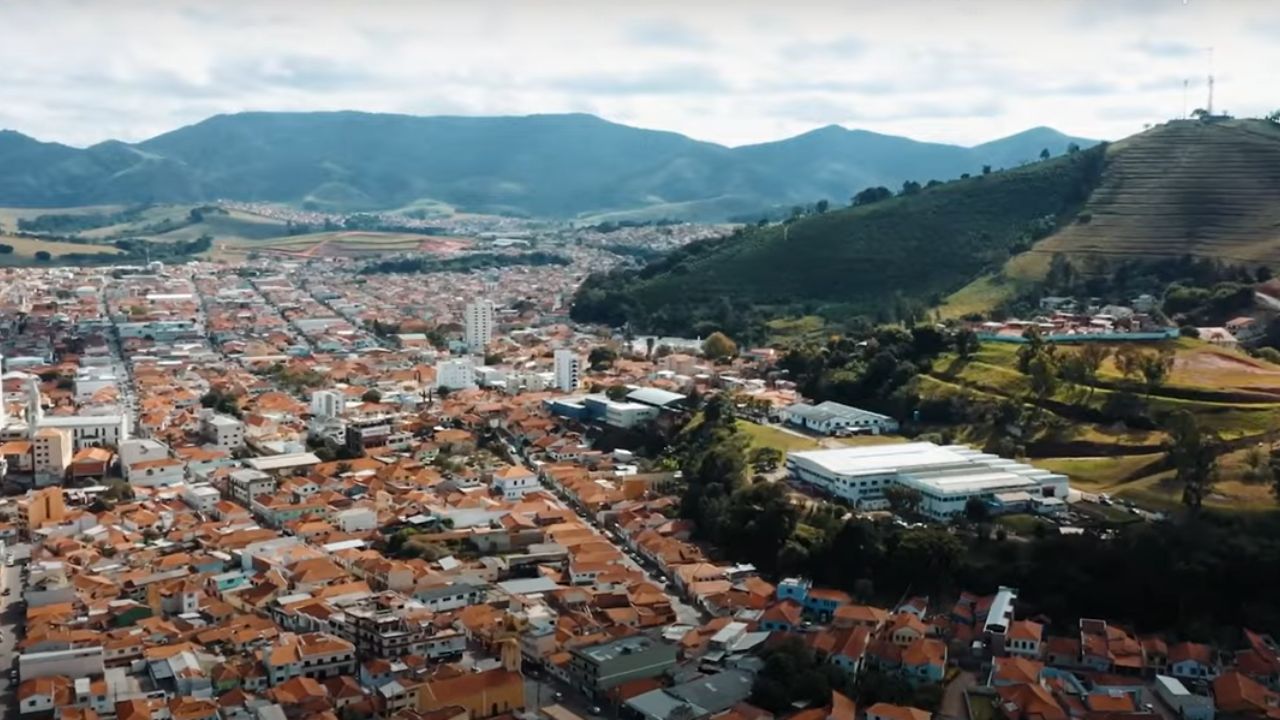


Discover How the City of Santa Rita do Sapucaí, in Southern Minas Gerais, Overcame Its Reputation for Isolation to Become One of the Most Important Centers for Production and Technological Innovation in Brazil.
A city in the interior of Minas Gerais, once pejoratively known as the “end of the world,” rewrote its own history. Santa Rita do Sapucaí overcame the stigma of isolation and transformed into the Electronics Valley, a recognized hub for technology development and production. This extraordinary metamorphosis, which took the municipality from a joke to a powerhouse, did not happen by chance. It was driven by a vision for the future and a strategic and pioneering investment in education.
The Dream That Transformed a Minas Gerais City
Before the 1950s, Santa Rita do Sapucaí had an economy based on agriculture and livestock, a common scenario in the interior of Brazil. The big turnaround began with the vision of Luzia Rennó Moreira, known as Sinhá Moreira. After a trip to Japan, she realized that the future of nations lay in technology, not in the fields anymore.
Convinced that electronics could be the engine of development for her hometown, Sinhá Moreira decided to take action. Her initiative to establish a technical electronics school in a rural and traditional environment was an audacious and visionary act that planted the seed for the technological revolution that was to come.
-
Scientists detect a rare and frightening phenomenon in the Pacific Ocean that could trigger a devastating Super El Niño as early as 2026, and American experts say it is one of the strongest ever recorded in history.

-
Without a button, sensor, or any electronic system, Harvard scientists create a solar device that autonomously decides whether to generate energy or heat and can transform energy use in homes and buildings.

-
Theories about UFOs have resurfaced strongly after an aerospace scientist and a general connected to the Roswell case mysteriously disappeared in the United States within a few months, and even the FBI was called in to investigate.

-
Neither in the refrigerator nor in the fruit bowl: this is the correct way to store lemons.


The Creation of ETE and Inatel in Minas Gerais
Sinhá Moreira’s vision materialized in 1959 with the founding of the “Francisco Moreira da Costa” Technical School of Electronics (ETE FMC). The institution was a historical milestone: the first secondary-level electronics school in all of Latin America. The ETE was the definitive turning point for the city, attracting young people from all over the country and initiating a change in the municipality’s destiny.
The success of the ETE paved the way for the next step. In 1965, the National Institute of Telecommunications (Inatel) was founded, the first Telecommunications Engineering college in Brazil. Inatel was born to continue the pioneering spirit of the ETE, raising the level of education offered and consolidating the educational foundation that would support the future technological hub.
The Birth of Technology Companies

The consolidation of Santa Rita do Sapucaí in Minas Gerais as the Electronics Valley occurred organically. From the 1980s onwards, former students from the ETE and Inatel, equipped with cutting-edge technical knowledge, began to found their own companies in the city. Rather than migrating to large centers, they created opportunities locally.
This “academic entrepreneurship” movement was the main driver of industrialization. The nickname “Electronics Valley” emerged at that time and became a strong brand, communicating the city’s new identity to Brazil and the world, attracting talent and investment.
An Innovation Ecosystem in Minas Gerais


Today, the Electronics Valley in Minas Gerais is a mature and vibrant ecosystem. The city is home to more than 170 small and medium-sized companies operating in diverse sectors such as telecommunications, industrial automation, software, and electromedicine. This diversity ensures the resilience and adaptability of the hub.
The support structure is robust, including the South Minas Electro-electronic Productive Arrangement (APL) and the Industry Union (Sindvel). Inatel has evolved and today also acts as a major idea promoter, with incubation and acceleration programs for startups. Events such as the Industrial Fair of the Electronics Valley (Fivel) and HackTown strengthen networking and keep the ecosystem at the forefront of innovation.
The Lessons from Santa Rita do Sapucaí in Minas Gerais
The journey of Santa Rita do Sapucaí offers valuable lessons. The success of the Electronics Valley demonstrates the importance of a long-term vision, significant investment in quality education, and fostering a collaborative environment. The strong connection between academia and industry is undoubtedly its greatest differential.
Although the claim of being the “largest production hub in Latin America” lacks comparative data to conclusively support it, the city is undeniably one of the most important and pioneering technological centers in Brazil. Its focus now turns to future challenges, such as Industry 4.0 and Artificial Intelligence, proving that the small city in Minas Gerais that was the “end of the world” continues to build an innovative future.






É importante comentar também o papel da PROINTEC, Incubadora Municipal, que apoia e apoiou empresas que geram empregos e novas tecnologias, promovendo um ambiente favorável entre o estado, empresas privadas e instituições de ensino.
Absurdo dizer que a cidade é ” fim do mundo” e que era uma piada.Santa Rita do Sapucaí fica em uma região privilegiada do Brasil, está a 240 km de São Paulo,região rica.
Lamentável.
Glória a Deus por santa Rita do Sapucaí!