





 Portuguese
  English
  Spanish
  5 min of reading
  92 comments


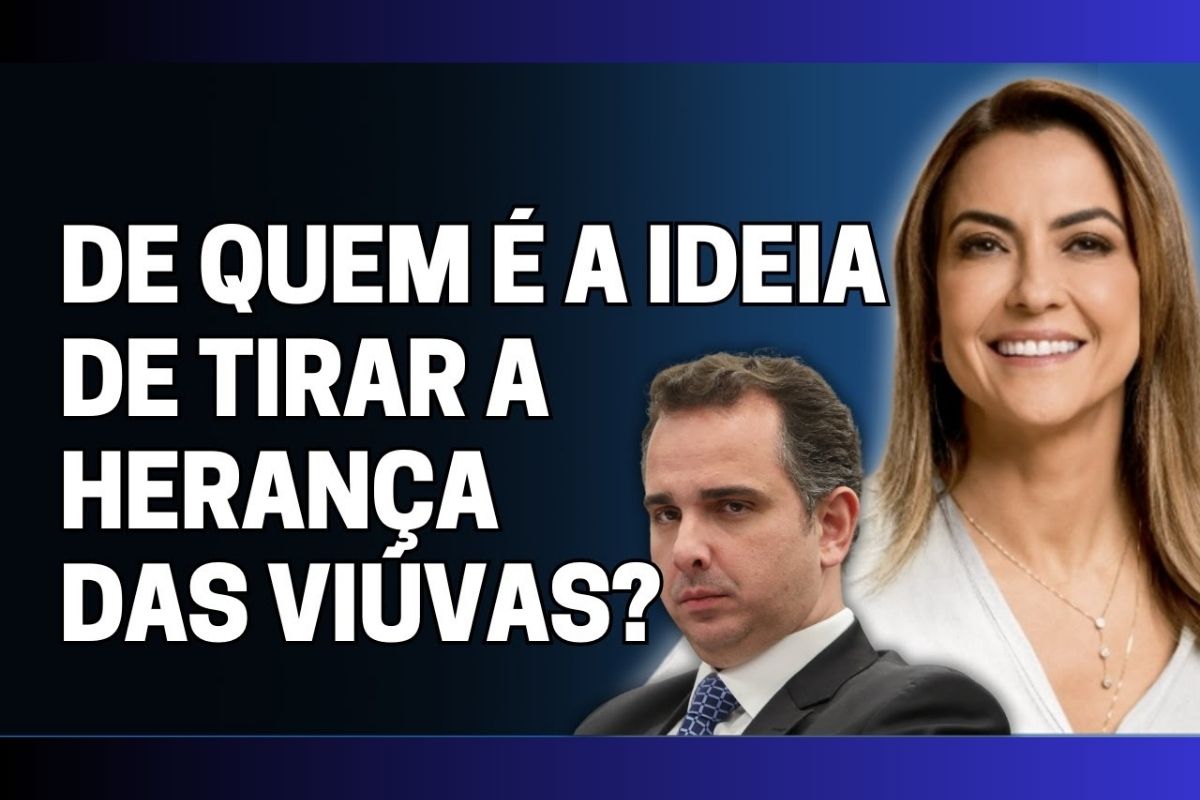


Two Proposals in the Senate Reintroduce the Debate on Widows and Widowers in Inheritance, Changing the Rules of the Civil Code and the Spouse’s Position in Succession
As explained by lawyer Flávio Romeu Picinini, discussions about widows and widowers in inheritance have returned to the center of the legal debate with two initiatives in the Senate: PL 3799/2019 and PL 4/2025. Both propose profound changes in succession law, especially regarding the position of the surviving spouse, currently treated as a necessary heir in several cases.
The agenda is sensitive because it involves family planning, property regimes, and autonomy of will. Changing who inherits and how much they inherit directly impacts widows, widowers, children, and parents of the deceased, as well as influencing wills and inventories. Below, what is at stake, who proposes it, why they propose it, and what the practical effects would be.
What Is Being Proposed, Who Proposes It, and Why the Topic Has Resurfaced Now
The texts place the spouse and partner at the center of the reform.
-
The Senate approves a bill that criminalizes misogyny, hatred, or aversion towards women, and includes the crime in the Racism Law with a penalty of up to 5 years.

-
Chamber Approves Bill That Allows Pepper Spray for Women Over 16 and Imposes Strict Rules for Purchase, Possession, and Use as Self-Defense

-
Chamber Approves Law to Combat Leucaena, Fast-Growing Plant That Dominates Land and Threatens Native Species in Various Regions of the Country

-
Asset Division: Know What Cannot Be Divided in Case of Divorce


The common idea is to allow the deceased, through a will, to exclude the spouse from legitimate succession or, depending on the version, to remove the spouse from the list of necessary heirs.
In simple terms, it opens space for the survivor no longer to automatically have the minimum share guaranteed by law.
According to the proponents’ justification, the expansion of private autonomy would correct distortions created in the Civil Code by equating the spouse with descendants and ascendants in scenarios that, in practice, frustrate the estate planning of many couples.
PL 3799/2019, introduced by Senator Soraya Thronicke, arises from a technical debate on successions involving entities in family and succession law.
The proposal seeks to equalize the treatment of spouse and partner and broaden the testator’s freedom, reducing litigation and speeding up inventories.
Meanwhile, PL 4/2025, proposed by Senate President Rodrigo Pacheco, is part of a broader agenda for updating the Civil Code.
In this package, succession returns to the table with the central question: what should be the spouse’s place in the inheritance in times of diverse family arrangements, more sophisticated contracts, and complex assets?
How This Would Change the Civil Code
Currently, the surviving spouse competes with descendants or ascendants in various situations and, in certain regimes, is a necessary heir.
With the changes, the spouse would no longer have automatic protection in all cases, allowing the expressed will in the will to prevail more broadly.
In practice, the effect would be to shift the axis of succession: less automatic rule and more planning. This may reduce conflicts when there is a clear will, but it could also increase disputes where there is no prior legal guidance.
In the partial communion regime, the spouse retains the share of what was acquired through work during the marriage.
The discussion affects the hereditary portion that exceeds the share. If the spouse ceases to be a necessary heir, their share after the division may be reduced by will.
In total separation, where there is no division over private assets, the change is even more sensitive: the inheritance of the deceased could go entirely to descendants and ascendants, as dictated by the will, leaving the spouse without any hereditary share unless specific protections are outlined.
Impacts for Partners in Stable Unions
The projects also bring the treatment of spouse and partner closer.
In practical terms, partners may see reduced automatic guarantees in succession, reinforcing the importance of cohabitation contracts and wills.
Without robust proof of the union and without planning, the risk of litigation increases.
This equalization seeks to eliminate distinctions deemed unfair, but requires careful documentation and proof of communal living, from shared expenses to formal records.
Those advocating for the change argue that freedom to will is a pillar of private autonomy. For this group, enforcing division with a spouse in every scenario ignores diverse realities, second marriages, and assets built before the relationship.
Critics warn about the economic vulnerability of widows and widowers, especially in long marriages with financial dependency.
Without safeguards, the risk is to push survivors into disputes with children and stepchildren, increasing judicialization and insecurity.
Possible Safeguards and Points of Attention
Even with more testamentary freedom, the share is not confused with inheritance and remains protected according to the property regime.
Another safeguard is to require robust forms of expression of will, with well-drafted wills, to avoid fraud and undue pressure.
The discussion on minimum housing rights for the surviving spouse is also gaining traction, such as the real right of habitation. Without this minimum level of protection, helplessness can become an undesirable side effect.
If the proposals advance, wills will no longer be optional but become strategic. Couples will need to align their property regimes, lifetime donations, family holdings, and life insurance with clear clauses. Poorly drafted wills protect no one; clear wills reduce disputes and costs.
For blended families, planning is even more critical. Defining shares, ensuring housing for the survivor, and protecting children from previous relationships prevents conflicts that often last for years and erode the estate.
Legislative Process and Next Steps
The proposals are currently debated in the Senate and may receive amendments, public hearings, and reports in committees. The final text may maintain, soften, or block the exclusion of spouses from the condition of necessary heirs.
Until there is approval and sanction, the current rules of the Civil Code apply. Those in the process of planning may consult a lawyer to prepare scenarios, as changes of this magnitude require time and well-done documentation.
The discussion about widows and widowers in inheritance is not an ideological topic, but rather about the institutional design of family and asset.
More autonomy may mean more responsibility: without planning and safeguards, the vulnerable suffer. With clear rules and solid wills, litigation is reduced and the deceased’s wishes are guaranteed with minimum protection for the survivor.
And you, what do you think? In a long marriage, should the spouse have minimum guaranteed rights or should the testator’s will prevail almost completely? In which property regimes would the change make the most sense? Tell us in the comments how this would affect your family and what safeguards you would include. Your real experience helps to qualify the debate.










Acho as mudanças muito justas, todos bens construído antes de um casamento tem ser em sua totalidade de quem já possui por tanto em caso de morte não pode ser divido c sobrevivente, agora acho justo q o sobrevivente si nescessário for, q ele tenha direito a moradia somente enquanto ele estiver sozinho se o sobrevivente casar q ele perda o direto a está moradia.
Num momento em que a pessoa se encontra fragilizado, sofrendo, desamparado (a) pela perda, ainda vai ter que lidar com a perda de seu sustento, de seu teto, da estabilidade, porque estes dois senadores hipócritas e insensíveis querem lhe tirar o que muitas vezes foram construídos pelo casal. Tirar a herança da viuva/viuvo é condená-los a viver a velhice na miséria e no desamparo, em benefício ,muitas vezes, daqueles que não fizeram nada. Isto é muita maldade, muita crueldade para quem já sofre com a viuvez.
Penso que nunca irão pensar em algo que seja bom para a maioria da população. Parasitas com mandatos nas mãos são especialistas em beneficiar a si próprio.