





 Portuguese
  English
  Spanish
  6 min of reading
  0 comments


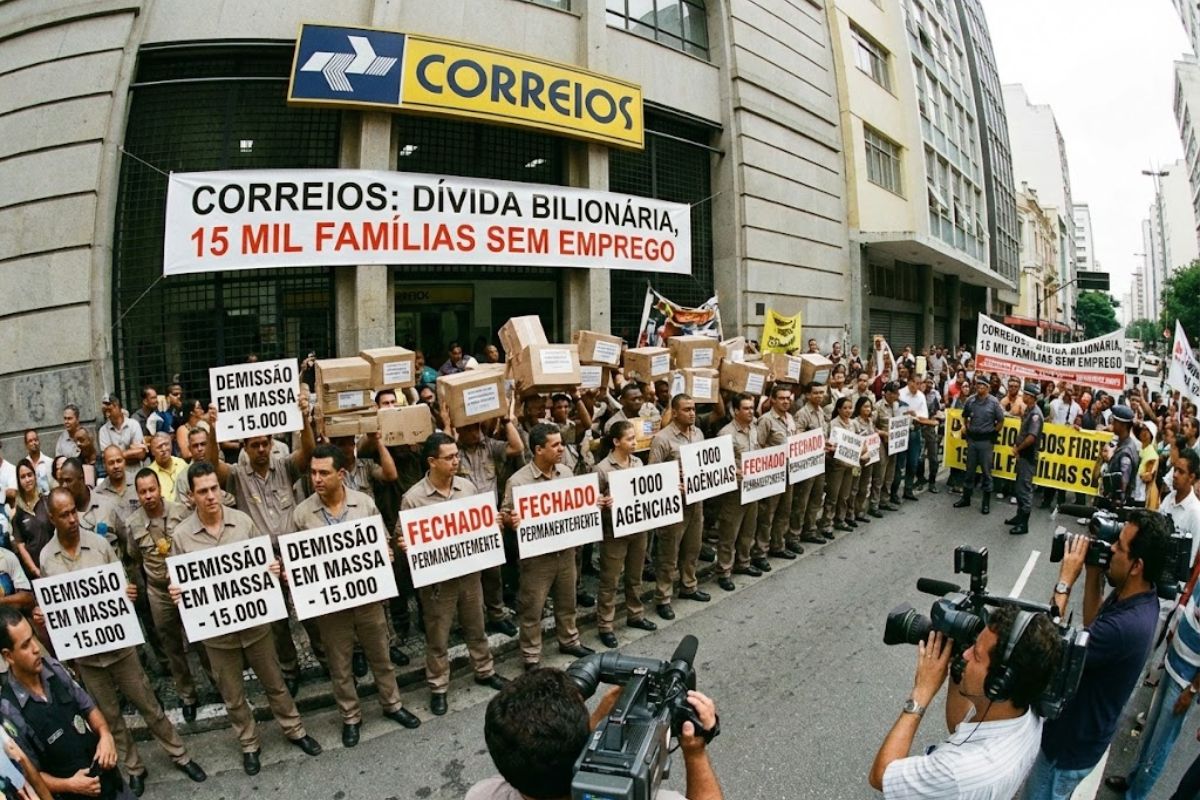
With Successive Losses Since 2024, Market Decline in Orders and Dependence on a 12 Billion Loan Guaranteed by the Union, The Postal Service Launches Mass Layoffs, Closes One Thousand Agencies and Still Requests an Additional 8 Billion in 2026 to Fund a Three-Phase Restructuring Plan for the Indebted State-Owned Company.
In 2024, the Postal Service recorded a loss of R$ 2.6 billion and, in 2025, the loss has already reached R$ 6 billion, according to President Emanuel Rondon. In his assessment, the business model focused on letters has lost economic viability, while packages have gained relevance, causing an accelerated market loss and demanding mass layoffs as an extreme response.
The losses of the Postal Service have been accumulating for at least three years, in a scenario of declining revenues and increasing operational costs. About 60% of the state company’s expenses are concentrated on personnel costs, including salaries, benefits, and charges, which pressures cash flow and makes the mass layoffs plan the center of the adjustment strategy.
In addition to the high payroll, the Postal Service is burdened by court orders and other judicial debts, requiring constant disbursements and increasing the annual loss. Rondon admits that, with the drop in letter volume and the rise of private competitors in package delivery, the state-owned company has quickly lost competitiveness and has begun to operate in a cycle of structural losses.
-
Unemployment rises again to 5.8% at the beginning of 2026, raising alarms about the end of temporary positions and its impact on the Brazilian job market.

-
Document organization can cut invisible costs in small businesses, a simple step that prevents waste, rework, and losses in daily operations.

-
Chinese giant worth nearly R$ 4 billion that manufactures cables for electric cars, solar energy, and robotics wants to open a factory in SC.

-
Many employers do not know, but the law guarantees domestic workers a 25% increase in salary during trips, 50% for overtime, 20% for night shifts, and 17 additional benefits that can lead to labor lawsuits if not paid.


Between 2019 and 2025, the Postal Service’s market share in the parcel market fell from 51% to 22%, according to the company’s management. The parcel area has become the main source of revenue, but it has not been enough to reverse the losses, which reinforces the dependence on a hefty loan and the use of mass layoffs as a survival tool for the state-owned company.
Restructuring in Three Phases and Use of the 12 Billion Loan

To try to contain the losses and reorganize cash flow, the Postal Service secured a R$ 12 billion loan from five banks, two public and three private, in a contract that matures in 2040 with full guarantee from the Union.
This R$ 12 billion loan is the financial backbone of the restructuring plan and conditions practically all the measures announced.
In the first phase, which goes until March 2026, the focus is on using the R$ 12 billion loan to boost cash flow, maintain basic operations, and pay off or renegotiate overdue debts, including court orders.
The indebted state-owned company thus tries to avoid service interruptions while preparing the ground for the mass layoffs package and large-scale agency closures.
The second phase, projected for the next two years, concentrates the toughest measures: a voluntary dismissal plan that could affect up to 15,000 employees, a review of positions, changes in health and pension plans, and the closure of one thousand agencies, equivalent to about 20% of the network.
The management estimates that the combination of mass layoffs and the closure of one thousand agencies could generate savings close to R$ 4.2 billion per year.
In the third phase, starting in 2027, the Postal Service plans to review its own business model, which includes the possibility of changes in the corporate structure and in the way the state-owned company operates.
However, the maintenance or not of state control has not been detailed, but the declared objective is to end the cycle of losses and reduce the permanent dependence on public loans.
Need for an Additional 8 Billion and Risk of New Losses in 2026


Even with the R$ 12 billion loan already secured, Emanuel Rondon states that the indebted state-owned company may still need an additional R$ 8 billion in 2026.
According to him, the amount initially requested by the Postal Service was R$ 20 billion, but the financial system approved only part of the demand, which maintains a relevant gap in the accounts and deepens the projected loss.
The President of the Postal Service indicates that this new funding of R$ 8 billion is still open and could occur through a new loan or a direct contribution from the National Treasury.
The decision, according to Rondon, will be made throughout 2026, according to the evolution of the losses, the effects of the mass layoffs, and the execution of the agency closures across the country.
The scenario outlined by the company’s management is that 2026 is still expected to register significant losses, even with the progress of mass layoffs and the full use of the R$ 12 billion loan.
The expectation is that only in 2027, if all stages are implemented according to plan, the Postal Service will be able to eliminate operational losses and reduce the need for new loans.
Asset Sales, Agency Closures and New Revenue Streams
On the revenue side, in addition to the R$ 12 billion loan, the Postal Service’s strategy includes selling idle properties, which could yield around R$ 15 billion in extraordinary resources.
These real estate assets are considered excess and, according to the state-owned company, can help offset part of the accumulated losses and reduce pressure on cash flow.
Alongside the closure of one thousand physical agencies and the streamlining of the traditional structure, the Postal Service intends to establish new partnerships in the logistics sector and diversify activities in areas such as financial services and insurance.
The management’s estimate is that these new fronts could guarantee an annual gain of around R$ 1.7 billion, helping to dilute losses and reduce the vulnerability of the state-owned company.
Even with these initiatives, the loss of market share in the parcel market continues to be a critical point.
The drop from 51% to 22% in market share, in a few years, has opened space for more agile competitors with lean structures, making the mass layoffs plan and agency closures an attempt to bring the Postal Service closer to less costly operational models.
Social Impacts of Mass Layoffs and Agency Closures
The social impacts of mass layoffs at the Postal Service are likely to be significant, especially in small and medium-sized cities where the state-owned company is one of the main employers.
The departure of up to 15,000 employees, even in the form of voluntary layoffs, is expected to affect local income, consumption, and the provision of public services linked to the company’s presence.
The closure of one thousand agencies may also reduce the population’s access to basic postal and banking services, especially in regions where the Postal Service operates as a payment point for bills, receipt of parcels, and simple financial services.
In these locations, the adjustment aimed at containing the losses and securing the R$ 12 billion loan is likely to be perceived as a loss of essential infrastructure.
For some workers, the mass layoffs package is seen as a direct result of years of mismanagement, delays in technological modernization, and sluggish reactions to private competition in the parcel market.
The management, in turn, argues that without the R$ 12 billion loan and without drastic reductions in personnel and agency expenses, the losses would make the state-owned company unviable.
2027 as the Deadline to Turn Around Losses
By projecting 2027 as a turning point, the Postal Service links the end of losses to the full execution of the mass layoffs package, the closure of one thousand agencies, and the complete utilization of the R$ 12 billion loan.
Only with these three combined fronts, according to management, could the indebted state-owned company operate without continuously relying on new public contributions.
If the targets for savings on personnel, agency reductions, and asset sales are not achieved, the risk is that losses will remain high and will require new loans, increasing the National Treasury’s exposure.
The discussion about the company’s future, the intensity of the mass layoffs, and the balance between public service and fiscal adjustment is expected to dominate the debate about the Postal Service in the coming years.
In light of this scenario, the central challenge is to know whether the adjustment measures, based on mass layoffs and the contraction of a large loan, will be sufficient to reverse the losses or merely delay a structural discussion about the role of the Postal Service in the Brazilian economy.
Do you think that the mass layoffs plan and the closure of one thousand agencies is a necessary remedy to save the Postal Service or an excessive risk for workers and service users?










-

Uma pessoa reagiu a isso.