





 Portuguese
  English
  Spanish
  5 min of reading
  0 comments


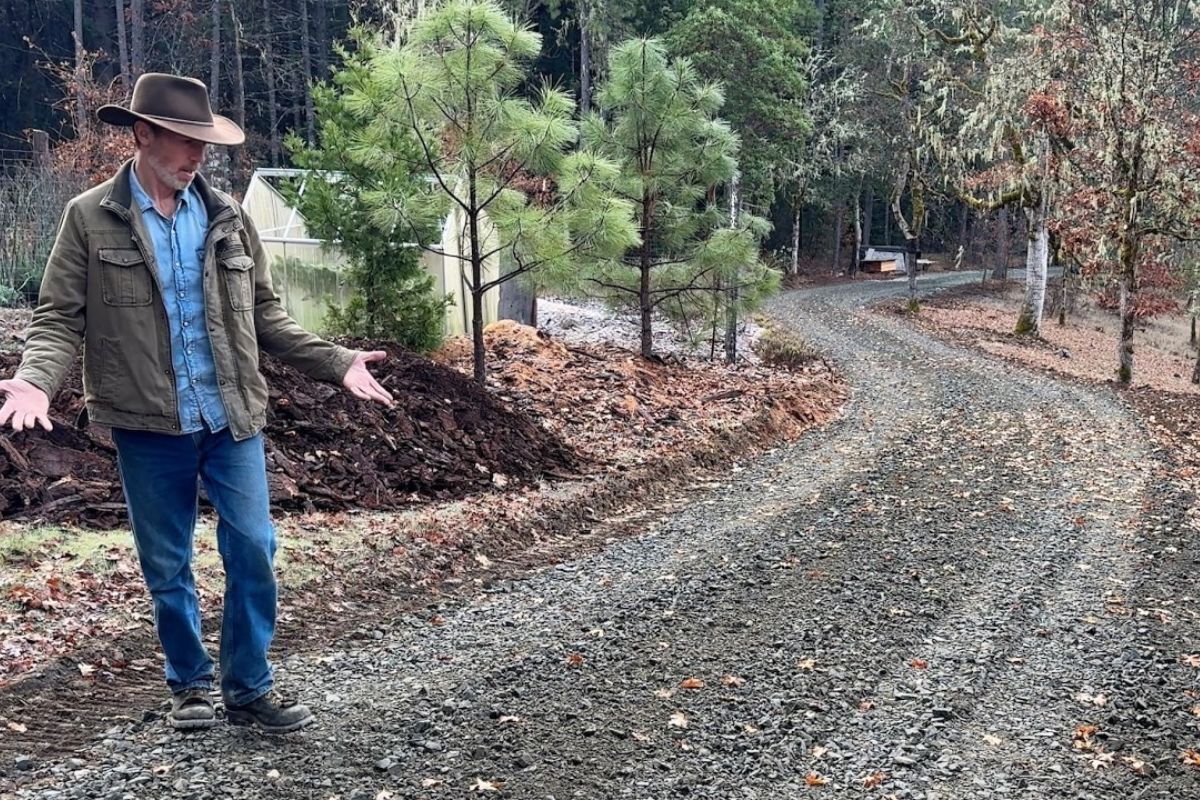
Gravel Roads Are Expensive When Gravel Is Thrown Without Layers, Drainage, and Maintenance; The Producer Reconstructed 427 Meters With Crushed Stone, Tested 4 Inches Less, Covered Sections With 1.5 Inches Less, and Explained Why River Rock Only Makes Mud Worse in Winter and Summer.
Gravel roads become a silent problem when the decision to “throw stone” replaces design, drainage, and traffic control. A producer who dealt with potholes, mud, and recurring costs decided to redo 427 meters of their own access with the help of a rock professional and began to treat gravel as a structure, not as decoration.
The reconstruction exposed a point that many people ignore: gravel roads do not fail only due to the weather, but also due to the wrong choice of material and lack of maintenance. By comparing crushed stone and river rock, and by adjusting layers according to soil and slope, the producer reduced the chance of sinking in wet areas and made the surface more predictable for driving and walking.
Where the Money Disappears When Gravel Roads Are Made by Eye

The most expensive mistake occurs when gravel roads receive loads without criteria, with loose stones on top of the mud and without fine material to lock the voids.
-
A couple buys an old chalet, breaks the kitchen floor for renovation, and finds over a thousand coins of gold and silver hidden since the English Civil War over 4 centuries ago.

-
Rigid bags with their days numbered: new trend prioritizes comfort in 2026.

-
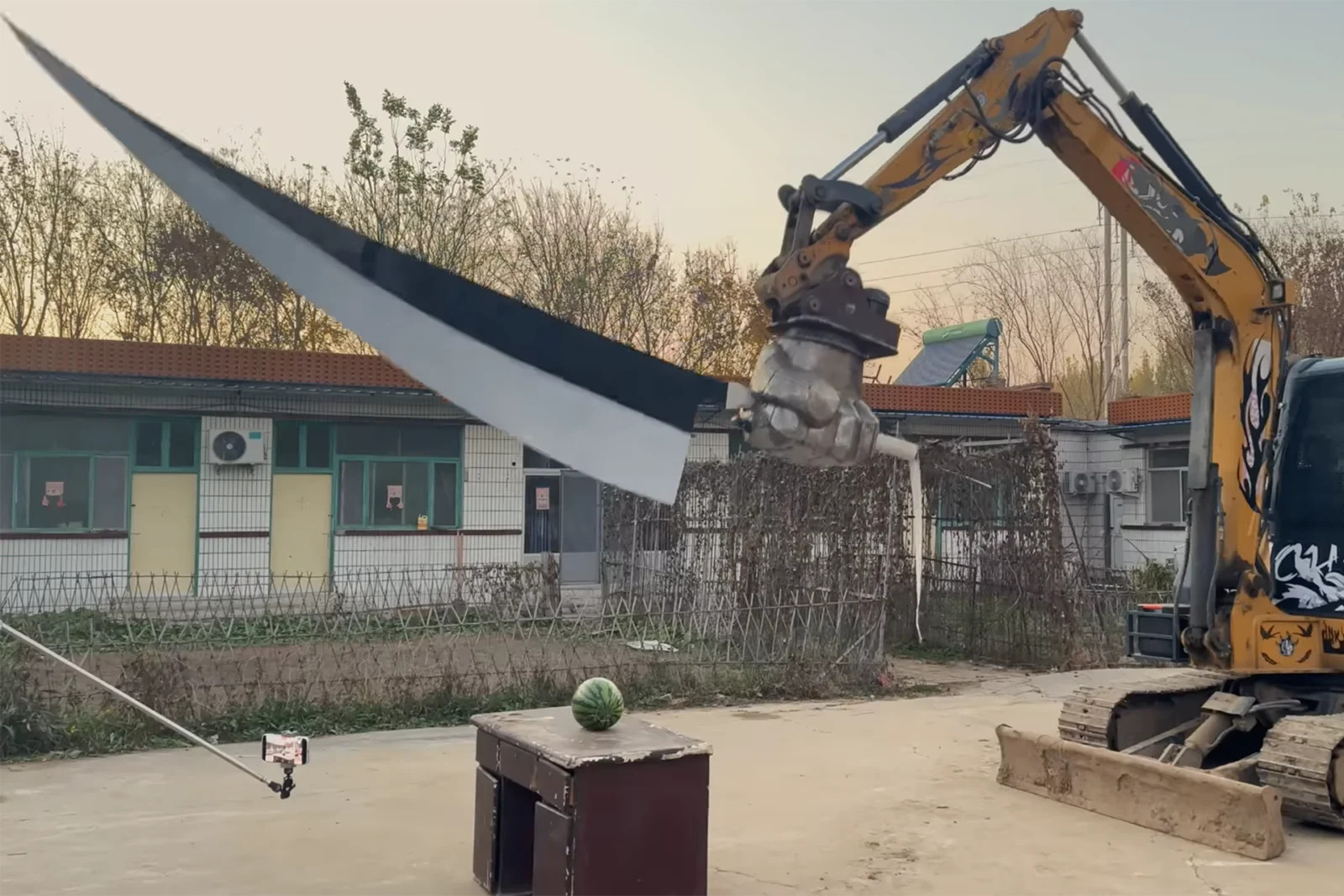
YouTuber creates an excavator equipped with a giant 4.5-meter sword to challenge his brother to a rematch, and the invention quickly goes viral on social media.
-
The U.S. Army surprises the world by presenting the UH-60MX Black Hawk helicopter capable of flying without pilots, controlled by a tablet, featuring the MATRIX system, smart sensors, and full autonomy in real combat and rescue missions.


In a low and slippery section, the producer observed that small stones easily sink into the mud, while larger stones resist sinking better, precisely because they have different contact and geometry.
Another factor that weighed was transportation: gravel may seem like “just stone,” but it becomes a significant expense when it needs to be replenished every season.
Maintenance, in this scenario, is not a luxury; it is a correction of a method that is already fragile. When the base shifts, the cost returns in ruts, puddles, mud, and new loads of material.
Layers, Granulometry, and the Logic of “Less” in Gravel

To stabilize the most critical areas, the described solution was to use a “4 inches less” base rock, an aggregate with pieces up to 4 inches mixed with smaller particles.
The producer emphasized that the value lies in the whole: the larger fragments hold the structure and the fines fill and lock, reducing the voids through which the mud rises.
On top of this base, where there was already support to prevent sinking, he applied “1.5 inches less” to improve drivability.
The justification was practical: a thinner upper layer creates a more regular surface, without sacrificing the interlocking between particles.
Even so, the rule was not absolute; the choice of layers changed according to section and history of mud.
Crushed Stone Against River Rock: Friction, Locking, and Stability

In the comparison between crushed stone and river rock, the central argument was mechanical: river rock is rounded and tends to roll, reducing friction and internal locking of the layer.
In gravel roads, this characteristic can accelerate the formation of ruts and the migration of stones to the sides, especially under repeated traffic.
On the other hand, crushed stone, being more angular, offers more “interlock” between grains.
The producer treated this as a stability factor: the more interconnected the layer, the less it displaces, which delays interventions and decreases maintenance.
He also observed that, in some places, river rock may be the only local offering, but even so, its performance as a structural layer tends to be inferior.
Mud, Slopes, and Depth: Why the Same Gravel Doesn’t Work for Everything
The reconstruction started in low areas, where water tends to sit and the soil becomes vulnerable to ruts.
There, the base with “4 inches less” reached a depth of 6 inches, and in more problematic spots it was thicker, precisely to confront the mud and slipperiness.
The producer reported having used this type of base in another phase, at least 10 years ago, and that the section remained functional even with heavy truck traffic.
In slopes with moderate inclination and less historical mud, the strategy was different: it is not necessarily worth placing the same thickness of base, because the soil drains and dries more quickly.
The cited case showed an important operational detail: loads with few fine particles leave large stones loose on the edges and fines in the middle, creating an unstable “corridor.”
The proposed answer was to complete with “1.5 inches less” to fill gaps and reduce rolling.
Compaction, Traffic, and Maintenance: What Happens After the Rock Hits the Ground
The producer pointed out that compaction can occur from traffic itself, especially when trucks pass over the newly applied layer.
This doesn’t eliminate the risk of ruts, but it helps accommodate the particles, provided the mix has enough fines to lock.
Where the soil was very wet, he avoided compacting with a roller for a simple reason: compacting while wet can bring moisture to the surface and turn the pavement into mud.
Maintenance appeared as a continuous step, not as an “emergency fix.” The logic was to observe performance in winter, let it dry in summer, and only then decide on the finish layer.
In well-drained areas and ridges, he described using “3/4 less” directly on the soil to improve grip and reduce slipperiness, without the same requirement for a heavy base.
The final message was that gravel roads require an understanding of soil, water, and use, and that copying a recipe from another region can be costly.
Gravel roads are not a one-time purchase but a system that depends on well-chosen gravel, the right layer, crushed stone in the right place, little room for river rock, and a maintenance routine planned for your type of mud, traffic, and slope.
If you have dealt with gravel roads on your property, what was the point that drained the most money in maintenance: the wrong material, the lack of base, or the water that was never directed away from the path?






-

-

-

-

-

14 pessoas reagiram a isso.