





 Portuguese
  English
  Spanish
  5 min of reading
  0 comments


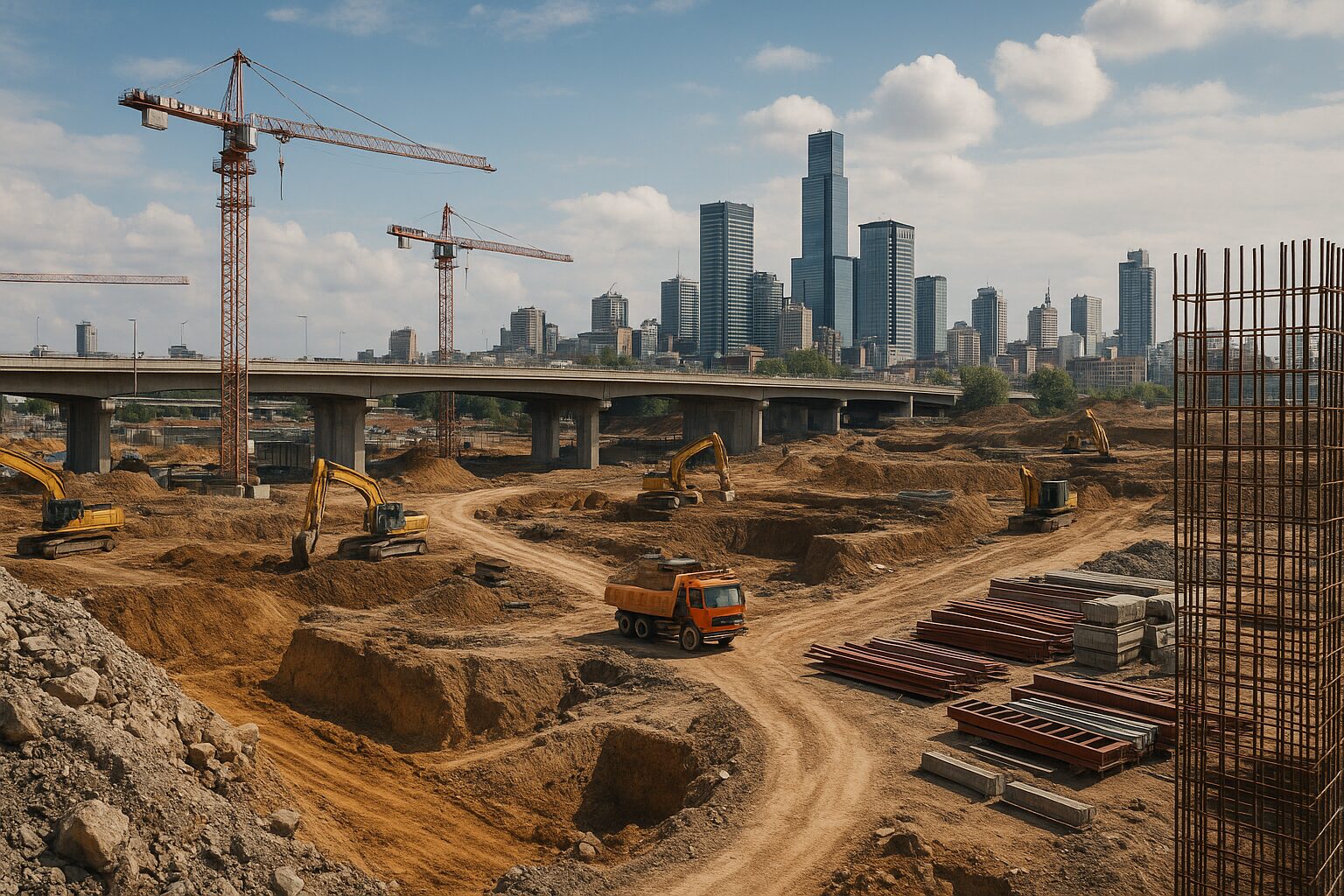
Understand The Main Infrastructure Challenges Faced Throughout History And Discover Why This Topic Is Essential For The Economic And Social Development Of Any Country.
The infrastructure challenges have always been present in human history.
Since ancient times, when the first civilizations began to organize into larger communities, the need to build roads, bridges, canals, and basic structures arose to ensure the functioning of society.
Infrastructure is the set of physical and organizational structures that support the functioning of an economy and ensure quality of life for the population.
-
Employee Fired After Accumulating 114 Days of Medical Leave in One Year, Labor Court Upholds Company’s Decision

-
Employee Fired While Treating Depression Wins in Court and Vale Is Required to Rehire Him Following Decision Based on the CLT and INSS Benefits

-
Workers Should Be Aware! March 6 Will Be The Fifth Business Day Of March And The Final Deadline For Companies To Pay Salaries According To The CLT

-
2026 FGTS Anniversary Withdrawal Is Released According to Birth Month, Sets Amounts by Balance Range, Establishes Deadlines for March and April, and Changes Rules in Case of Dismissal


Therefore, when there are failures or absence of these essential services, obstacles arise that directly affect the social, economic, and environmental development of a country.
These obstacles are known as infrastructure challenges, and understanding their origins, consequences, and possible solutions is essential for anyone interested in progress and collective well-being.
Historically, great empires like Ancient Egypt, Rome, and China already dealt with this issue. For example, the Egyptians built canals for irrigation and control of the Nile River.
The Romans, in turn, developed systems of roads and aqueducts, which allowed for the transport of water and the movement of troops and goods.
These examples not only show that infrastructure has always played a central role in the organization of societies.
They also highlight how the absence of infrastructure can compromise the growth and stability of a civilization.
However, as time went by, infrastructure challenges became even more complex.
During the Industrial Revolution, between the 18th and 19th centuries, the accelerated urbanization led to an urgent need for rail networks, public lighting, sewage systems, and more suitable housing.
The growth of cities, however, brought forth problems such as traffic, pollution, and the increasing demand for basic services.
Without adequate planning, cities began to deal with inequality in access to infrastructure.
This remains one of the largest obstacles faced by developing countries today.
Thus, infrastructure challenges are not new, but their dimensions have changed over time, reflecting economic and social transformations.
Historical Transformation And Modern Infrastructure Challenges

As urbanization advanced, the infrastructure challenges evolved.
During the Industrial Revolution, large cities became populated with a growing population, resulting in significant failures in the provision of essential services.
According to the Global Infrastructure Report, the lack of adequate urban infrastructure created precarious living conditions for millions of people, especially in the poorer areas of expanding cities.
In this context, problems such as housing shortages, unsanitary working conditions, and overload on supply and transport systems emerged.
Undoubtedly, the rapid process of industrialization, which aimed to boost the economy, also caused serious infrastructure problems.
Cities were, therefore, unprepared to support the large number of people migrating from rural areas, resulting in precarious living conditions for many families.
However, the modern world has faced new challenges that have worsened the situation. The climate crisis, scarcity of natural resources, and rapid technological transformations place even greater pressure on governments and public managers.
According to the Intergovernmental Panel on Climate Change (IPCC), the increase in natural disasters, such as floods and storms, demands more resilient infrastructure adapted to new environmental realities.
In this sense, infrastructure must not only function but also be resilient, sustainable, and smart.
Indeed, the concept of smart infrastructure has gained prominence. This implies the use of innovative technologies to improve the efficiency of public services, ensuring that infrastructure meets a growing population without compromising natural resources or quality of life.
Therefore, the combination of innovation and resilience becomes essential to overcome current infrastructure challenges.
Economic Impacts And Solutions For Infrastructure Challenges
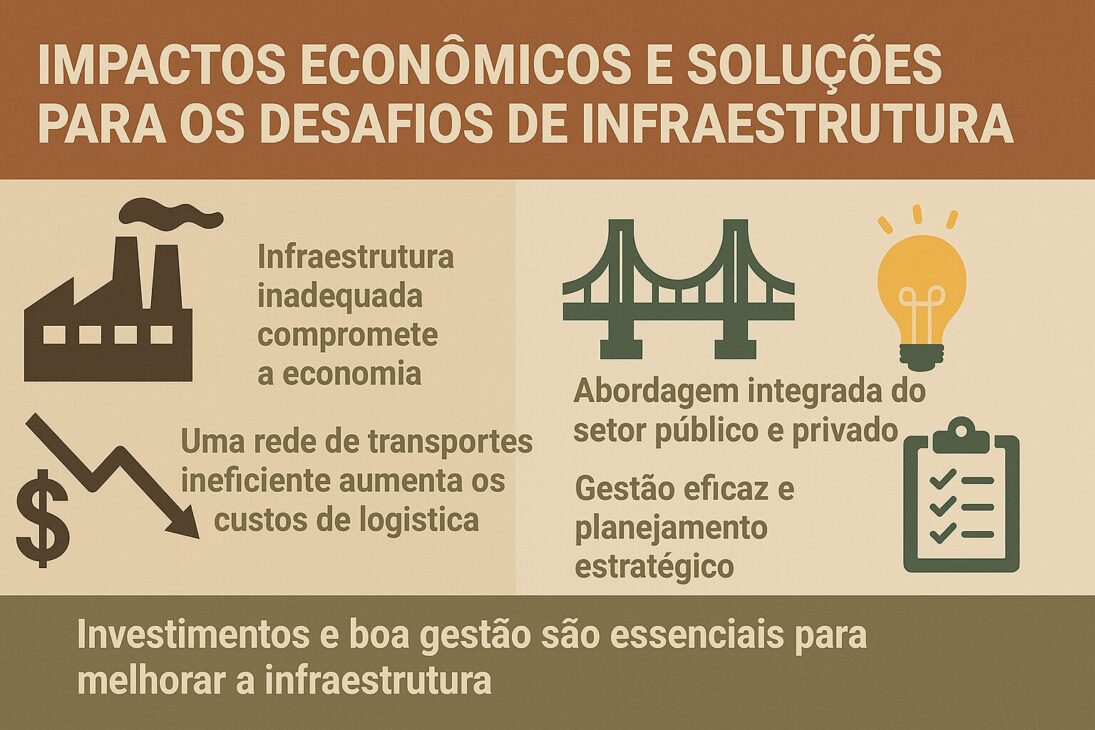
Therefore, infrastructure challenges affect not only citizens but also companies and the productive sector.
When infrastructure is inadequate, trade is compromised, industrial production suffers delays, and as a result, the economy becomes more fragile.
Additionally, without an efficient transport network, the costs of logistics increase significantly, making products more expensive.
According to the World Bank, a study conducted in 2018 pointed out that countries that do not adequately invest in infrastructure face a significant loss in economic growth, especially in sectors such as trade and transport.
Quality infrastructure facilitates trade, improves the competitiveness of companies, and increases the quality of life of the population.
However, the economic impacts of deficient infrastructure do not only affect large companies.
In fact, many underprivileged communities also face significant challenges due to a lack of basic services.
The absence of sanitation, for example, can lead to outbreaks of diseases, affecting public health and consequently the productivity of workers.
Therefore, an integrated approach, involving both the public and private sectors, is necessary to improve the quality of infrastructure and ensure that it benefits everyone equitably.
However, in addition to financial investments, the solution to infrastructure challenges also depends on effective management and strategic planning.
The simple act of building large-scale works does not solve the issue if there is no efficient management of resources and constant maintenance.
Moreover, many projects end up being poorly executed or abandoned due to a lack of planning and oversight.
In this sense, transparency in public actions and societal participation are essential to ensure that projects truly meet the needs of the population.
The Need For Innovation To Overcome Infrastructure Challenges
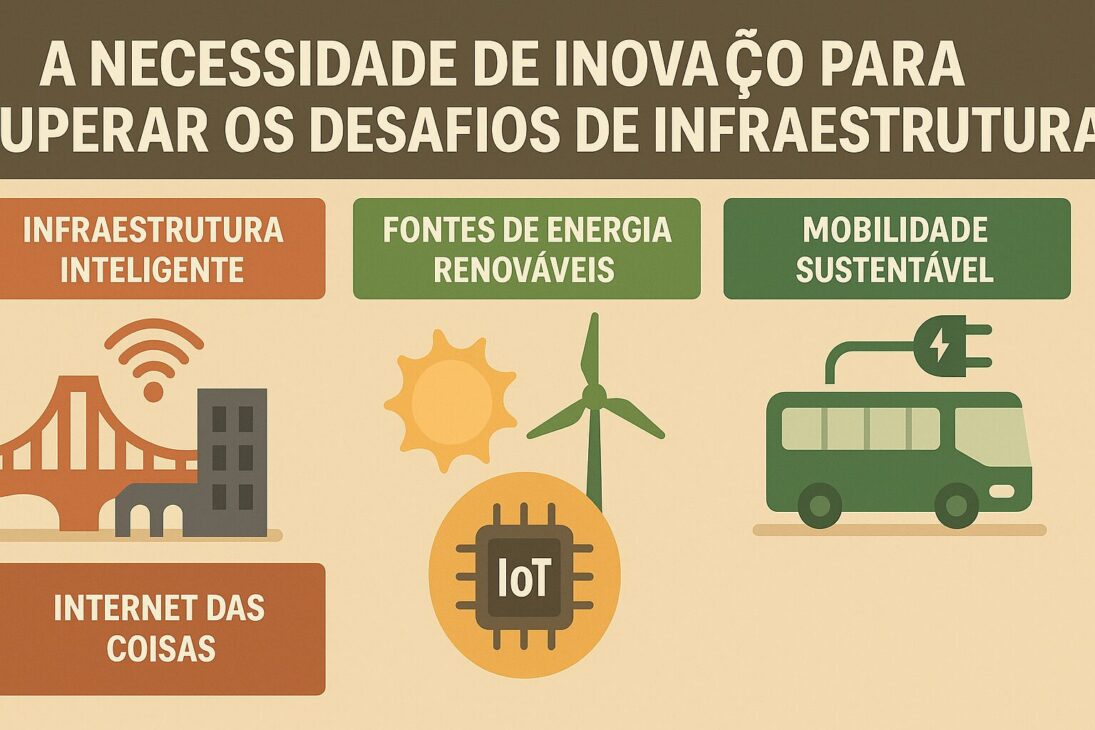
As technology advances, new solutions begin to emerge to address infrastructure challenges.
For instance, smart infrastructure, which utilizes sensors, automation, and real-time data analysis, can improve the management of essential services, such as the provision of water, energy, and transport.
The Infrastructure Innovation Report from the World Health Organization in 2022 indicates that the adoption of these technologies has reduced costs and improved efficiency in various cities around the world.
These advancements not only increase the efficiency of services but also reduce environmental impact, contributing to a more sustainable future.
Furthermore, the use of renewable energy sources, such as solar and wind, has proven to be a viable alternative to ensure the continuity of energy supply in a clean and efficient manner.
Additionally, sustainable urban mobility has become a priority in major cities.
Many metropolises are now investing in electric public transport, such as buses and <strong subways, which not only reduce pollutant gas emissions.
But also provide a cheaper and more efficient means of transport for the population.
In this context, vehicle-sharing technologies and the popularization of electric bicycles have also gained prominence, offering more eco-friendly and accessible transport options.
Finally, the internet of things (IoT) plays a crucial role in the revolution of modern infrastructure.
Smart sensors installed on bridges, roads, and buildings enable real-time monitoring, preventing accidents and optimizing the use of public resources.
As a result, cities become safer, efficient, and better prepared for future challenges.










-

-

2 pessoas reagiram a isso.