





 Portuguese
  English
  Spanish
  4 min of reading
  0 comments


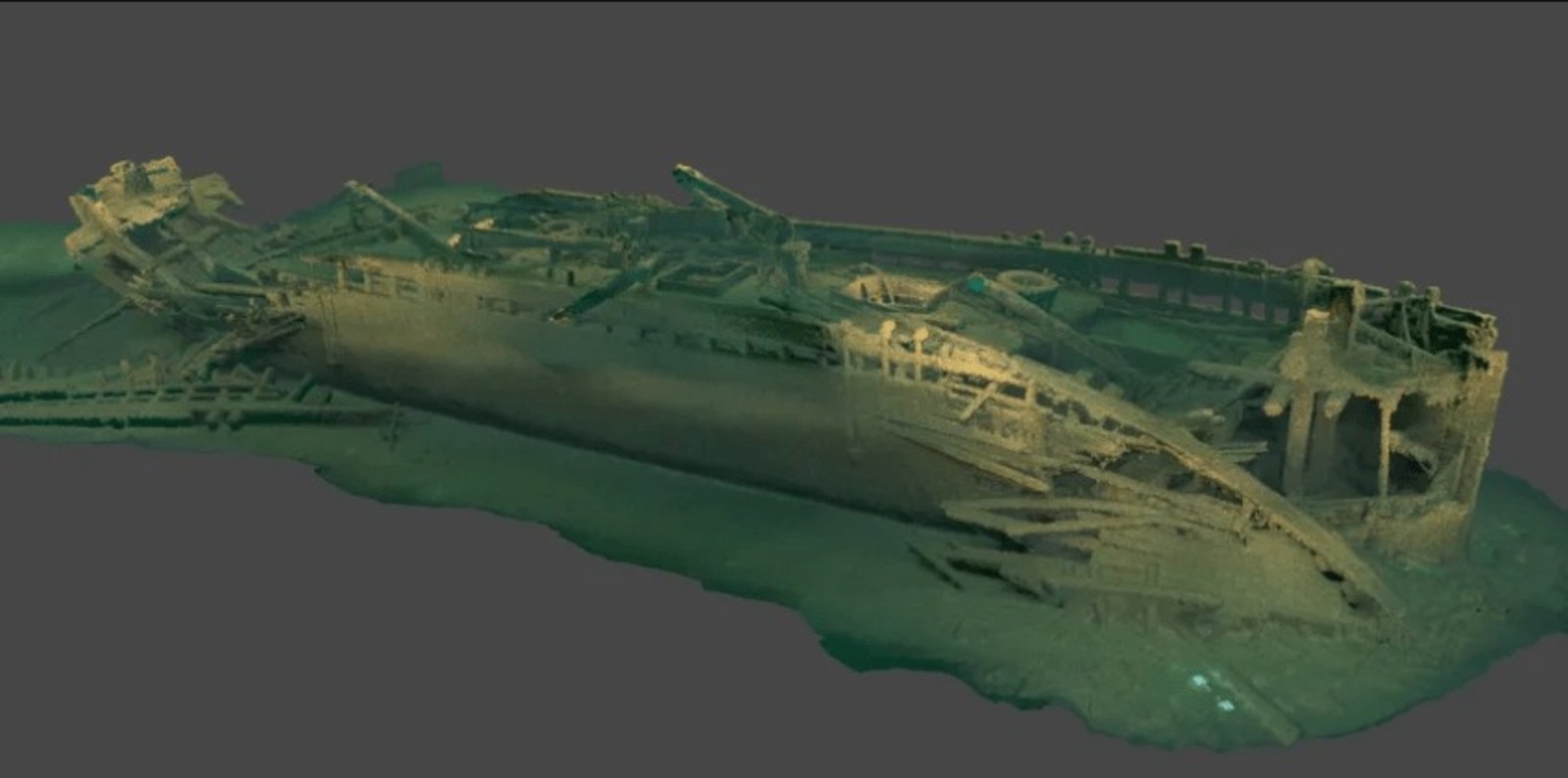
Researchers Locate The Ghost Ship F.J. King After 139 Years Disappeared, Revealing Preserved Details And Reinforcing The Historical Importance Of Shipwrecks
One of the most persistent mysteries of navigation in the Great Lakes has come to an end. After nearly 140 years submerged and decades of frustrating searches, the wooden schooner F.J. King was located in Lake Michigan, near the town of Baileys Harbor, Wisconsin.
The discovery was announced last Sunday (14) by the Wisconsin Underwater Archeology Association in partnership with the Wisconsin Historical Society.
A Shipwreck That Became Legend
The F.J. King sank in September 1886 during a severe nighttime storm. The 44-meter vessel was carrying grain, lumber, iron ore, and other products when violent winds breached its hull.
-
Motorola launched the Signature with a gold seal from DxOMark, tying with the iPhone 17 Pro in camera performance, Snapdragon 8 Gen 5 that surpassed 3 million in benchmarks, and a zoom that impresses even at night.

-
Satellites reveal beneath the Sahara a giant river buried for thousands of kilometers: study shows that the largest hot desert on the planet was once traversed by a river system comparable to the largest on Earth.

-
Scientists have captured something never seen in space: newly born stars are creating gigantic rings of light a thousand times larger than the distance between the Earth and the Sun, and this changes everything we knew about stellar birth.

-
Geologists find traces of a continent that disappeared 155 million years ago after separating from Australia and reveal that it did not sink, but broke into fragments scattered across Southeast Asia.

Captain William Griffin ordered an evacuation, and the crew managed to escape in the lifeboat.
Days later, lighthouse keeper William Sanderson reported seeing the masts emerging from the surface, and fishermen found fragments of the ship in their nets.
Despite this, numerous expeditions failed to locate it, fueling the aura of “ghost ship” among wreck hunters.
The Unyielding Search
Maritime historian Brendon Baillod, current president of the Wisconsin Underwater Archeology Association, led the latest mission.
He had been investigating the case for years and found a crucial clue: a newspaper article published shortly after the accident, in which Sanderson indicated the approximate location of the wreckage.
Based on this information, Baillod mapped an area of 5.2 km² and organized a team made up of 20 citizen scientists.
On June 28, using side-scan sonar, they captured the image of a ship with a remarkably preserved hull.
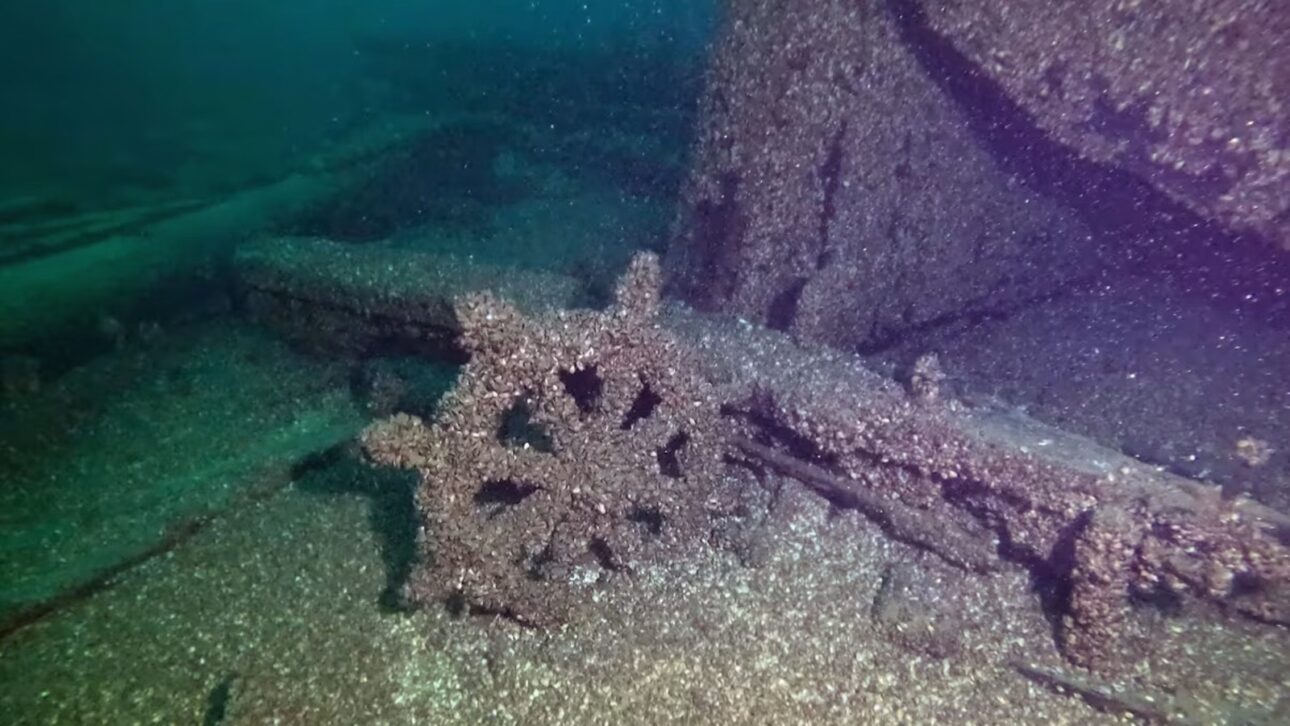
The confirmation came with remotely operated underwater vehicles, which descended to depths of 50 meters.
“It felt like the ship had vanished into thin air. When we saw the first images, it was unbelievable,” Baillod reported. According to him, the volunteers were the first to see the vessel since 1886.
The Historical Value Of The Discovery
Built in 1867, the F.J. King had 19 years of profitable operations in trade between the Great Lakes. At the time, Wisconsin was considered the breadbasket of the United States, and grain transport drove the region’s economy.
For Ric Mixter, a shipwreck expert and board member of the Great Lakes Shipwreck Historical Society, finding a ship in such good condition is exciting.
He highlighted that preserved remains help understand life in the lakes during the 19th century.
Mixter also emphasized the importance of including amateur explorers in the process. “The fact that novice archaeologists participated in the mission is just as relevant as the discovery itself,” he stated.
A Reward That Stayed In The Past
The fascination with the F.J. King did not start now. About 20 years ago, the Neptune’s Dive Club in Green Bay even offered a reward of US$ 1,000 to anyone who found the ship.
At the same time, Baillod initiated his systematic investigation of historical records.
The ongoing involvement of clubs, researchers, and volunteers shows how shipwrecks spark public and scientific interest.
After all, each discovery carries fragments of forgotten stories and reinforces the cultural identity of the Great Lakes.
A Submerged Cemetery
It is estimated that about 6,000 vessels are sunk in the Great Lakes, a result of the intense traffic of commercial ships in the 19th and 20th centuries coupled with the region’s unstable weather.
In Lake Michigan alone, more than 200 shipwrecks are still waiting to be located.
According to Baillod, the area has the highest concentration of sunken ships per square kilometer in the world. Therefore, the search continues and is expected to yield new discoveries in the coming years.
Factors That Facilitated The Discovery
The clarity of the water was decisive. The accidental introduction of quagga mussels in the 1990s altered the local ecosystem.
These mollusks filtered the water and increased visibility from just a few meters to up to 30 meters in certain areas.
Additionally, technological advancements have reduced costs. Sonar equipment that cost US$ 100,000 in 1980 can now be purchased for just over US$ 10,000, allowing smaller groups to access the searches.
A New Era For Shipwrecks
Since the 1960s, ships have been located in the Great Lakes, but the pace of discoveries has increased in recent years.
Researchers and media outlets already classify this moment as a “golden age” of underwater explorations.
Tourism has also benefited. With clearer waters, stand-up paddle and kayak practitioners can see 19th-century vessels just below the surface.
This raises public interest and helps preserve the memory of these shipwrecks.
The NOAA, the U.S. agency responsible for oceanic and atmospheric studies, is working on a project to map the bottom of the Great Lakes in high resolution by 2030.
If completed, the survey could reveal all the lost ships in the region.
The Future Of Expeditions
Baillod believes there is still much to come. He maintains a database of missing vessels and hopes to continue the searches alongside teams of citizen scientists.
“I have no doubt that new findings will emerge. We will continue to search, and we will certainly continue to find,” he said.
Thus, the recovery of the F.J. King not only ends a historical mystery but also symbolizes the beginning of new journeys in one of the largest shipwreck beds on the planet.
With information from CNN.







-

-

2 pessoas reagiram a isso.