





 Portuguese
  English
  Spanish
  3 min of reading
  0 comments


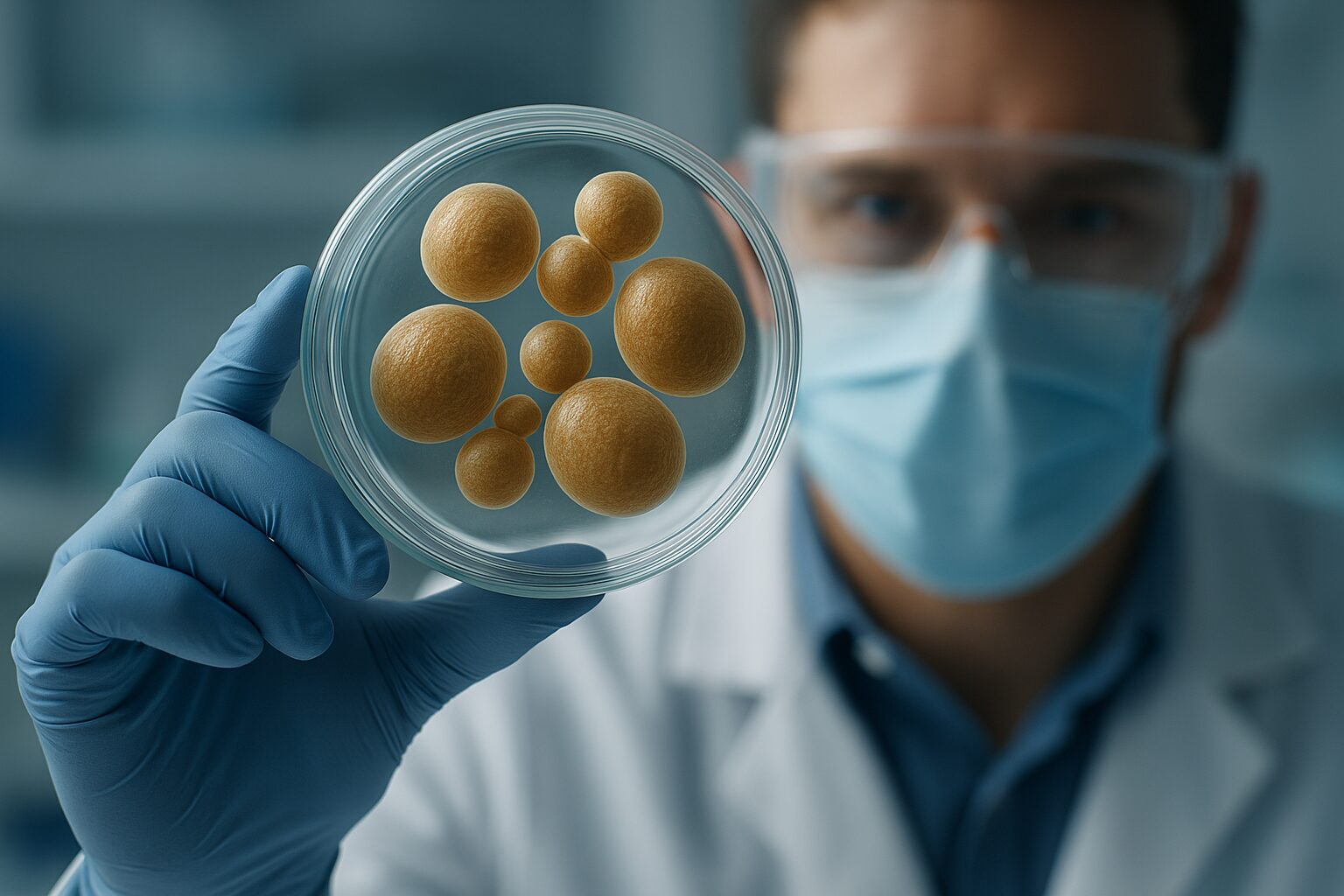
Researchers at the University of California Create a Genetic System Capable of Extending the Lifespan of Yeast Cells by Up to 82%, Opening New Paths for Regenerative Medicine
Scientists at the University of California San Diego (UCSD) achieved an impressive feat by extending the lifespan of yeast cells by up to 82%. The research, which began in 2020, could open new pathways to understand and control the aging process.
Two Aging Pathways Identified
During the initial studies, the researchers discovered that yeast cells age in two different ways. Half of them suffer from the loss of DNA stability.
The other half experiences problems in the mitochondria, structures responsible for generating energy in cells. Based on this division, the scientists developed ways to manipulate the processes that lead to aging.
-
Motorola launched the Signature with a gold seal from DxOMark, tying with the iPhone 17 Pro in camera performance, Snapdragon 8 Gen 5 that surpassed 3 million in benchmarks, and a zoom that impresses even at night.

-
Satellites reveal beneath the Sahara a giant river buried for thousands of kilometers: study shows that the largest hot desert on the planet was once traversed by a river system comparable to the largest on Earth.

-
Scientists have captured something never seen in space: newly born stars are creating gigantic rings of light a thousand times larger than the distance between the Earth and the Sun, and this changes everything we knew about stellar birth.

-
Geologists find traces of a continent that disappeared 155 million years ago after separating from Australia and reveal that it did not sink, but broke into fragments scattered across Southeast Asia.

Gene Oscillator: The Key to the Process
The UCSD team used synthetic biology to create a “gene oscillator.” This genetic device functions like an electrical circuit, controlling the cell’s functions. With it, the cells alternate between the two types of aging, without getting stuck in one state for too long.
This controlled alternation helps avoid the accumulation of cellular damage. Thus, the aging process is slowed down, and the lifespan of the cells increases. Tests showed that this method works well in yeast, with significant gains in the longevity of the analyzed cells.
Technology with Potential for Humans
Although the experiments were conducted only with yeast, the scientists believe the results open doors for broader applications.
The success of the technique provides a solid foundation for developing similar genetic circuits in more complex organisms, such as plants, animals, and eventually, humans.
The proposal is to use genetic engineering to reprogram cellular aging. This could lead to significant advances in areas such as regenerative medicine and longevity. The research serves as a promising proof of concept for future applications.
Challenges and Future of Research
Despite the positive results, there are still many obstacles. Applying this technique in more complex living beings requires a deeper understanding of the involved genes and how each organism reacts to manipulation.
Another important issue is the potential ethical and biological impacts of these changes. Before any widespread use, it will be necessary to conduct tests on other types of cells and monitor the effects over time. The safety of the process needs to be ensured.
Conclusion: A Discovery with Great Potential
Scientists at UCSD have made an important step in the study of aging. The possibility of slowing down cellular aging through genetic engineering brings hope for the future.
There is still much to be done, but the results with yeast indicate a promising path to improving the quality of life.
With information from Correio Braziliense.







Seja o primeiro a reagir!