





 English
  Francês
  Alemão
  Italiano
  Japonês
  Norueguês
  Portuguese
  Spanish
  4 min of reading
  0 comments


Unprecedented Record at Over 140 Meters in the Maluku Islands Documents a Living Coelacanth in October 2024. The Finding Brings New Insights into Behavior and Reinforces the Urgency of Marine Conservation in Deep Waters.
Two French divers recorded an encounter that science rarely witnesses. In October 2024, in the Maluku archipelago, eastern Indonesia, Alexis Chappuis and Julien Leblond filmed a living coelacanth at a depth between 140 and 150 meters in Maluku Province.
The fish, with a dark blue body and light spots, was seen calmly floating over a rocky promontory. The next day, the duo returned to the same spot and identified the same individual by its unique pattern of side spots.
According to the expedition’s records, it is the Indonesian species Latimeria menadoensis, about 1.10 meters long. The report represents the first detailed observation of a living coelacanth in Maluku, later documented in an international scientific publication.
-
Government unlocks R$ 554 million for a highway that has been requested for decades and accelerates the duplication of BR.

-
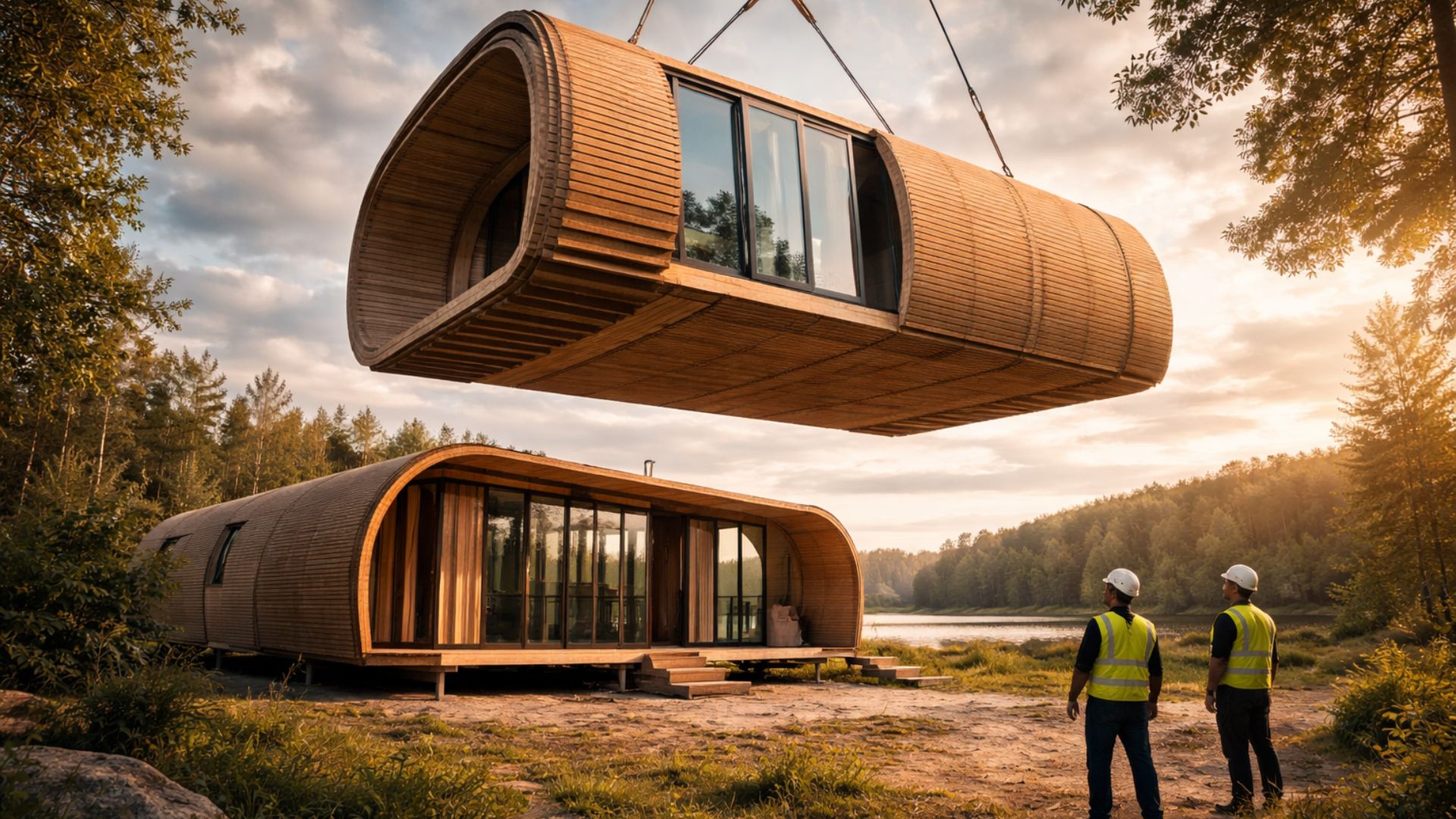
Without bricks, without cement, and without endless construction: the cardboard house that is assembled in modules and can be moved.
-
Billions of barrels on the equatorial margin could lead Amapá to double its oil production in Brazil — the state aims to enter the route of companies in the Campos Basin, attract investments, and boost jobs and businesses in the oil and gas sector.

-
Without bricks, without cement, and without endless construction: the cardboard house that is assembled in modules and can be moved.

The encounter challenges the image of a fish that only leaves caves at night. The animal was observed in open water, suggesting flexibility in habitat use and broadening the understanding of the species’ behavior in deep slopes.
Meticulous Search Mapped Cold, Rocky Slopes, Key to Finding the Prehistoric Fish
The scene was not a matter of chance. For two years, Chappuis analyzed nautical charts, bathymetric maps, bottom temperature data, and fishermen’s accounts, searching for cold, steep sections with cracks, similar to those already associated with coelacanths in places like Comoros and South Africa.
With closed-circuit rebreathers and technical suits for cold water, the team executed a plan with minimal margin for error. There were over 50 deep dives until they located the spot where the animal was filmed, and the exact position remains confidential to avoid predatory tourism and targeted fishing.
In the images, the fish hovers over rocks covered by sponges and soft corals, showing no signs of fleeing. For the divers, the stability of the buoyancy and the presence of the individual on consecutive days reinforce that the area offers suitable environmental conditions.
Unique Features of the Coelacanth Help Explain the Transition from Water to Land
Described by fossils and thought to be extinct for millions of years until 1938, when a living specimen was found in South Africa, the coelacanth remains an enigma. Today, two species are recognized, and the one recorded in the Maluku Islands is the Indonesian Latimeria menadoensis, with lobed fins resembling small articulated arms.
These fins, along with the vestige of an ancient inactive “internal lung” and a skull with two movable parts, help to understand the evolution of lobe-finned fishes toward the first terrestrial vertebrates. It is a window to the past that continues to evolve, albeit at a very slow pace.
New Behavior Observed Indicates Greater Flexibility Than Previously Thought
Previous reports described the coelacanth as an animal that would spend the day hiding in caves, rarely coming out to hunt. The individual from Maluku was seen in open water, with calm movements and no signs of fleeing.
Researchers believe this nuance indicates an alternation between shelter points and more exposed areas, possibly in response to current, temperature, or prey availability. The finding expands hypotheses on how the species utilizes deep slopes.
Extreme Risks of Technical Diving and Increasing Pressure in the Twilight Zone of the Oceans
Diving to 140 meters requires precise gas mixtures, rigorous planning, and long decompression stops. Any technical failure at that depth can be fatal, compounded by intense cold, low visibility, and expensive logistics with support vessels and equipment redundancy.
The coelacanth’s habitat is in the so-called twilight zone of the oceans, between 100 and 400 meters, where light barely reaches. However, the distance from the surface does not protect against modern threats such as sinking plastic, warming waters, noise from ships and sonars, and extreme tourism projects.
According to the International Union for Conservation of Nature (IUCN), the Indonesian species is classified as Vulnerable. The risk increases due to its unique life cycle: coelacanths grow slowly, reach sexual maturity around 55 years, have gestation of about five years, and can live for over a century, making each population loss especially serious.
Next Steps Prioritize Non-Invasive Science with eDNA to Map and Protect Maluku
The team advocates for expanded studies with environmental DNA (eDNA), filtering water samples for genetic traces left by feces, mucus, or skin fragments. The approach reduces risks and avoids capturing rare animals.
With this method, it is possible to detect presence and routes without harming individuals and to guide conservation policies. Between Sulawesi and West Papua there are vast deep areas still poorly mapped, and eDNA can accelerate the recognition of priority zones for protection.
- Identify coelacanths in different deep bays of Indonesia
- Compare genetic diversity between regions and possible corridors
- Delimit key shelter and feeding areas for protection proposals
As the team highlights, robust science doesn’t need nets or specimens in formaldehyde. In the case of the coelacanth, each living individual is worth more than any collection.
What do you think about keeping the site confidential to avoid predatory tourism, even if it limits access to open data? Should protection of the twilight zone have stricter rules for commercial vessels and sonars? Leave your comment and tell us if you agree with the strategy of non-invasive studies or if you see alternative paths to balance research and conservation.









Seja o primeiro a reagir!