





 Português
  Inglês
  Espanhol
  5 min de leitura
  0 comentários


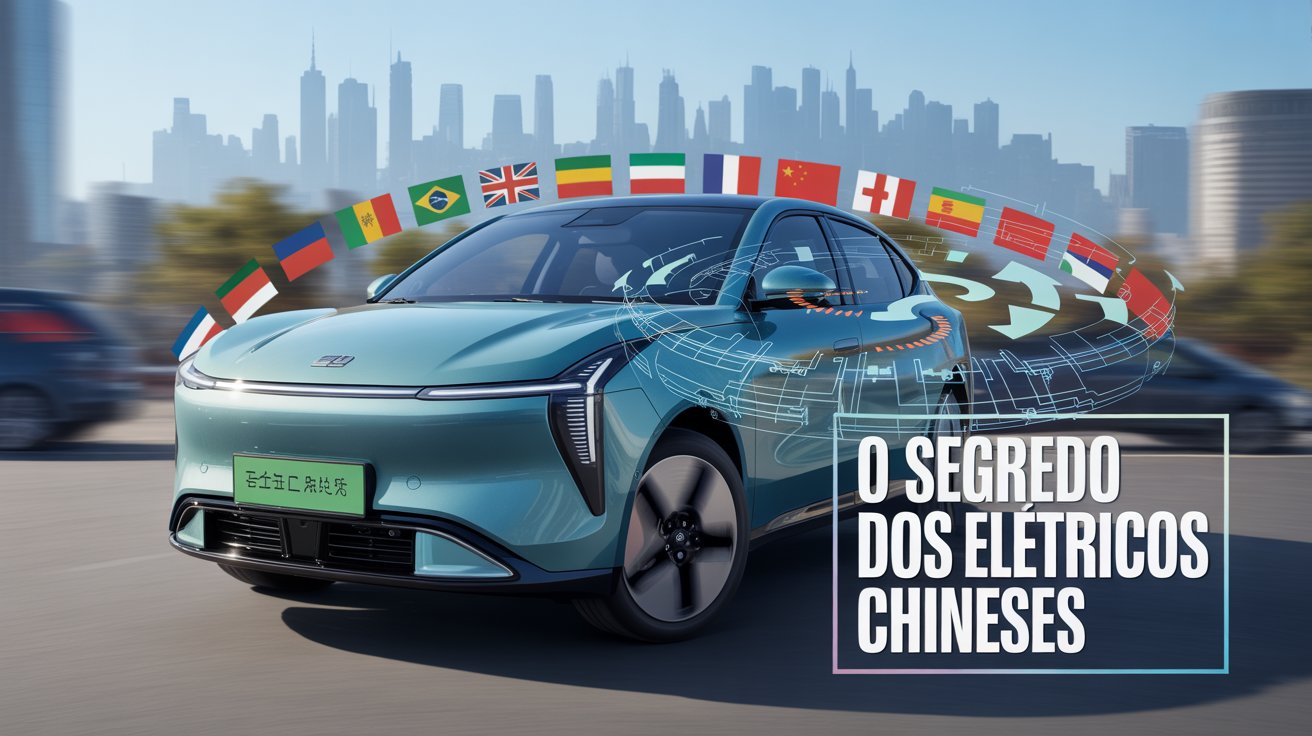
Chinese Low-Cost Electric Cars Are Changing The Automotive Industry, Creating New Competitors, Challenging Traditional Brands, And Sparking Protection Measures In Strategic Markets.
The rise of Chinese electric cars, especially low-cost models, is transforming the global automotive industry and triggering responses in traditional automotive countries.
In China, the BYD Seagull, which arrived in Europe as Dolphin Surf, represents the phenomenon of electric compacts that combine technology, low price, and strong market appeal.
Launched in 2023, the vehicle quickly won over Chinese consumers and, when presented to the European public, caught attention for its initial price of approximately £18,000, equivalent to R$ 135,000, a level considered affordable by Western standards.
-
Brazilian city gains industrial hub for 85 companies that is equivalent to 55 football fields.

-
Peugeot and Citroën factory in Argentina cuts production by half and opens a layoff program for more than 2,000 employees after Brazil drastically reduced purchases of Argentine vehicles.

-
A Brazilian city gains a factory worth R$ 300 million with the capacity to process 200 thousand tons of wheat per year, a mill of 660 tons/day, silos for 42 thousand tons, and an industrial area of 276 thousand m².

-
Havan will leave the shopping mall in Blumenau to inaugurate something that the chain has never done before: a megastore in half-timbered style in the Historic Center of the city, which is expected to be completed in May and change the landscape of local retail.


This movement has raised the stakes in competition among global manufacturers and opened the floor for discussions about competitiveness, safety, and the future of electric mobility.
BYD Leads Global Electric Vehicle Sales
According to a report published by g1, BYD, the manufacturer responsible for Dolphin Surf, has established itself as the leader in electric vehicle sales in 2024, surpassing renowned brands like Tesla and expanding operations to the European continent.
This growth comes alongside the rise of other Chinese companies, such as Nio, Xpeng, Zeekr, and Omoda, as well as names already known to Brazilian and European audiences, such as MG, Volvo, and Lotus, which are now owned by Chinese groups.
The presence of these companies spans from urban compact models to high-tech supercars, highlighting the wide-ranging involvement of Chinese brands.
Numbers Showing The Chinese Commercial Offensive
The impact of this commercial offensive can be observed in recent industry figures.
According to investigations by the g1 portal, data from the consulting firm Rho Motion indicate that in 2024, 17 million battery-powered and plug-in hybrid vehicles were sold worldwide, of which 11 million were in China alone.
Chinese brands now represent about 10% of global sales of electric and hybrid vehicles outside their home country, a percentage that is likely to grow given the interest in high-tech alternatives at low costs.
Industrial Policies And Technological Competitiveness
The rapid development of Chinese manufacturers results from robust industrial policies and long-term planning.
The Chinese automotive sector made a significant leap after the country joined the World Trade Organization in 2001.
Growth intensified from 2015 onward when the government launched the “Made in China 2025” strategy, a national plan to boost advanced technology sectors, including the electric vehicle segment.
State subsidies, research incentives, and an integrated national supply chain have allowed companies like BYD and Geely to assume prominent positions in the international market.
Cost Advantage And Battery Dominance
Chinese competitiveness is also explained by lower labor costs and dominance over battery technology, a central component of electric vehicles.
As highlighted by g1, an analysis by UBS indicates that BYD can produce cars up to 25% cheaper than Western rivals, a benefit that supports its expansion outside of China.
Despite claims of unfair competition from governments and international associations, representatives of Chinese manufacturers assert that the difference lies in innovation and productivity, resulting from intense internal competition and a continuous pursuit of efficiency.
Global Reaction: Tariffs And Market Protection
In the global context, the Chinese advance has provoked swift responses.
In 2024, the United States raised tariffs on imports of Chinese electric vehicles from 25% to 100%, complicating the entry of these products into the American market.
The European Union enacted similar measures, imposing additional tariffs of up to 35.3% on electric cars made in China, arguing that government subsidies distort competition.
Meanwhile, the United Kingdom did not apply restrictions, becoming a strategic destination for Asian manufacturers.
Europeans Accelerate Innovation In Affordable Electrics
The newspaper also pointed out that growing pressure on traditional brands has led European manufacturers to accelerate the development of affordable electric cars.
The French company Renault exemplifies this new phase by investing in automation and digitization at its Douai factory in northern France.
There, vehicles like the Renault 5 E-Tech are produced, combining the visual identity of a classic with modern electrification and assembly technologies.
The goal is to compete directly with Chinese models, keeping jobs and technology within the continent.
Cybersecurity And Regulatory Challenges
Despite the progress, concerns about cybersecurity and data protection have intensified.
Modern electric vehicles are increasingly connected to the internet, offering functionalities such as satellite navigation, smartphone integration, and remote software updates.
UK authorities have even restricted the use of Chinese cars in military areas and security agencies, citing risks of espionage and remote control of systems, a scenario that gained visibility after statements from former directors of the British secret service.
Response From Chinese Authorities And Global Integration
In a new reference from g1, Chinese authorities categorically deny any involvement in espionage or threats to international security.
So far, there is no public evidence confirming these suspicions, and Chinese companies argue that they strictly comply with the laws of the countries where they operate.
Experts consulted by the portal argue that cybersecurity risks can be mitigated by regulations and monitoring by national agencies, but they recognize the importance of constant vigilance in the face of advancing new technologies.
Interdependence In The Automotive Production Chain
In addition to regulatory concerns, the integration of Chinese components into global production chains stands out.
Even vehicles manufactured in Europe often use parts, batteries, or software modules produced in China, highlighting the degree of interdependence in the global automotive sector.
To achieve environmental goals and reduce emissions, European and Asian countries remain dependent on technologies developed in Asia, especially in areas such as batteries, electric motors, and embedded connectivity.
Chinese Electric Cars And The Challenges For Traditional Manufacturers
Meanwhile, consumers in various markets are evaluating the benefits of Chinese electric cars, which include lower acquisition costs, good urban performance, and an increasing supply of compact models, SUVs, and utilities.
The adoption of these technologies could speed up the popularization of electric vehicles, making them more accessible in emerging and developed countries.
Still, the outlook remains uncertain for traditional manufacturers, who are racing to adapt their processes and products in face of the new competition.
The presence of Chinese electric cars on the streets of Brazil and the world raises a new question: will the national industry manage to adapt to the speed of changes imposed by this global transformation?









Seja o primeiro a reagir!