





 Portuguese
  English
  Spanish
  3 min of reading
  0 comments


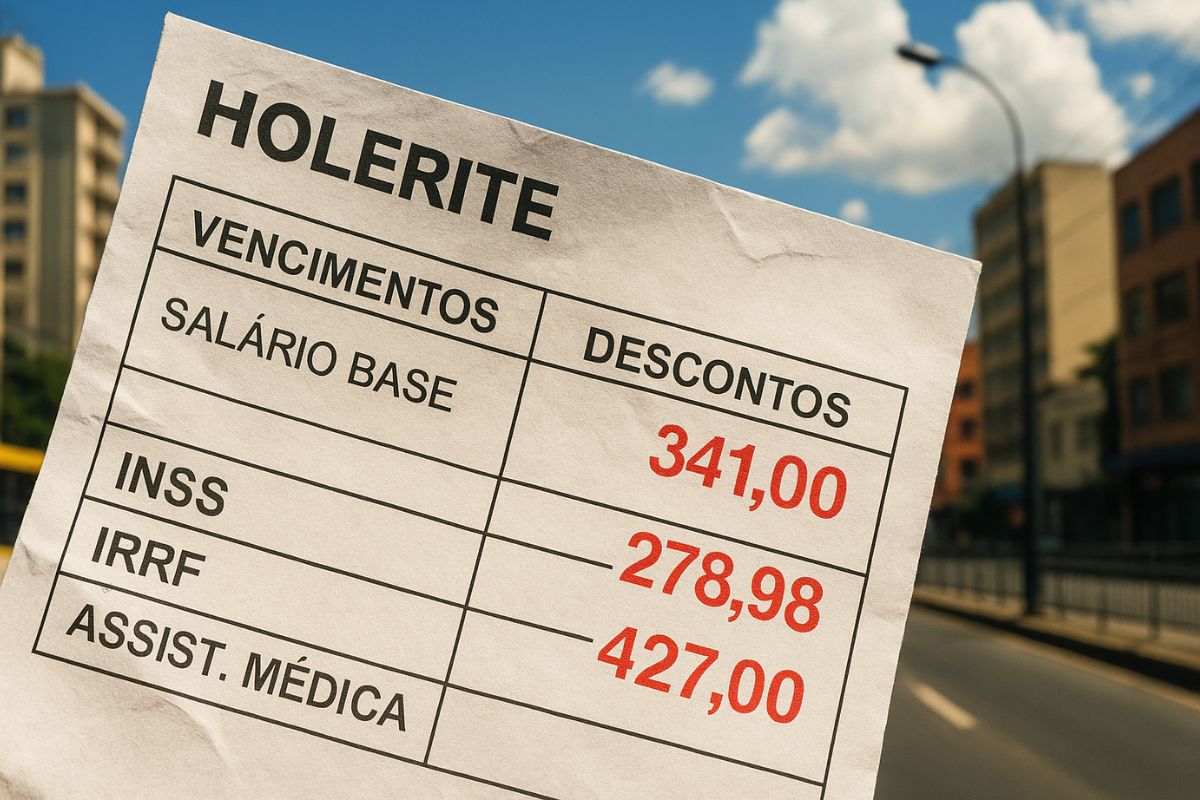
Illegal Deductions From Salary: Learn to Identify and Protect Yourself. Brazilian Workers Continue to Face Illegal Deductions From Salary, a Practice That Violates the CLT and Should Be Challenged.
Experiencing illegal deductions from salary is more common than one might think. Many employees accept reduced amounts on their paychecks believing they are part of normal company rules, but the Consolidation of Labor Laws (CLT) is clear: only legally mandated deductions, collective agreements, or those formally authorized by the employee can be made.
According to labor attorney Laura M. Dutra, cases like charging for broken goods, uniforms paid for by employees, or passing on improper costs frequently appear in the retail, industrial, and service sectors. Identifying these situations is essential to avoid financial losses and ensure the reimbursement of amounts.
Why Is Deducting Expired or Damaged Goods Illegal?
One of the most common examples of illegal deductions from salary occurs when companies attempt to transfer losses from damaged or expired goods to the employee. According to the CLT, these risks are part of business activity and should be borne exclusively by the employer.
-
Larger than entire cities in Brazil: BYD is building a 4.6 km² complex in Bahia with a capacity for 600,000 vehicles per year, but the discovery of 163 workers in conditions analogous to slavery has shaken the entire project.

-
With an investment of R$ 612 million, a capacity to process 1.2 million liters of milk per day, Piracanjuba inaugurates a mega cheese factory that increases national production, reduces dependence on imports, and repositions Brazil on the global dairy map.

-
Brazilian city gains industrial hub for 85 companies that is equivalent to 55 football fields.

-
Peugeot and Citroën factory in Argentina cuts production by half and opens a layoff program for more than 2,000 employees after Brazil drastically reduced purchases of Argentine vehicles.


The rule only changes in cases of willful misconduct or gross negligence by the employee, duly proven. Outside of this, any deduction of this kind is considered abusive and can be challenged in court.
Uniforms Cannot Be Deducted From Employee
Another frequently overlooked point is regarding uniforms. If the company requires their use, it is obligated to provide them free of charge and also bear the costs of replacement in case of normal wear and tear.
Deducting uniforms from the paycheck constitutes irregular practice. The exception only exists if it is proven that the employee intentionally damaged the item or acted with gross negligence, and even then, there must be provision in the contract or collective agreement.
FGTS Is Not a Deduction From Salary
Many employees confuse the presentation of FGTS on their paychecks with a deduction. In reality, FGTS is not deducted from salary. It is the company’s obligation to deposit 8% of the amount into an account linked to the employee, without passing on any costs.
Any attempt to pass this amount on to the employee is illegal and should be challenged. FGTS is a right guaranteed by law and serves as protection in cases of unjust dismissal, housing financing, and retirement.
How to Act in the Face of Unjust Deductions
If you identify illegal deductions from salary, the first step is to question the Human Resources department and request documented explanations. It’s also important to keep paychecks, emails, and conversations that prove the practice.
If the situation persists, the employee can seek the union of their category or file a lawsuit in Labor Court to recover improperly deducted amounts. The CLT guarantees protection and provides for restitution in these cases.
Official Sources That Ensure Your Rights
The main legal bases that regulate this issue are:
- Consolidation of Labor Laws (CLT), especially Articles 462 and following.
- Norms Regarding FGTS, which establish the employer’s obligation to deposit 8% without passing costs to the employee.
Illegal deductions from salary should not be accepted as “normal” by the employee. Identifying these abuses is essential to keep your income protected and ensure compliance with the law.
Have you ever experienced a deduction that you considered unfair? How did you react? Do you think Brazilian workers are well aware of their rights? Share your opinion in the comments and help broaden this discussion.










Seja o primeiro a reagir!