





 Portuguese
  English
  Spanish
  3 min of reading
  0 comments


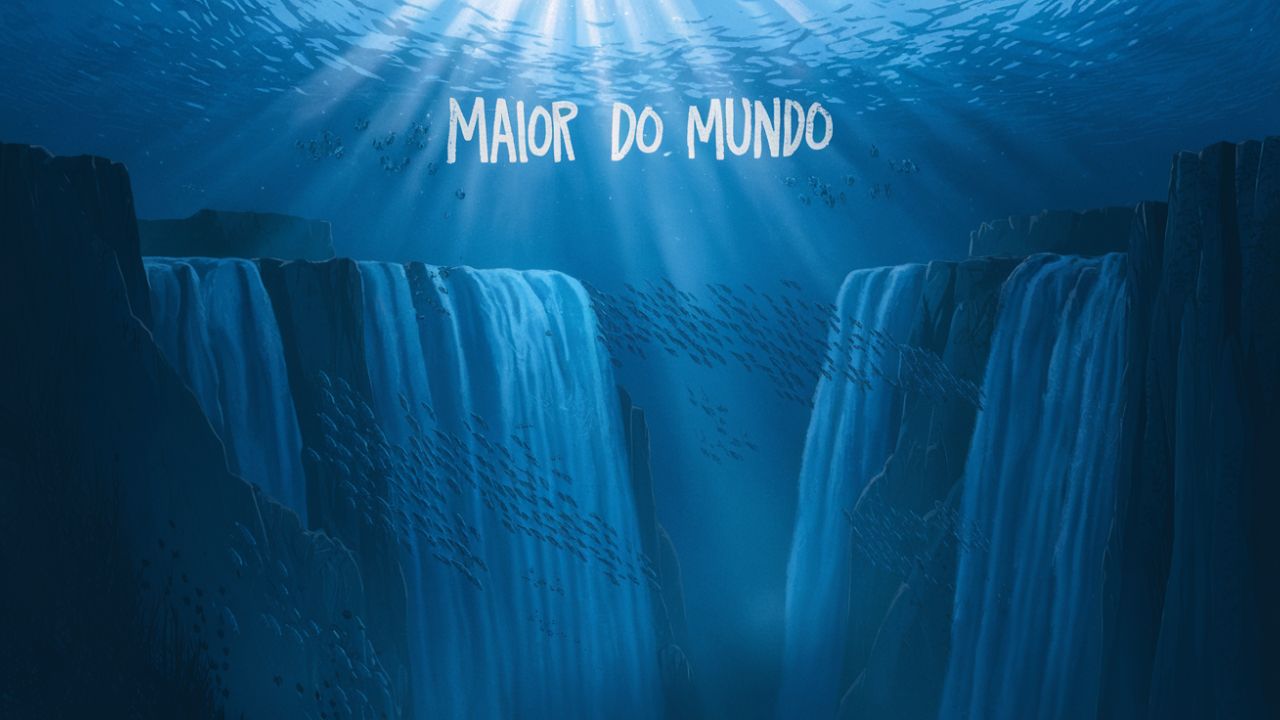
With an Impressive Drop of 3,500 Meters, the Largest Waterfall on Earth Is Submerged Between Iceland and Greenland, Moving More Water than the Amazon River and Impacting Global Climate.
When you think of waterfalls, you picture the majestic Niagara Falls or the stunning Angel Falls, right? But what if I told you that the largest waterfall on Earth is not on solid ground but submerged in the depths of the ocean? Yes, the Denmark Strait waterfall redefines everything we know about the power of water.
This hidden wonder has such grand proportions that it makes any terrestrial waterfall seem modest. Let’s dive into this story and discover why this submerged giant is so important to our planet.
What Are Waterfalls?

The waterfalls we see on solid ground form when water flows over a steep drop, such as a cliff or a ledge. This continuous flow carves the rocks, creating breathtaking landscapes. Besides their beauty, waterfalls sustain unique ecosystems, providing moisture and creating ideal environments for specific plants and animals.
-
A couple buys an old chalet, breaks the kitchen floor for renovation, and finds over a thousand coins of gold and silver hidden since the English Civil War over 4 centuries ago.

-
Rigid bags with their days numbered: new trend prioritizes comfort in 2026.

-
YouTuber creates an excavator equipped with a giant 4.5-meter sword to challenge his brother to a rematch, and the invention quickly goes viral on social media.

-
The U.S. Army surprises the world by presenting the UH-60MX Black Hawk helicopter capable of flying without pilots, controlled by a tablet, featuring the MATRIX system, smart sensors, and full autonomy in real combat and rescue missions.

In contrast, underwater waterfalls, although invisible to the naked eye, are no less spectacular. They do not “fall” in the same way as terrestrial waterfalls. Instead, they are formed by currents of water that move due to differences in density, temperature, and salinity. It’s as if the ocean has its own secret cascades.
The Denmark Strait Waterfall: The Hidden Giant
Located between Iceland and Greenland, this submerged waterfall has an impressive drop of 3,500 meters — more than three times the height of Angel Falls, the tallest terrestrial waterfall. Its width of about 480 kilometers makes it a colossal force on the ocean floor.
The Denmark Strait waterfall forms due to the meeting of cold waters from the Nordic seas with the warmer waters of the Atlantic. The difference in density between these waters creates a powerful flow that transports colossal volumes of water every second. It is a phenomenon that occurs silently but with a gigantic impact.
The Origin and Importance of the Largest Waterfall on Earth
This submerged waterfall is a relic of the last Ice Age, formed between 17,500 and 11,500 years ago. As glaciers sculpted the landscape, ocean currents shaped the unique structure we see today. This natural wonder remains active due to the continuous interaction between the currents and geological conditions.
In addition to its magnitude, the Denmark Strait waterfall plays a crucial role in thermohaline circulation — the “engine” that regulates global ocean currents. This system distributes heat, nutrients, and energy, affecting climate, sea levels, and even marine life across the planet.
Comparisons
While waterfalls like Niagara impress with noise and visible force, the Denmark Strait waterfall operates silently, hidden from our eyes. With 3.2 million cubic meters of water flowing every second, it far exceeds the volume of the Amazon River, but its grandeur is perceived only with advanced instruments.
This underwater waterfall is a reminder that not all powerful things need to be visible. Just as the invisible forces of wind and gravity shape our world, this submerged giant works behind the scenes, sustaining life and balancing the planet.
The largest waterfall on Earth, hidden in the Denmark Strait, shows us that the planet is full of wonders beyond our imagination. Even though we cannot see it, its presence influences life around the globe, regulating currents and shaping climates. It is a powerful reminder that the most important forces are not always in plain sight — sometimes, they are hidden in the depths of the ocean.








-

-

3 pessoas reagiram a isso.