





 Portuguese
  English
  Spanish
  4 min of reading
  0 comments


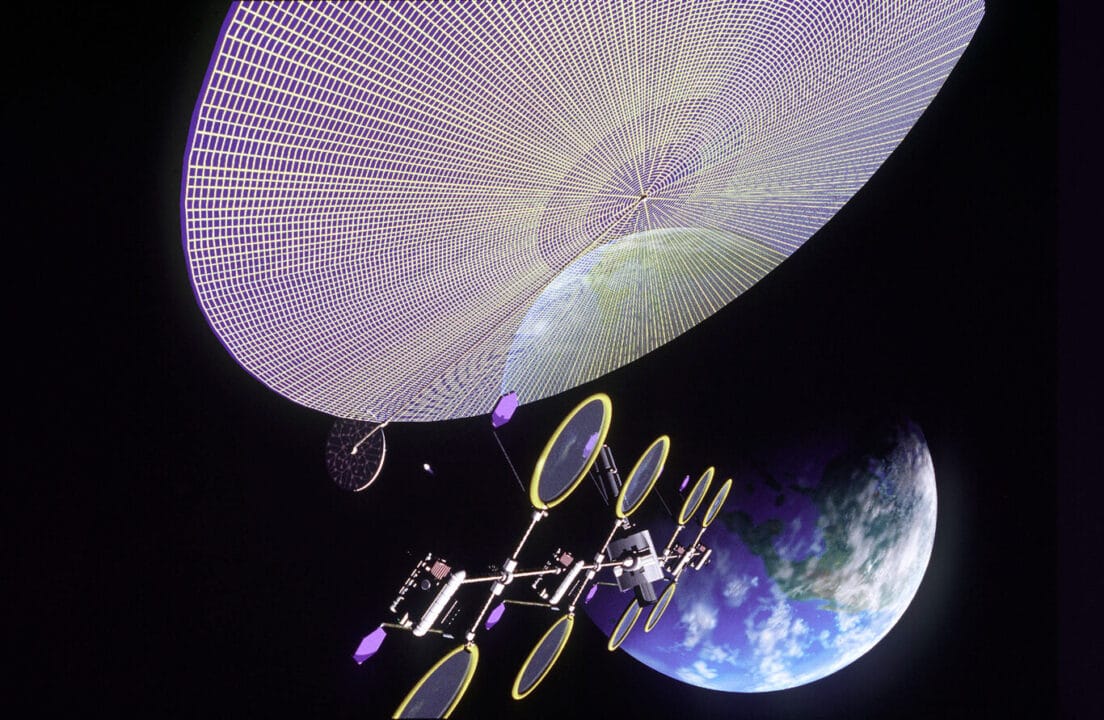
Solar Energy In Space: China Leads Innovation With An Ambitious Project To Harvest Solar Energy In Space And Transmit It To Earth. Learn More About This Technology And Its Challenges
Photovoltaic solar energy is one of the most promising renewable energy sources to reduce our dependence on fossil fuels. On the path to sustainability, we have developed numerous projects that seek to harness the endless electromagnetic radiation from our sun to generate electricity. From the largest solar farm in the world to the installation of panels in our own homes.
However, our technological resources to make the most of photovoltaic solar energy are far from ideal. The panels we install in different parts of the planet —including far from land— have a significant disadvantage: they are affected by atmospheric solar radiation attenuation and by nighttime phases. In other words, it is not a constant energy source, as marine energy is.
The Idea Of Setting Up A Solar Farm In Space
So, why not collect solar energy in space and send it to Earth? This idea, which seems straight out of science fiction, has been circulating for several decades. The United States was a pioneer in exploring this type of alternative in the 1970s, allocating an initial budget of 80 million dollars to study its feasibility and boosting NASA with different projects.
-
Renewable energy advances over protected areas in Brazil, and a survey by the Energy Transition Observatory reveals silent impacts that challenge environmental conservation and pressure sensitive traditional territories.

-
Rio Grande do Sul accelerates energy transition: State invests in renewable technologies and consolidates decarbonization strategies and pathways to attract billions in new industrial investments.

-
With 160,000 m² of collectors, an area larger than 20 football fields, Silkeborg, in Denmark, hosts a solar thermal plant that heats 19,500 homes and could become the largest solar heating plant in the world.

-
A study reveals the expansion of renewable energy procurement in Brazil and shows how companies are taking advantage of opportunities to reduce expenses, ensure energy efficiency, and strengthen strategic environmental commitments.


China, in turn, began working on space solar power (SSP) technology in 2012. Later, in 2015, the Chinese Academy of Space Technology (CAST) presented a roadmap to develop the project. This outlined that by 2035, it would launch a 200-ton SSP station with a generation capacity of several megawatts.
The first tests of energy generation and transmission from orbit were supposed to start in 2030, but according to the South China Morning Post, an article published in the journal Chinese Space Science and Technology shows the updated plans of the Asian giant, which intends to start testing two years earlier than originally planned.
China Takes This Idea Seriously
But this is not just a simple statement of intentions. China seems to take this idea seriously, despite all the challenges it faces. According to Eurasia Times, the country is already building a receiving station in the city of Chongqing to aid in the research of its ambitious project and has already conducted energy transmission tests from aerostatic balloons.
The updated plans indicate that this year the first satellite will be launched to test the SSP. It will have the capacity to provide enough energy to meet the energy needs of a few houses. However, researchers are still unsure about which transmission method to use, whether microwaves or lasers, as each has its pros and cons.
The System Could Use A Microwave Energy Transmitter
In the case of microwaves, researchers believe this alternative could maximize system efficiency, preventing energy loss in the atmosphere. However, they are uncertain whether this could adversely affect people’s health. For this reason, a buffer zone of several hectares would be established around the receiving station.
Additionally, this alternative would require a transmitter antenna several meters (possibly kilometers) in diameter in orbit and a receiving antenna about 10 kilometers on Earth. It is believed that gravity or solar winds could cause movements that disrupt energy transmission.
If all goes well, after the first launch, other satellites would be launched to complete a huge solar station in orbit. China hopes that by 2035 the system will be capable of producing 10 MW. By 2050, the capacity is expected to increase to 2 GW.

Challenges And Future Perspectives
The plan, while stretched over time, seems very ambitious but is not without significant challenges it needs to overcome. “Such a large infrastructure in space could disturb many countries, especially those without the technology or capability to build one,” points out Dong Shiwei from the National Laboratory of Science and Technology at the Chinese Academy of Technology.
It is noteworthy that China is not the only country interested in exploring the possibilities of SSP. The United Kingdom plans to have its first space solar power plant of 30 GW operational by 2040 to “provide 30 percent of the country’s electricity demand.” Over time, we will know whether these proposals can succeed.










Seja o primeiro a reagir!