





 Portuguese
  English
  Spanish
  5 min of reading
  0 comments


Understand How Renewable Energy Regulation Boosts the Sector, Attracts Investments, and Ensures Security in the Global Energy Transition.
Currently, the advancement of clean energy sources is profoundly transforming the way we produce and consume electricity worldwide.
Therefore, for this transition to occur in a safe, efficient, and fair manner, one element becomes essential: renewable energy regulation.
Although the topic may seem technical, it directly influences the growth of the sector, the entry of new investors, and consequently, the population’s access to more sustainable sources.
-
The Brazilian state accelerates industrial competitiveness with a focus on the extraction of strategic minerals to boost the energy transition in Goiás.

-
A Canadian retiree creates a hydroelectric system on a real river, generating energy continuously throughout the day and demonstrating how the power of water can supply a house with stability even in a simple structure.

-
Petrobras reaffirms its commitment to the market and ensures that it will carry out the energy transition safely to maintain national sovereignty.

-
Researchers discover a possible hydrogen deposit of up to 46 million tons beneath an ancient coal basin, and the volume could exceed half of the entire global production.


Moreover, the importance of regulation grows as the world moves towards reducing the impacts of climate change.
Thus, an increasing number of countries are setting ambitious targets to increase the share of renewable energy in their energy matrices.
Therefore, the success of these plans depends on clear and adapted rules to local realities.
How Energy Regulation Emerged Globally
First of all, to understand the current role of norms and policies aimed at renewable energies, we need to go back in time and observe how energy regulation evolved.
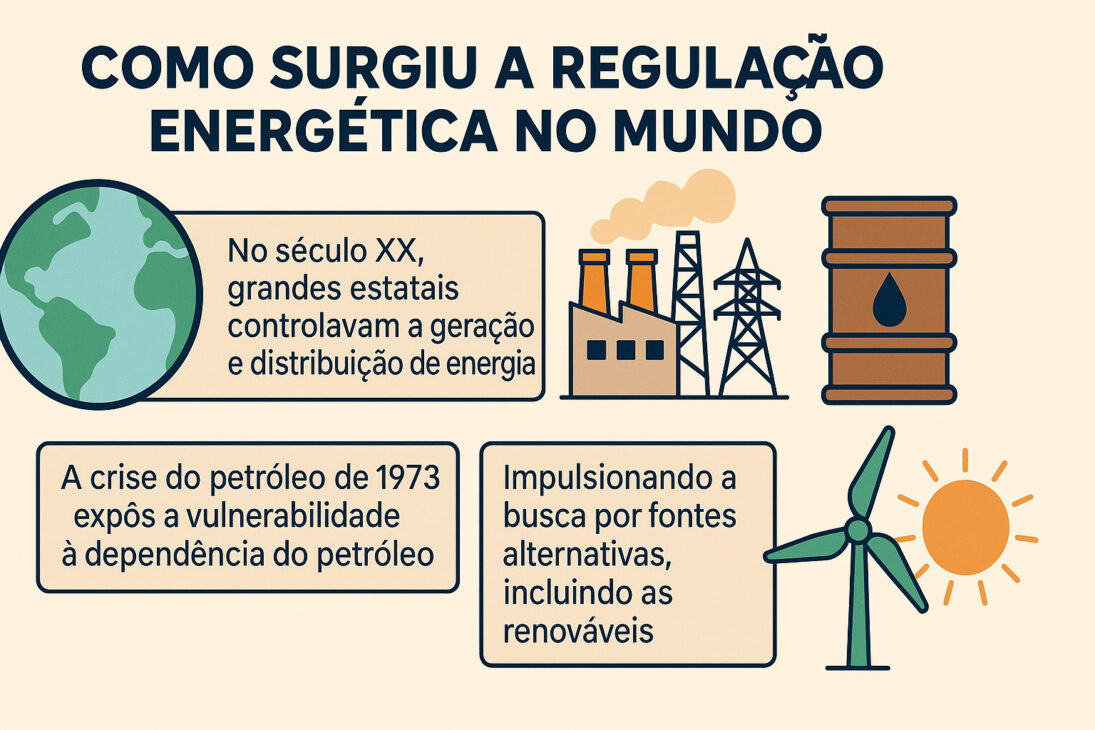
In the 20th century, most countries operated under a centralized model, where large state-owned enterprises controlled all energy generation and distribution.
However, this scenario changed with the rise of environmental concerns and the oil crisis of the 1970s.
According to the International Energy Agency (IEA, 2023), the 1973 oil crisis marked a turning point.
It exposed countries’ vulnerability to dependence on oil and spurred the search for alternative energy sources, including renewables.
In this context, governments began to realize the need to diversify their energy matrices, seeking less polluting and less fossil fuel-dependent sources.
However, as explained in the World Bank report (2022), the lack of specific regulations and economic incentives limited the development of clean energy.
On the other hand, in the 1990s, the international landscape changed significantly regarding renewable energy regulation.
The signing of the Kyoto Protocol in 1997, under the auspices of the United Nations (UN), committed various countries to reduce greenhouse gas emissions.
As highlighted by the United Nations Environment Programme (UNEP, 2021), this agreement created a favorable environment for the growth of solar, wind, biomass, and other clean energy sources, in addition to fostering specific public policies.
This change accompanied the opening of energy markets and the creation of independent regulatory bodies, which began to establish norms to balance the interests of consumers, producers, and the environment.
What Is Renewable Energy Regulation
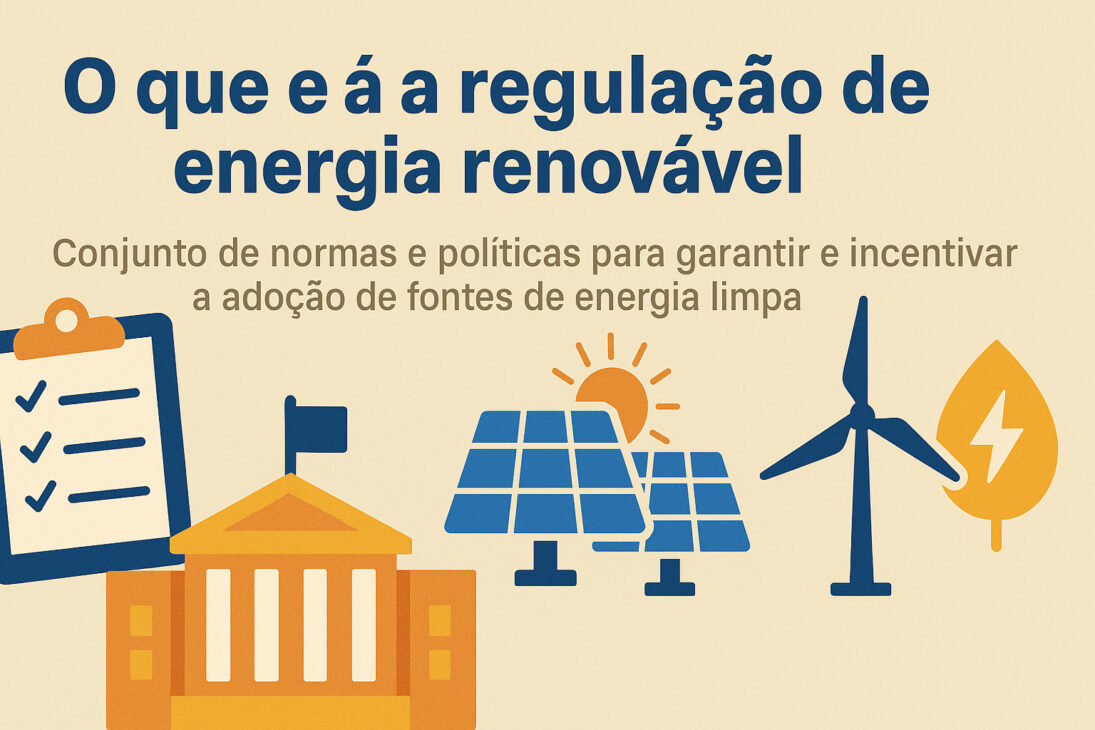
Indeed, based on international agreements and the growing demand for sustainability, governments began to create energy policies aimed at renewable sources.
Thus, specific legislations, incentive tariffs, clean energy auctions, and regulatory agencies emerged to monitor and ensure compliance with the norms.
Therefore, renewable energy regulation has become a fundamental cog to provide legal security to projects and encourage investments.
Imagine, for example, a scenario in which any company could install solar panels or wind turbines without any technical or environmental requirements.
This would jeopardize the stability of the electricity system, increase impacts on the environment, and create disputes with other sectors.
Thus, renewable energy regulation exists precisely to prevent these issues.
Hence, through clear and well-defined rules, governments organize the growth of the sector in a balanced manner, ensuring that renewable energy integrates into the national system with quality, safety, and responsibility.
Additionally, the regulation sets targets, controls tariffs, protects consumers, stimulates innovation, and corrects market distortions.
Without it, we would not be able to ensure that the energy transition occurs sustainably and equitably for all involved.
Who Regulates Renewable Energy in Brazil
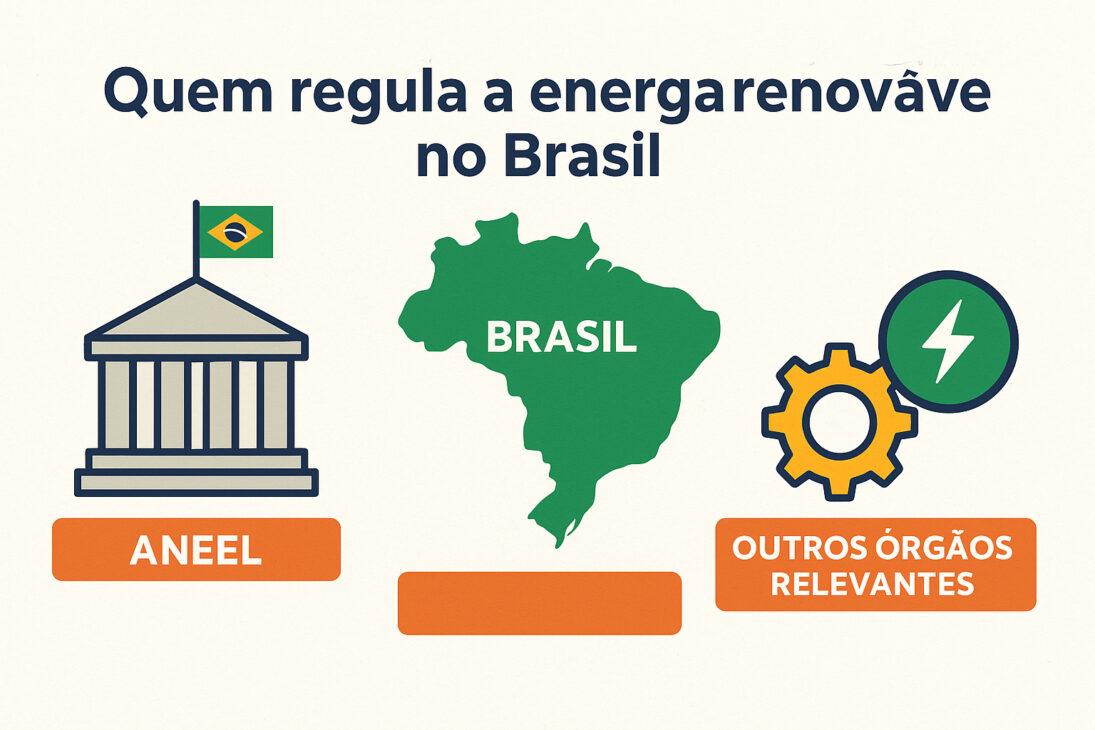
In Brazil, the National Electric Energy Agency (ANEEL) regulates the electricity sector. Thus, it sets norms, oversees compliance with obligations, and approves contracts and tariffs.
According to ANEEL’s official website (2024), since its creation in 1996, the agency has promoted the modernization of the Brazilian electricity sector, with special attention to encouraging renewable sources.
When it comes to renewable energy, ANEEL plays a strategic role in project approval, defining energy purchase auctions, and overseeing companies in the sector.
Additionally, other agencies also play significant roles.
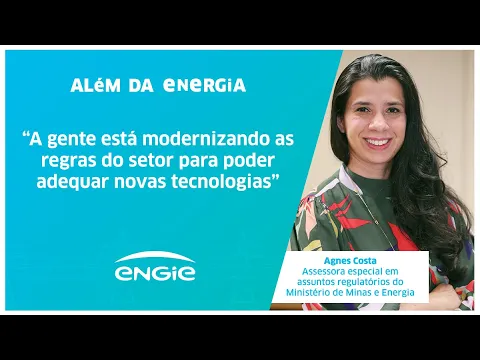
The Ministry of Mines and Energy (MME), as detailed in its Ten-Year Energy Plan 2030, defines the guidelines for the country’s energy policy.
Meanwhile, the National Electric System Operator (ONS) coordinates the operation of the interconnected system, ensuring its safety.
Therefore, the joint action of these institutions, combined with a solid legal framework, allows the country to advance safely towards energy sustainability.
It is worth mentioning that Brazilian legislation evolves to adapt to new technologies and the increased participation of renewable sources, always seeking to balance the interests of the private sector, government, and civil society.
Impacts of Regulation on the Market and Consumers
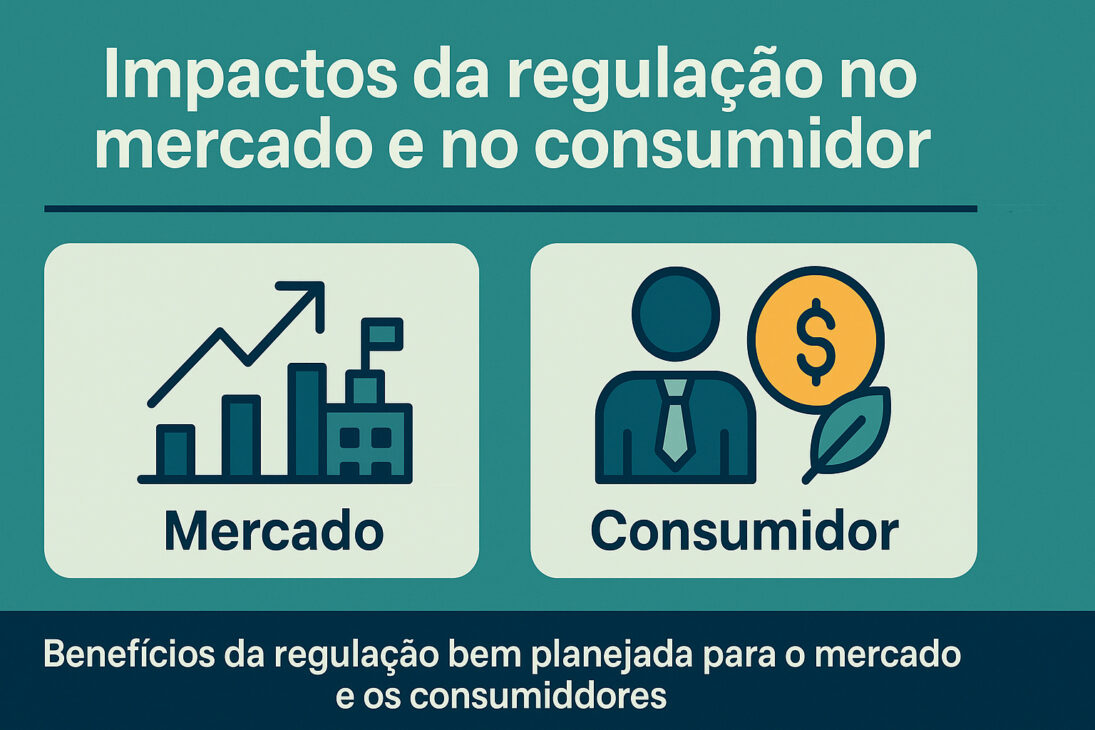
When regulation is well planned, the market reaps many benefits.
Thus, companies gain more confidence to invest, competition increases, new technologies emerge, and innovation grows.
The consumer also benefits, with more supply options, potentially lower tariffs, and access to clean sources.
Moreover, regulation directly influences the business models adopted by companies.
For example, policies that encourage the procurement of renewable energy in the free market attract consumers looking to reduce their environmental footprint.
On the other hand, strict environmental licensing requirements or energy efficiency targets force companies to improve their processes.
With consumers increasingly concerned about sustainability, regulation that promotes transparency and access to information about the origin of energy becomes essential.
This way, consumers choose suppliers aligned with their values, increasing demand for renewable sources.
Additionally, regulation helps reduce costs over time, whether through economies of scale, technological improvements, or increased competition, reflecting in more affordable tariffs for the population.
The Main Challenges of Regulation in the Future
Despite advances, the sector faces many challenges.
One of the main challenges is adapting regulation to the accelerated pace of technological changes.
The digitization of the electricity sector, the growth of energy storage in batteries, and the expansion of electric mobility require new, more flexible rules aligned with the current reality.
Another challenge is the decentralization of generation.
With more consumers also becoming generators, it is necessary to rethink the role of distributors, adjust system usage tariffs, and ensure balance between centralized and distributed generation.
We also need to ensure that renewable energy regulation is inclusive.
This means considering policies that benefit not only large companies but also rural communities, small producers, and regions further from major urban centers.
Additionally, coordination among different levels of government and alignment of public policies with international climate goals will be crucial for the success of regulation in the future.
According to the Intergovernmental Panel on Climate Change (IPCC, 2023), integration between energy and environmental policies will be decisive in achieving global carbon reduction targets.
Thus, the pursuit of innovative solutions that combine sustainability, economic development, and social inclusion will continue to challenge lawmakers and regulators.









Seja o primeiro a reagir!