





 Portuguese
  English
  Spanish
  6 min of reading
  0 comments


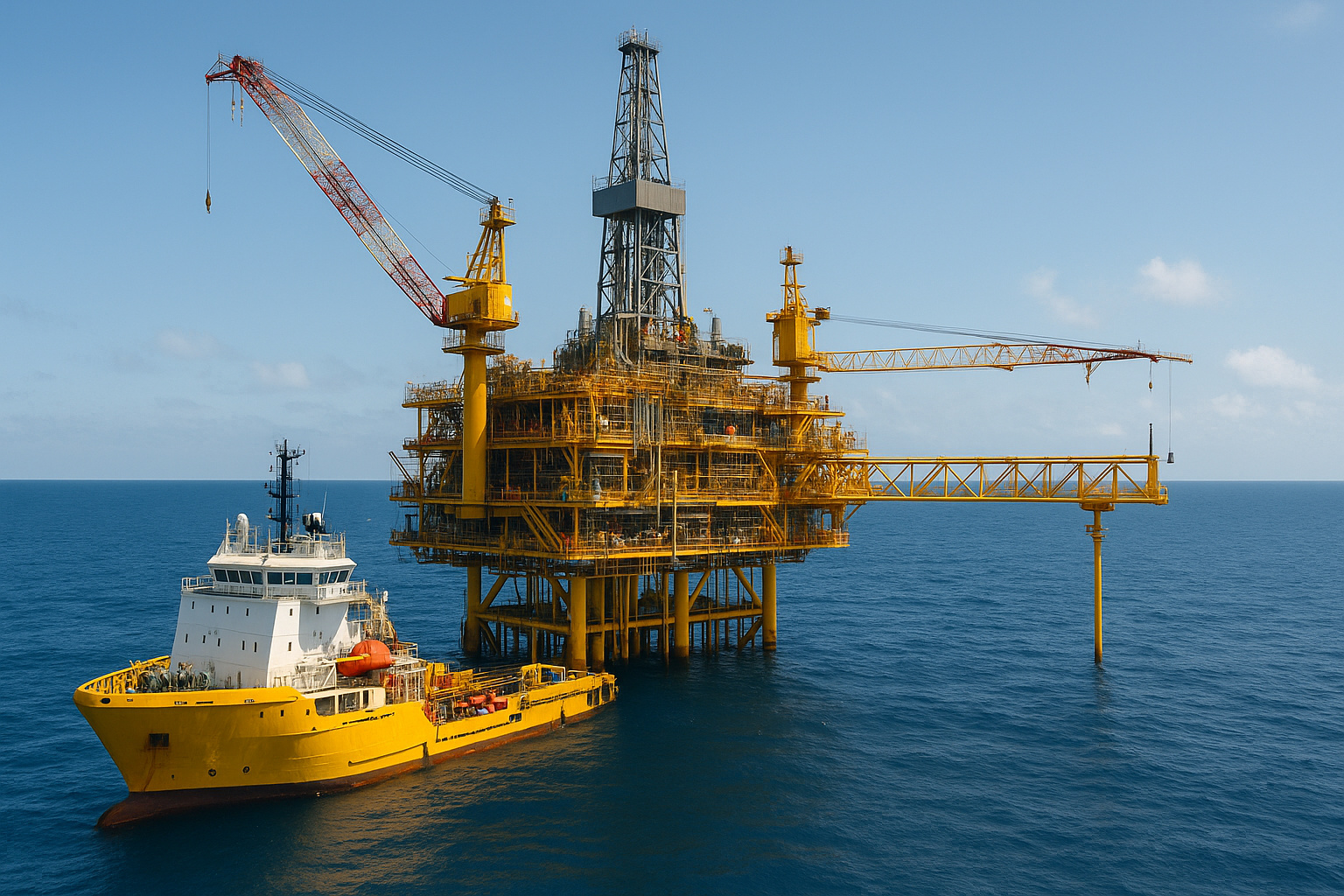
Understand How the Offshore Career Impacts the Global Market, Creates Jobs, and Shapes Sectors Like Oil, Gas, Logistics, and Technology in a Strategic Way.
The offshore career undoubtedly sparks curiosity and admiration in many people.
Moreover, with attractive salaries, international opportunities, and a daily life completely different from onshore work, it represents more than just a lifestyle.
It generates billions of dollars every year and, consequently, directly influences the global market, especially in oil and gas, logistics, engineering, and technology.
-
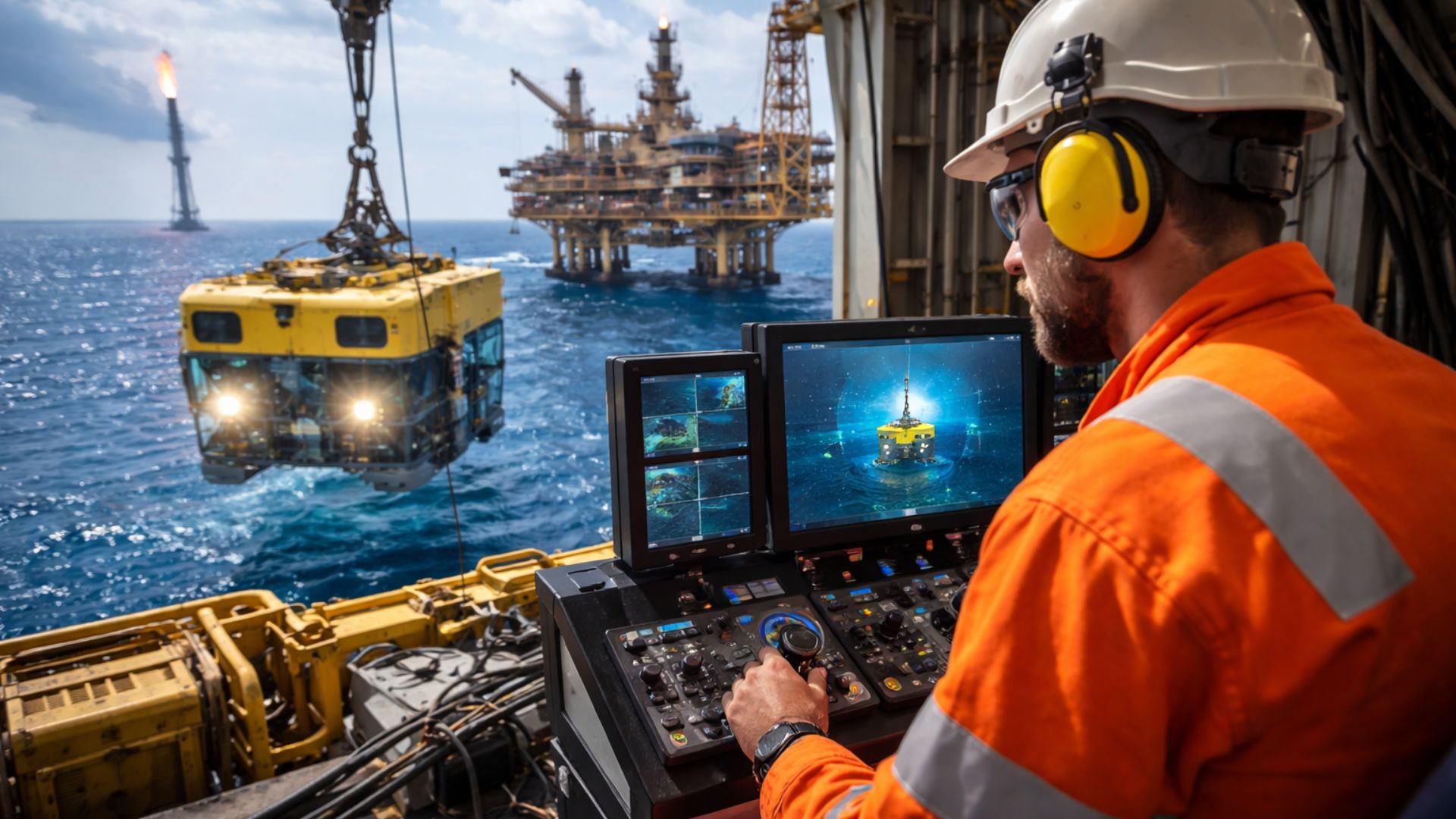
With Announcement for ROV Course in Partnership with Zen, Rio das Ostras Aims to Transform Technical Qualification into Real Jobs in the Competitive Offshore Market
-
Free Offshore Steward Course in São Gonçalo Emerges as a Strategic Opportunity for Those Seeking Qualified Work at Sea

-
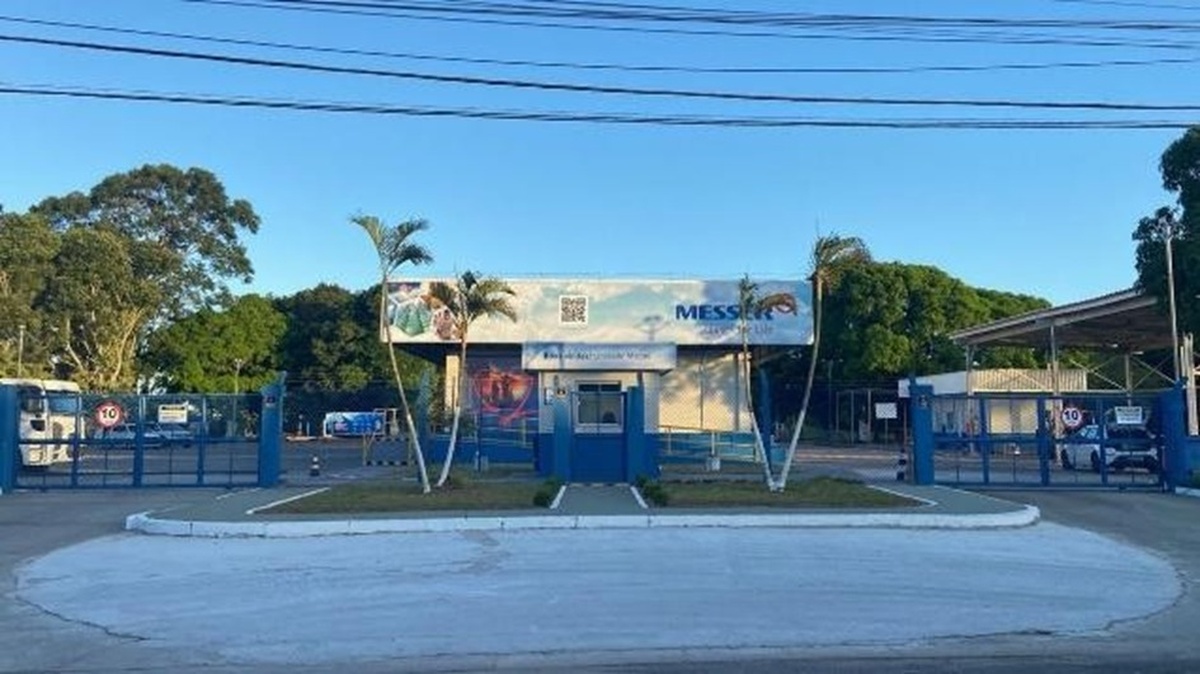
Messer Gases Reopens Branch in Macaé to Serve Offshore Oil and Gas Market in Northern Fluminense with Supply of Oxygen, Argon, and CO₂
-
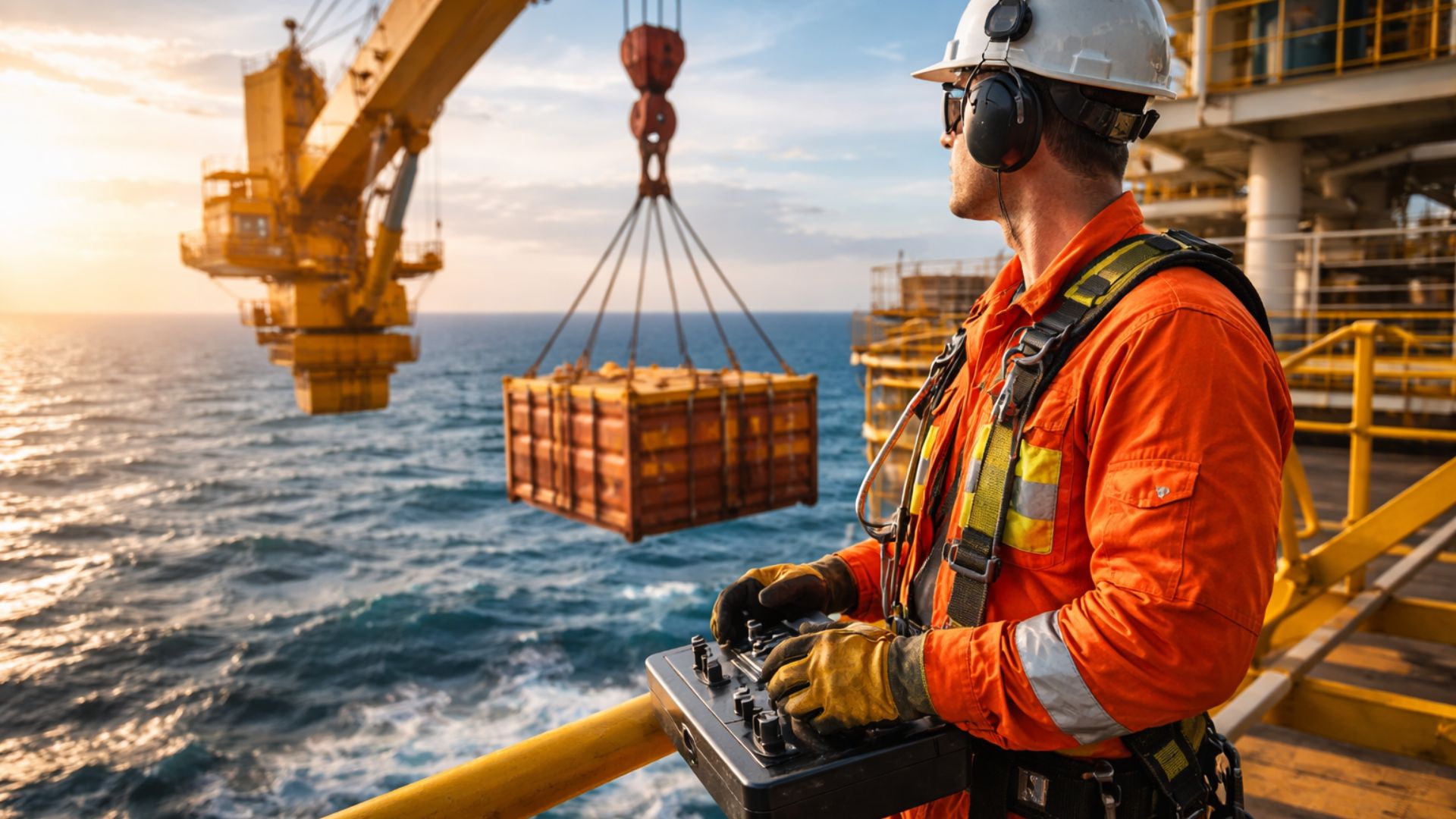
Offshore Profession Simplified: Comprehensive Guide Reveals How to Trade Common Routine for High Salaries and Long Breaks in Life Aboard in the Oil Sector

To understand how the offshore career became so relevant, it is essential, first of all, to look at its origins.
The term “offshore,” in literal translation, means “away from shore”.
In a professional context, it relates to activities conducted at sea, typically on oil and natural gas extraction platforms.
According to the International Association of Oil & Gas Producers (IOGP), the first commercial offshore oil operations began in the United States in 1947.
When Humble Oil drilled the first well in shallow waters in the Gulf of Mexico. As noted by the IOGP, this pioneering exploration marked the beginning of the expansion of the offshore industry.
Subsequently, as reported by the International Energy Agency (IEA), during the 1960s and 1970s, the North Sea became an important exploration hub, especially for countries like the United Kingdom and Norway, enhancing the economic and technological relevance of the sector.
Furthermore, the development of naval technology and engineering techniques enabled significant advances.
According to the American Petroleum Institute (API), these innovations allowed companies to reach deeper and more challenging waters, with floating platforms, mobile drilling rigs, and enhanced safety systems, pushing the boundaries of what previously seemed impossible.
The Strength of the Offshore Industry in Brazil
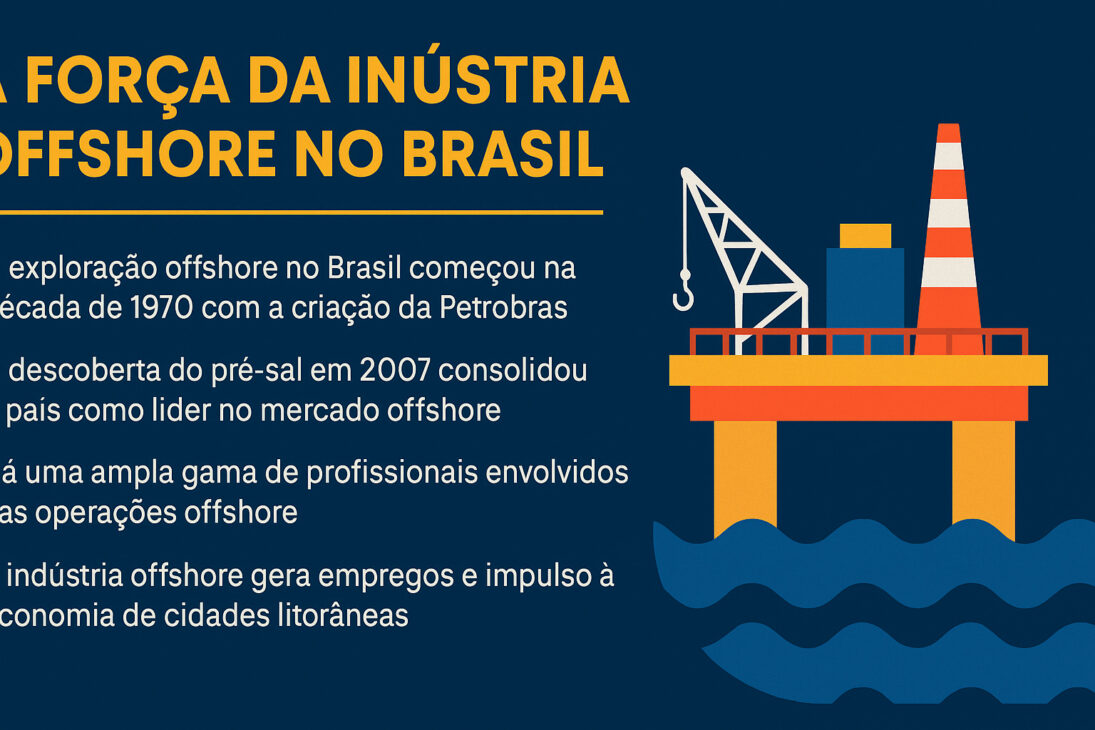
In Brazil, offshore exploration gained traction starting in the 1970s with the creation of Petrobras, as reported on the official website of the state-owned company. Founded in 1953.
Petrobras began its offshore activities in 1968 and, according to data from the National Agency of Petroleum, Natural Gas and Biofuels (ANP), solidified its leadership with the discovery of the pre-salt in 2007, considered one of the largest oil reserves in the world in ultra-deep waters.
According to the Brazilian Institute of Oil and Gas (IBP), this discovery transformed Brazil into one of the main players in the global offshore market, increasing the demand for specialized professionals and stimulating the development of national technologies.
Moreover, the offshore career in Brazil goes far beyond petroleum engineering.
As highlighted by the IBP, it involves a complex chain of professionals, such as drilling operators, maintenance technicians, nurses, cooks, electricians, welders, geologists, and safety specialists.
All these professionals play essential roles in the functioning of maritime operations.
As Petrobras and ANP explain, workers typically stay on board for long shifts – for example, 14 days on board and 14 on land – and each team needs to work with precision, discipline, and cooperation to ensure the safety and efficiency of the operations.
Furthermore, the offshore industry contributes to the economic development of the regions where it operates.
According to an IBP report, many Brazilian coastal cities have transformed into industrial and logistics hubs due to the proximity of maritime operations, boosting service sectors, infrastructure, and local commerce, thus generating direct and indirect jobs.
Attractive Salaries and Personal Challenges
One of the most mentioned attractions in the offshore career is the salary.
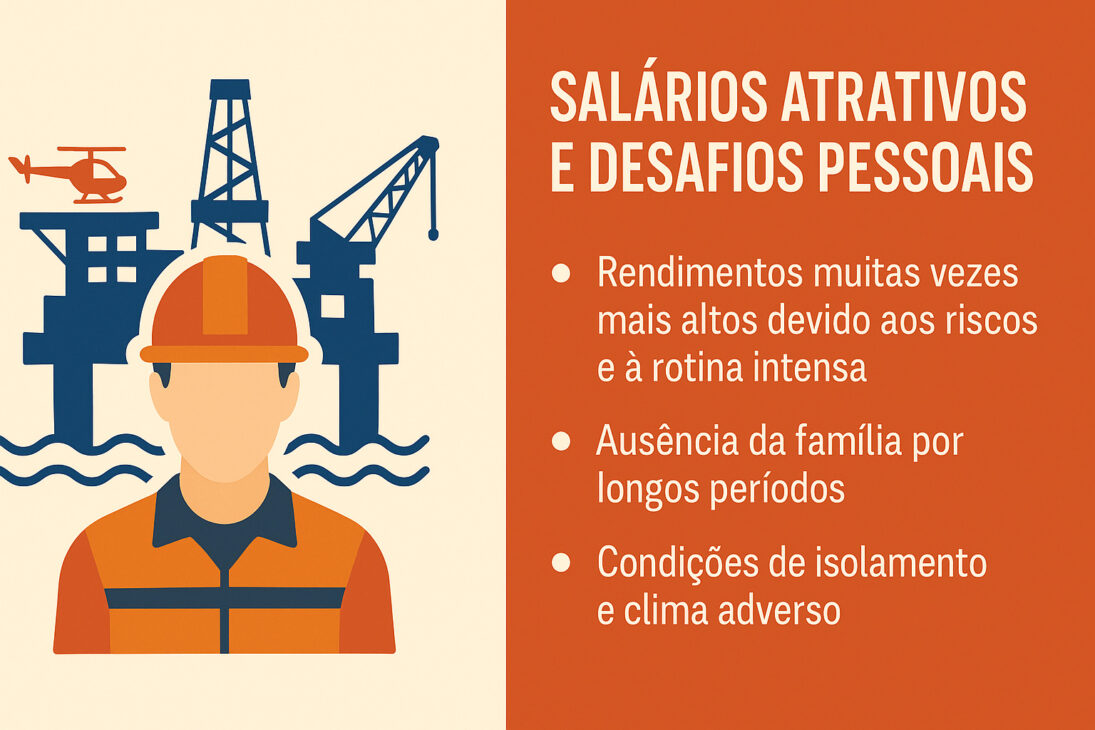
According to research conducted by the National Union of Offshore Drilling and Assembly Companies (SINDIPES), offshore earnings tend to be higher than those of equivalent positions onshore, precisely due to the risks and the intense routine.
However, the financial factor is not the only differential.
As pointed out in the Health and Safety Manual of the International Association of Oil & Gas Producers (IOGP), many professionals seek to build a solid career in international companies.
Gaining multicultural experience and learning to work under extreme conditions, which greatly enhances their resume.
Nonetheless, the offshore routine presents challenges that cannot be ignored.
The absence of family for long periods, intense interaction with colleagues, isolation, and adverse weather conditions require emotional preparation.
Therefore, companies invest in wellness, psychological support and behavioral training programs to ensure the mental health of on-board teams, according to the IOGP.
Additionally, physical preparation is another important aspect.
The offshore environment requires good health and endurance, as the work can be heavy and weather conditions unpredictable.
Consequently, many professionals adopt a balanced diet and engage in physical activities to keep their bodies and minds balanced during their time on board.
Safety and Technology as Pillars of the Profession
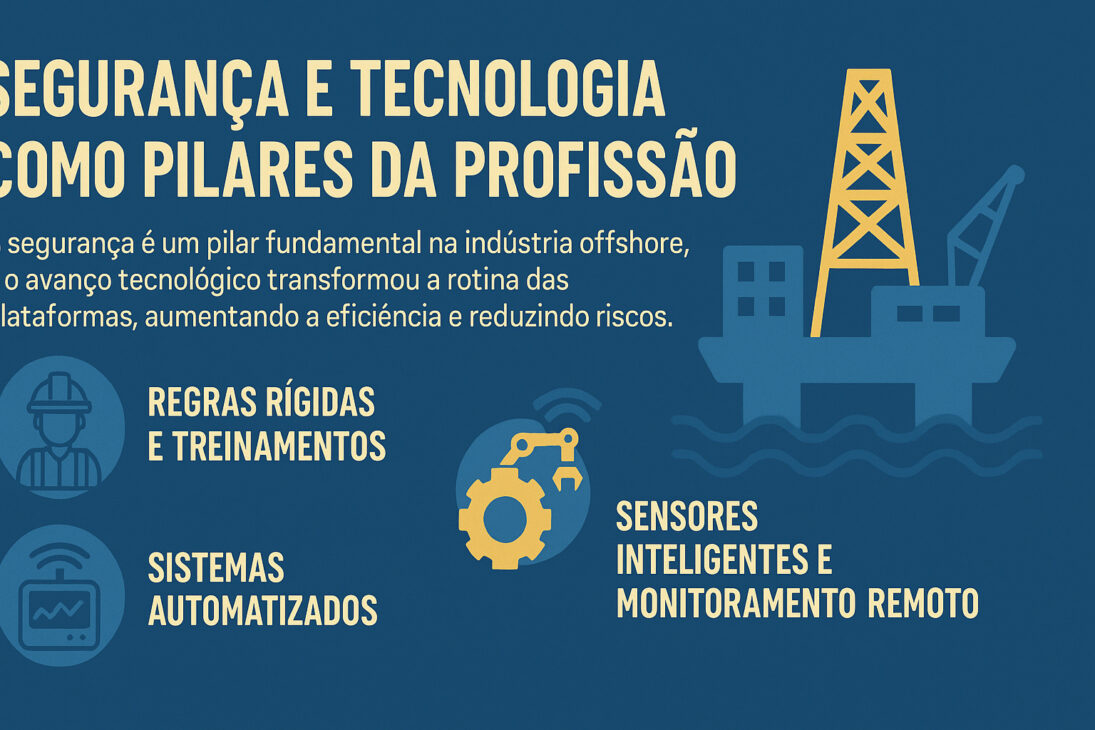
Safety is a fundamental pillar in the offshore industry.
According to the regulations of the Brazilian Association of Technical Standards (ABNT) and the International Association of Oil & Gas Producers (IOGP), each employee must follow strict rules and participate in mandatory training.
The basic safety course for platforms (CBSP) is a requirement for anyone wishing to enter the field, reinforcing the commitment to the physical integrity of workers and the environmental sustainability of operations.
In recent years, technological advancements have significantly transformed offshore routines.
According to the American Petroleum Institute (API), platforms now have automated systems, smart sensors, and remote monitoring, increasing efficiency and reducing risks.
These innovations have created a demand for new professional profiles, such as IT specialists, data analysts, and predictive maintenance experts.
Thus, the digitalization of operations brings the offshore career closer to global trends, such as Industry 4.0 and energy transition, according to the International Energy Agency (IEA).
Moreover, companies invest in innovation to minimize environmental impacts.
According to the IBP, advanced marine monitoring techniques and processes that reduce emissions are becoming increasingly common, reinforcing the role of offshore professionals in protecting the environment.
Impacts of the Offshore Career on the Market
The influence of the offshore career on the market is evident.
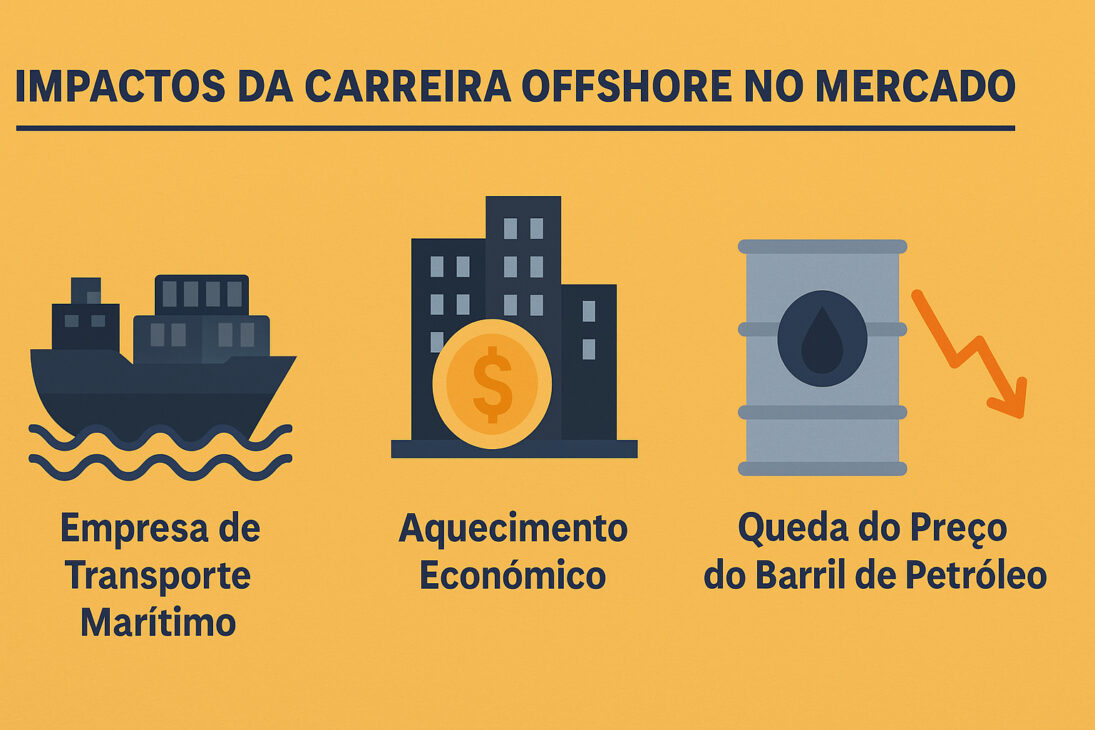
According to a report by the ANP, when maritime activities expand, a ripple effect occurs in other sectors, benefiting companies in maritime transport, shipbuilding, equipment supply, food, and hospitality.
Port cities and regions near industrial hubs experience economic warming, job creation, and infrastructure development, as highlighted by the IBP.
On the other hand, crises in the sector, such as the drop in oil prices or environmental accidents, negatively impact the entire production chain linked to offshore activities.
An example occurred in 2014, when the abrupt devaluation of oil led companies to cut costs and reduce hiring in various regions around the world, according to the International Energy Agency (IEA).
Moreover, the COVID-19 pandemic posed challenges to the offshore career, requiring rapid adaptations in safety and operational protocols.
Still, according to the IOGP, the sector demonstrated resilience and the ability to reinvent itself, preserving jobs and resuming pace with new strategies.
The Future of the Profession and Its Opportunities
Despite the natural ups and downs of the sector, the offshore career remains a solid professional alternative full of opportunities.
With the increasing global demand for energy and the pursuit of cleaner sources, there is room for both professionals from traditional industries and those focused on innovation and sustainability.
For those wishing to enter this market, the first step is to seek technical qualification and the required certifications for each role.
Specialized institutions offer specific courses, and companies themselves promote internal training for continuous improvement.
Furthermore, having a good level of English and being willing to work outside of one’s comfort zone become important differentiators.
In the long run, the trend indicates that the offshore career will become increasingly strategic within the global energy landscape.
The globalization of markets, the growing demand for natural resources, and the pressure for sustainable practices place offshore professionals at the center of decision-making.
Therefore, investing in this trajectory is more than just seeking a good salary: it is to be part of a sector that shapes the present and future of the global economy.
The offshore career, therefore, is not limited to an isolated job at sea. It represents a vital link between the ocean floor and the top of the economy.
With unique challenges and valuable opportunities, it directly influences the market, coastal cities, professional formation, and the directions of the energy industry.
Those who choose this path embrace a unique lifestyle, full of responsibilities, but also achievements.









Seja o primeiro a reagir!