





 Português
  Inglês
  Espanhol
  5 min de leitura
  0 comentários


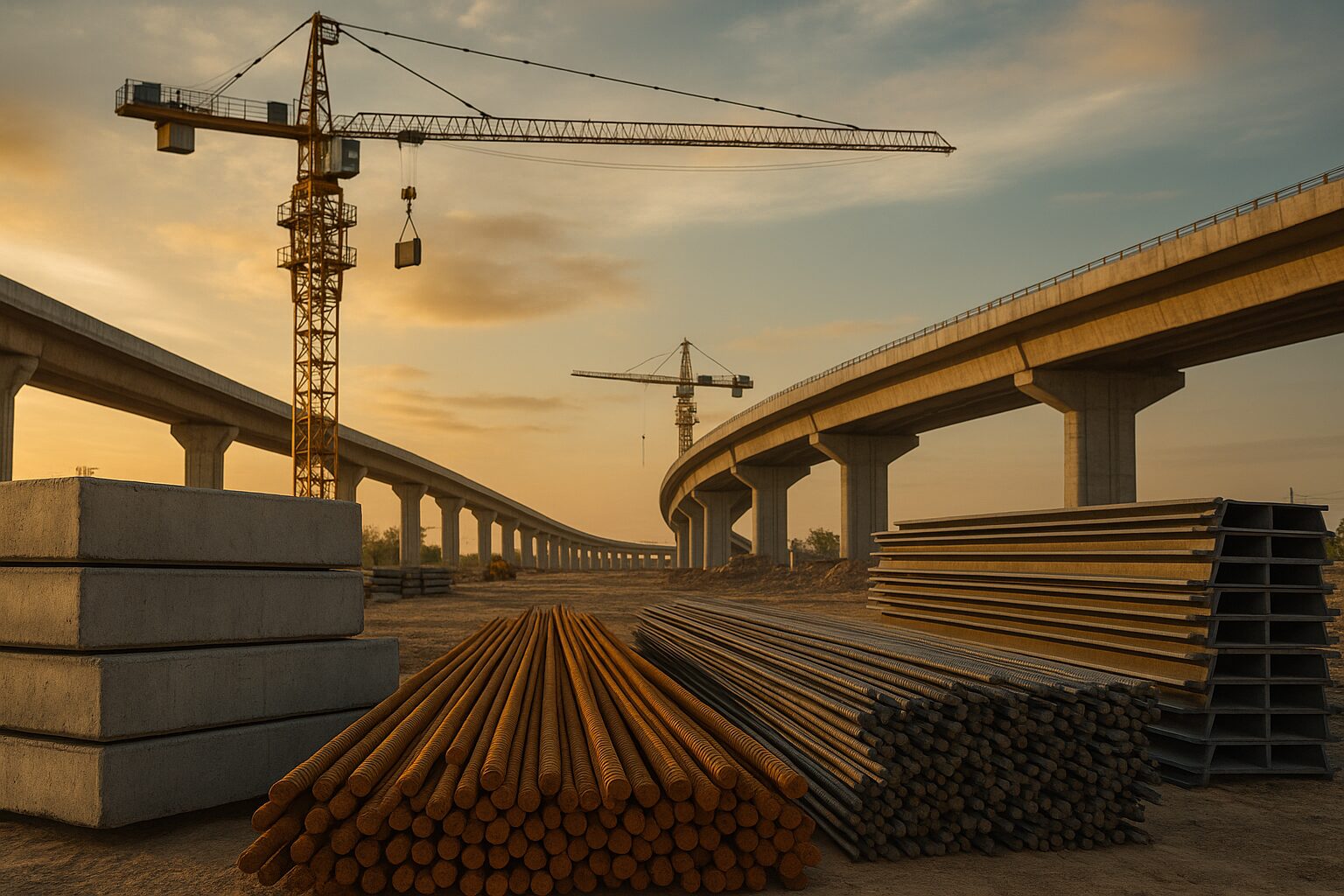
Understand How Infrastructure Materials Impact the Growth of Cities, the Economy, and Construction, from History to Current Innovations.
Since ancient times, the construction of cities, roads, and buildings has always relied on a solid foundation: infrastructure materials.
These materials, although often overlooked by the general public, play a fundamental role in how the world operates.
They support bridges, pave highways, compose sewer systems, railways, and many other structures essential for economic and social development.
-
Employee Fired After Accumulating 114 Days of Medical Leave in One Year, Labor Court Upholds Company’s Decision

-
Employee Fired While Treating Depression Wins in Court and Vale Is Required to Rehire Him Following Decision Based on the CLT and INSS Benefits

-
Workers Should Be Aware! March 6 Will Be The Fifth Business Day Of March And The Final Deadline For Companies To Pay Salaries According To The CLT

-
2026 FGTS Anniversary Withdrawal Is Released According to Birth Month, Sets Amounts by Balance Range, Establishes Deadlines for March and April, and Changes Rules in Case of Dismissal


Moreover, their importance only grows as societies develop and infrastructure needs increase.
The Historical Origin of Infrastructure Materials

The origin of infrastructure materials dates back to ancient times, and over the centuries, these materials have evolved, shaping entire civilizations.
In Ancient Egypt, for example, giant stones allowed for the construction of the pyramids, which remain one of the greatest engineering feats in history.
In Ancient Rome, the Romans became known for their stone-paved roads and their primitive concrete aqueducts, which revolutionized transportation and water supply in cities.
These innovations were fundamental for the growth and organization of great civilizations.
The city of Rome, with its grand architectural works, served as a model for the development of European cities in the Middle Ages and, later, for the rest of the world.
However, it was only with the Industrial Revolution, which began in the late 18th century, that infrastructure construction gained proportions never seen before.
The extensive use of iron and steel allowed for the construction of larger and more durable bridges, as well as skyscrapers and more efficient railways.
Reinforced concrete, in turn, also began to be used to create sturdier structures.
Urbanization and industrialization increased the demand for roads, buildings, power grids, and water and sewage systems, making construction one of the main economic engines of the country.
Indeed, Brazil’s very development as a nation has become tied to the availability and efficient use of these materials.
According to the Brazilian Institute of Geography and Statistics (IBGE), in 1950, Brazil experienced a significant leap in urbanization, and the infrastructure sector became one of the pillars supporting economic growth.
Innovation and Sustainability in the Use of Materials

Today, infrastructure materials have diversified even further.
With the advancement of technology, new options for materials are being developed, such as synthentic fibers, special polymers, recyclable materials, and more eco-friendly solutions, like green concrete.
These materials not only offer greater durability and lightness, but also promote greater energy efficiency and a lower environmental impact.
As a result, the construction of new infrastructures is now based on a more sustainable mindset.
Moreover, new technologies, such as nanotechnology, have been applied to construction materials, creating more durable surfaces that last longer and require less maintenance.
The use of green concrete, which includes recycled materials and compounds with a lower carbon footprint, is an example of innovation that has been adopted by companies in Brazil.
According to the Brazilian Association of Portland Cement (ABCP):
Brazil has invested in practices that prioritize the reduction of CO2 emissions in the construction sector, with a more focused approach on sustainability.
This change is also being driven by the growing consumer awareness of the importance of eco-friendly practices.
Environmental Impact and Importance of Logistics

The environmental impact also needs to be considered, as the production of infrastructure materials can have harmful effects on the environment.
An example of this is the production of cement, which accounts for a significant share of global CO2 emissions.
Moreover, the sand extraction, which is an essential resource for concrete manufacturing, can also cause environmental damage when done irresponsibly.
The Ministry of the Environment, in a 2021 report, highlighted that the excessive sand extraction from Brazilian rivers has compromised the environmental balance and affected local ecosystems.
For this reason, the search for more sustainable alternatives and the conscious use of natural resources have gained relevance in the sector.
In addition to the reuse of construction waste, such as recycled concrete, the use of eco-friendly materials is becoming a priority in planning new infrastructures.
This is reflected in the practices of companies like Concremat, which invest in green technologies to minimize the environmental impacts of construction.
The Future of Infrastructure and Its Challenges

The market for infrastructure materials is constantly evolving, driven by innovation.
Research and development of new materials, such as bioncrete and smart asphalt, are changing the way projects are planned and executed.
These materials promise not only to extend the lifespan of structures but also to reduce maintenance costs and improve the safety of buildings.
The Brazilian Association of Technology for Construction (ABNT) has collaborated on the implementation of standards and research to promote the use of advanced technologies in the construction sector.
Additionally, emerging technologies, such as 3D printing, are transforming the way infrastructures are designed and built, bringing creative solutions.
According to the Massachusetts Institute of Technology (MIT), 3D printing in the construction of houses and structures has the potential to significantly reduce costs and construction timelines.
In practice, the choice of infrastructure materials has a significant impact on the quality of life of people. A low-quality asphalt can lead to potholes and accidents.
Likewise, a poorly constructed building can compromise the safety of its residents.
Therefore, the careful selection of materials is essential to ensure the integrity of constructions, minimizing risks and enhancing safety.
Finally, with the increase in urbanization and the growing demand for infrastructure, the importance of infrastructure materials will become increasingly evident.
The challenge will be to meet this growing demand sustainably, balancing production costs and environmental impacts.
This will require investments in innovation, research, and efficient planning to ensure a safer, sustainable, and accessible future for all.
The Silent Power of Infrastructure Materials
Therefore, understanding how infrastructure materials influence the market makes it possible to realize how essential they are for the development of nations.
These materials are not only fundamental for the construction of physical structures, but also for creating job generation and economic development.
They shape the future of our cities and, consequently, the future of future generations.
Thus, it is impossible to underestimate the silent power of infrastructure materials.











Seja o primeiro a reagir!