





 Portuguese
  English
  Spanish
  5 min of reading
  0 comments


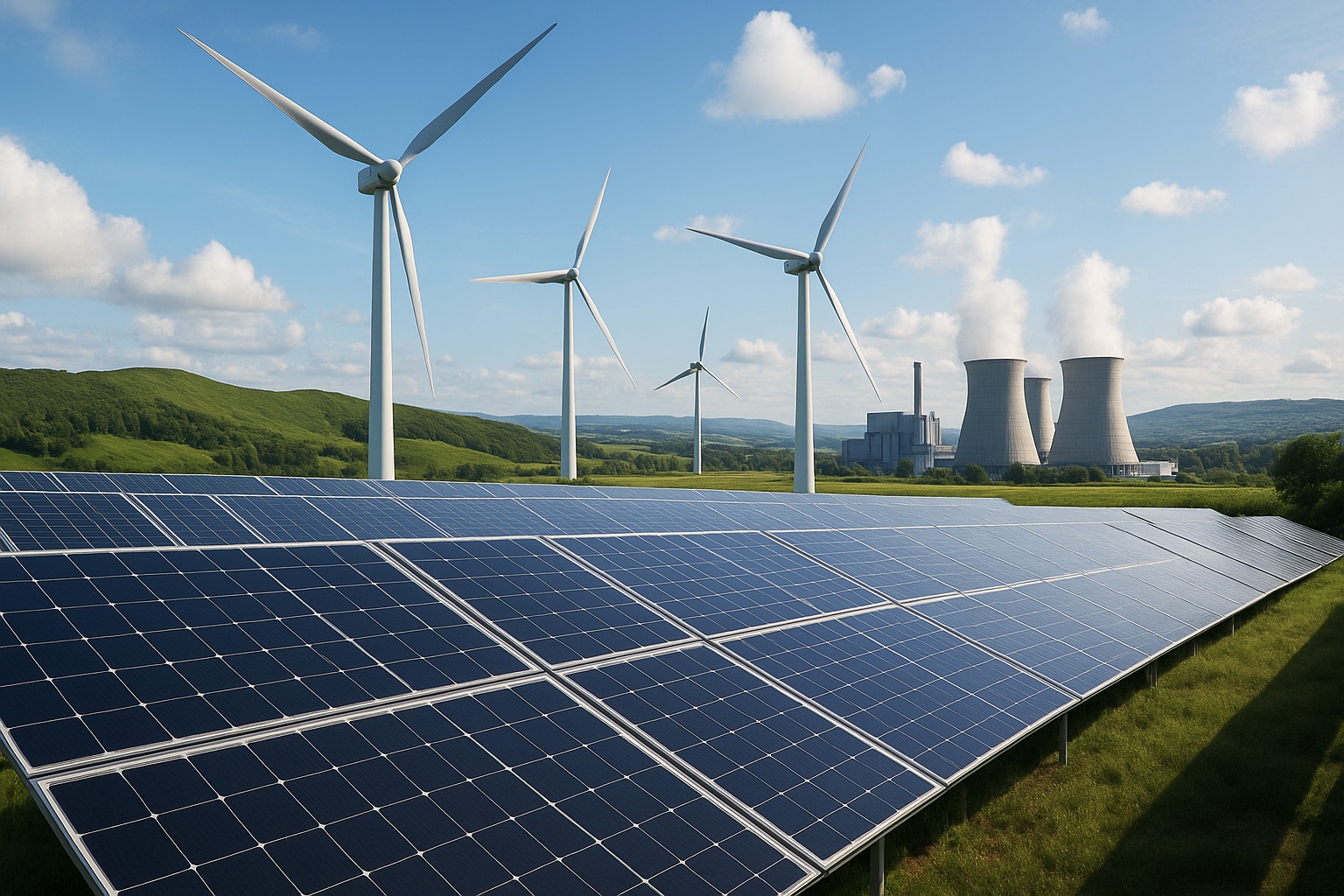
The Benefits Of Renewable Energy Go Beyond The Environment And Are Already Transforming Economies, Generating Jobs, And Redefining The Energy Future With Positive Impact Across The Market.
Energy sustains the development of any society.
From the first industrial revolutions to the present day, the way we produce and consume energy has shaped economies, influenced policies, and transformed the environment.
According to the International Energy Agency (IEA), since the Industrial Revolution began in the 18th century, humanity has relied heavily on coal to power machines and factories, radically altering the global energy matrix.
-
Renewable energy advances over protected areas in Brazil, and a survey by the Energy Transition Observatory reveals silent impacts that challenge environmental conservation and pressure sensitive traditional territories.

-
Rio Grande do Sul accelerates energy transition: State invests in renewable technologies and consolidates decarbonization strategies and pathways to attract billions in new industrial investments.

-
With 160,000 m² of collectors, an area larger than 20 football fields, Silkeborg, in Denmark, hosts a solar thermal plant that heats 19,500 homes and could become the largest solar heating plant in the world.

-
A study reveals the expansion of renewable energy procurement in Brazil and shows how companies are taking advantage of opportunities to reduce expenses, ensure energy efficiency, and strengthen strategic environmental commitments.


In recent years, interest in clean sources has grown significantly.
Thus, the benefits of renewable energy have gained prominence in public debates, business decisions, and government policies due to the positive impact they have on various sectors of society.
According to data from the United Nations (UN), from the 1970s onwards, global environmental movements have driven the search for more sustainable energy alternatives.
Historically, economic growth depended on the availability of cheap and abundant energy.
However, the fossil fuel-based model has proven unsustainable in the long term, mainly due to serious environmental impacts.
Therefore, the shift to renewable sources represents not only an environmental response but a necessary transformation to ensure the future of the planet and the global economy.
The Origin Of Energy Sources And The Search For Alternatives
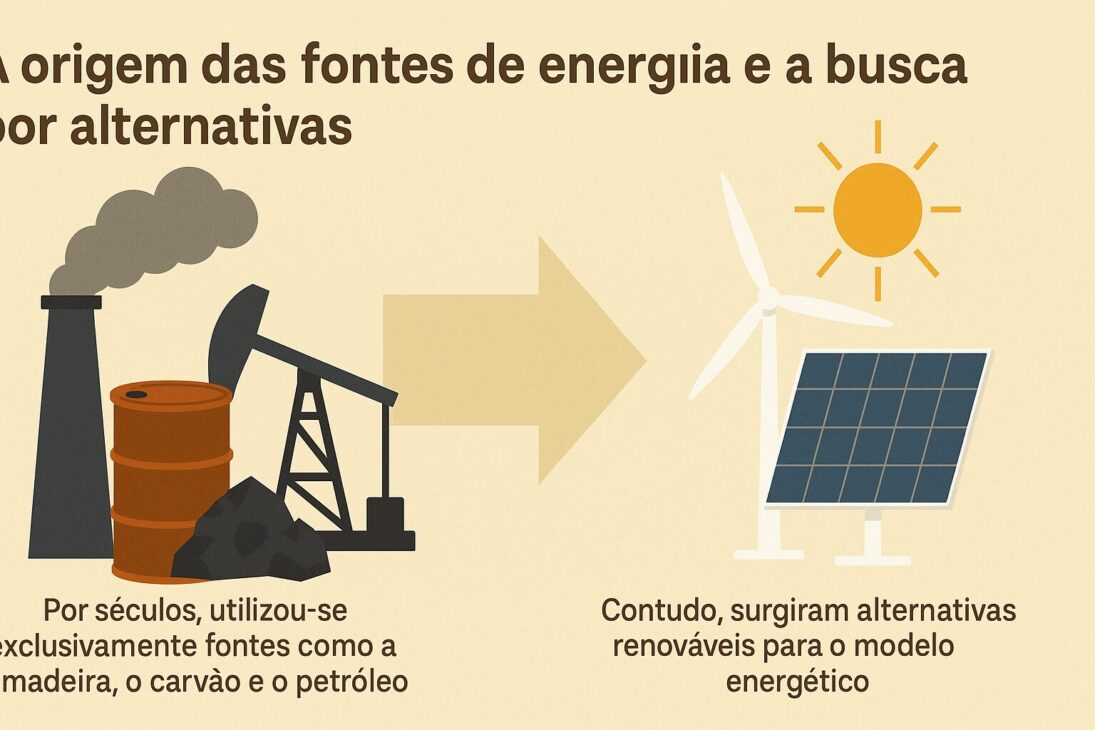
For centuries, humanity exclusively used natural and renewable sources, such as wood, river power, and winds, to generate energy.
However, with the Industrial Revolution, the landscape changed drastically.
According to the U.S. Department of Energy (DOE), coal became the main energy source to power industries and transport in the 19th century.
Oil and natural gas emerged as the next dominant sources during the 20th century, offering greater efficiency and concentrated energy.
These sources, called fossil fuels, provided unprecedented technological and economic advances but also caused serious environmental problems, such as air pollution, increased greenhouse effect, and global climate crisis.
According to the Intergovernmental Panel on Climate Change (IPCC), the burning of fossil fuels is responsible for about 75% of global greenhouse gas emissions since the Industrial Revolution.
From the second half of the 20th century, the first warnings about the impacts of the indiscriminate use of these polluting sources arose.
Environmental awareness grew, spurred by ecological disasters and scientific studies, leading the world to reflect on the need to change the energy model.
An important milestone was the Stockholm Conference in 1972, organized by the UN, which established sustainability as a global priority.
In this context, renewable energies returned to the center of discussions, now backed by modern science and technology. In the past, renewable sources were limited and inefficient.
However, technological advancements changed this scenario.
Today, we capture solar energy on a large scale, harness strong winds in various regions, and produce clean energy at increasingly competitive costs.
According to the IEA report from 2023, solar photovoltaic and wind energy lead growth in the sector, with an annual expansion of about 15%.
What Is Renewable Energy?
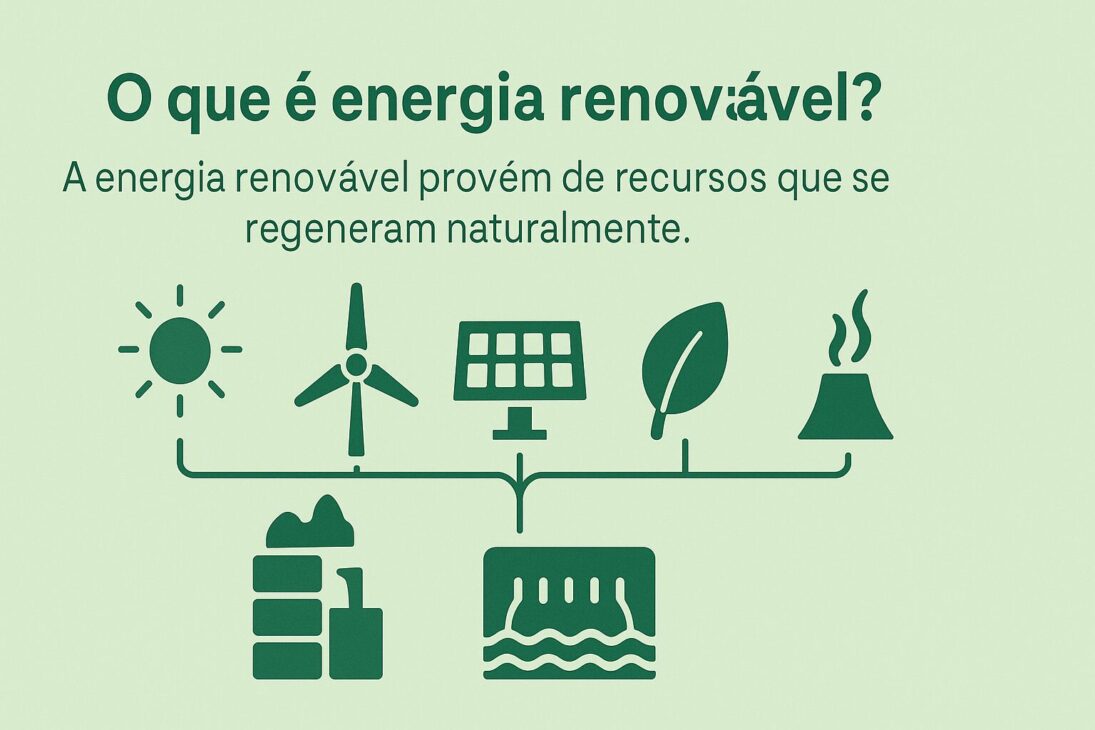
Renewable energy comes from resources that regenerate naturally and are always available or cyclically renew in nature.
The main sources include solar energy, wind energy, hydroelectric energy, biomass, and geothermal energy.
Unlike fossil fuels, renewable sources do not deplete with use and cause much less environmental impact, justifying the growing interest and global investments in the sector.
Furthermore, renewable energy is essential to promote sustainable development, a concept that seeks to balance the needs of the present without compromising future generations.
By reducing pollution and protecting natural resources, clean sources help preserve biodiversity and quality of life in both urban and rural areas.
The UN emphasizes that access to renewable energy is one of the Sustainable Development Goals for 2030, reflecting its global importance.
The Main Benefits Of Renewable Energy
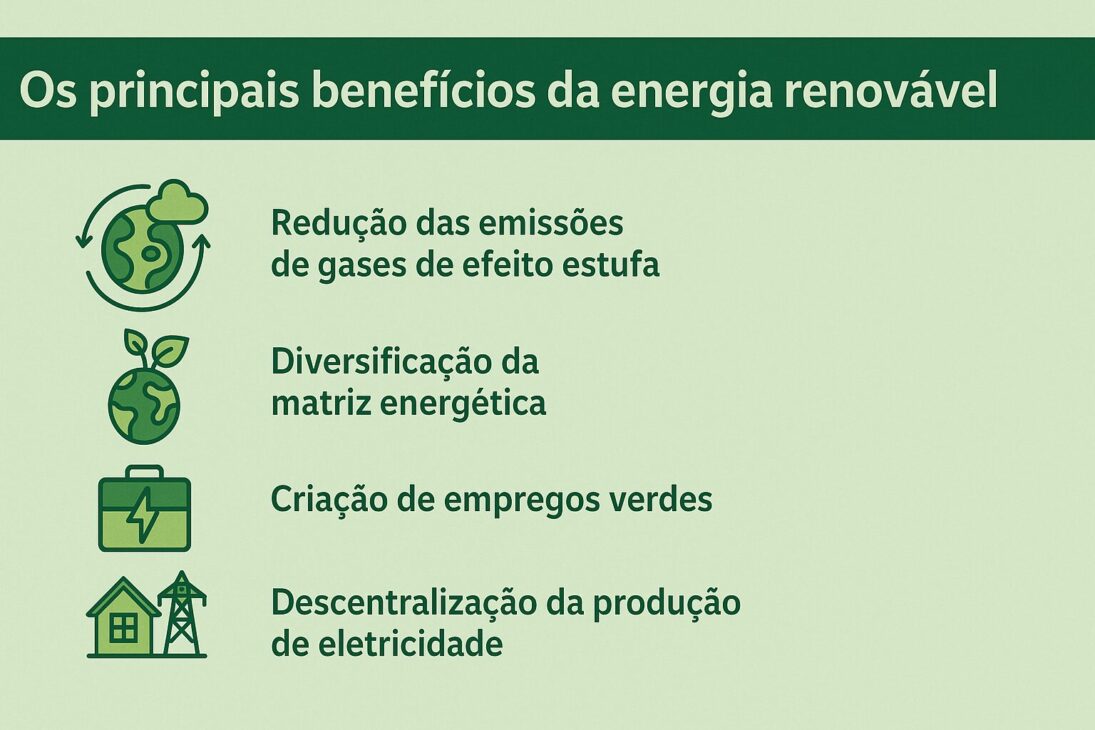
The benefits of renewable energy encompass various aspects: environmental, economic, social, and even geopolitical.
One of the clearest is the reduction of greenhouse gas emissions, the primary cause of global warming.
By replacing polluting sources with clean alternatives, the release of carbon dioxide (CO₂) and other pollutants is significantly reduced, contributing to curb climate change.
Another essential point is the diversification of the energy matrix.
Countries investing in renewable sources reduce their dependence on oil and natural gas, which often need to be imported from politically unstable regions.
This provides greater energy security and national autonomy, which directly impacts the market by decreasing vulnerability to price shocks typical of the fossil sector.
Additionally, the renewable energy sector generates many green jobs.
The construction and maintenance of solar panels, wind turbines, and other structures involve various stages of the production chain, from research to installation and operation.
It is estimated that, according to the International Renewable Energy Agency (IRENA), the sector already employs over 12 million people globally, boosting local economies and favoring regional development, especially in communities far from large urban centers.
The use of renewable energy also promotes production decentralization.
With solar systems in homes and small communities, people start generating electricity locally, reducing dependence on large plants and strengthening regional autonomy.
This decentralization opens up space for new business models and encourages entrepreneurship in areas with limited access to energy.
The Challenges And Future Of Clean Energy
Despite the advances, some challenges remain.
The intermittency of sources such as solar and wind, which depend on the weather, requires investments in energy storage, such as efficient batteries, and in smart distribution systems capable of balancing supply and demand in real-time.
There are also challenges related to infrastructure, technical training, and democratization of access to technologies.
Although costs have fallen significantly, many regions still face difficulties in implementing these solutions effectively.
Another important point involves modernizing the electrical grids, which were designed for centralized models and do not always support the integration of multiple distributed sources.
For this reason, investments in updates and appropriate public policies are essential.
However, the future is promising.
It is expected that costs will continue to fall, technologies will evolve, and awareness of the benefits of renewable energy will grow even further.
The combination of science, political will, and social engagement can accelerate the transformation so that clean energy becomes the norm, not the exception.








Seja o primeiro a reagir!