





 Portuguese
  English
  Spanish
  5 min of reading
  0 comments


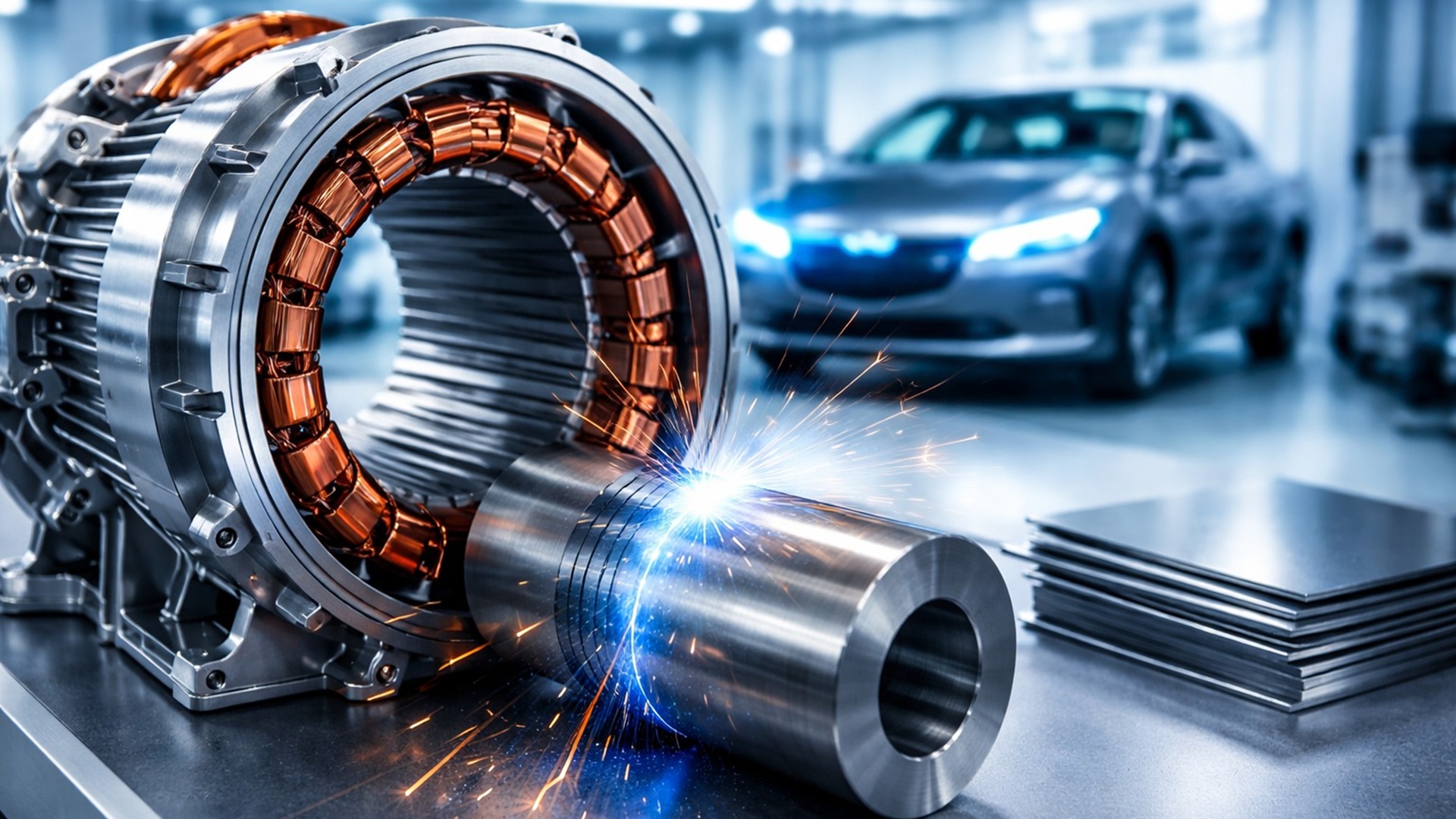
South Korean Research Published At The End Of 2025 Shows That Atmospheric Modification In The Final Annealing Of Electric Steel Reduces Magnetic Hysteresis, Cutting Between 8% And 10% Of Losses In The Motor And Increasing The Efficiency Of Electric Vehicles Without Changing Batteries Or Industrial Lines
Researchers From South Korea Have Demonstrated That An Alteration In The Final Heat Treatment Of Electric Steel Can Reduce Energy Loss In Electric Vehicle Motors By Up To 10%, Increasing Magnetic Efficiency By Up To 16% And Extending Range Without Changes To The Battery.
A Change Outside The Battery Increases The Efficiency Of The Electric Vehicle
The Advancement Is Not Related To New Battery Chemistries, Increased Energy Density, Or Exotic Materials.
The Improvement Occurs In The Electric Motor, More Specifically In The Electric Steel Sheets Responsible For Conducting Magnetic Fields. An Almost Invisible Modification On The Surface Of These Sheets Showed A Direct Impact On Energy Efficiency.
-
A French brand placed a car on four huge red balloons to prove that its suspension made the vehicle “float,” and the surreal scene became one of the most iconic and unusual images in automotive history.
-
Jeep Avenger begins production in Brazil, debuting as the brand’s new entry-level SUV and inaugurating an unprecedented phase by becoming the first national Jeep manufactured outside of Goiana, as part of a R$ 3 billion plan.
-
Costing R$ 12,490, the new Shineray Urban Lite 150 “cheap one” arrives in Brazil with a CVT transmission, digital dashboard, and LED lights, making it more affordable than the Biz and targeting those who want to abandon the bus.
-
Ducati brings to Brazil the Superleggera V4 Centenario: 228 hp that become 247 with a track kit, carbon fiber and carbon-ceramic brakes, estimated price between R$ 1.5 and 2 million, deliveries only in 2027.

The Principle Is Simple In Industrial Terms, But Relevant At Scale. By Reducing Internal Magnetic Losses, More Electrical Energy Effectively Reaches The Wheels. The Practical Result Is Greater Range Per Charge, Maintaining The Same Battery And The Same Drivetrain.
The Study, Published At The End Of 2025 In A Materials Science Journal, Focused On The Final Step Of The Heat Treatment Of Steel.
The Focus Was Not On The Interior Of The Material, Nor On Grain Size Or Crystalline Texture, But On The Surface Microstructure Formed During The Final Annealing.
How Magnetic Hysteresis Consumes Energy In The Motor
In Electric Motors, The Magnetic Field Changes Hundreds Of Times Per Second. Within The Steel, Millions Of Magnetic Domains Need To Continuously Reorient To Keep Up With These Variations. Each Reorientation Generates A Small Energy Loss, Dissipated As Heat.
This Phenomenon Is Known As Magnetic Hysteresis Loss And Constitutes A Relevant Part Of The So-Called Iron Losses. In Modern Electric Vehicles, These Losses Can Represent About A Quarter Of The Energy Dissipated Before Power Reaches The Wheels.
Even Modest Reductions In This Fraction Have Measurable Impact. Reducing Hysteresis Loss By A Few Percentage Points Decreases Electricity Wastage And Increases The System’s Real Efficiency, Without Requiring Additional Recharge Or Increased Battery Capacity.
The Effect Of Annealing Atmosphere On The Surface Of Steel
The Team Compared Three Distinct Atmospheres In The Final Annealing Stage Of Electric Steel. Processes Performed With Nitrogen Only, A Mixture Of Nitrogen And Hydrogen, And With Pure Hydrogen Were Evaluated. The Interior Of The Material Remained Practically Identical In All Three Cases.
The Differences Emerged On The Surface. In Nitrogen-Rich Environments, A Relatively Thick Layer Of Aluminum Nitride Formed, Crystalline, Rough, And With Larger Inclusions. This Surface Topography Creates Obstacles To The Movement Of Magnetic Domains.
In Atmospheres With A Higher Hydrogen Content, A Thin Layer Of Aluminum Oxide Developed, More Amorphous, Smooth, And With Significantly Smaller Inclusions. This More Uniform Surface Reduced Resistance To The Displacement Of Magnetic Domains.
The Surface Smoothness Proved Decisive. Rough Surfaces Trap And Slow Down Magnetic Domains, Requiring More Energy For Their Reorientation. By Reducing This Roughness, The Magnetic Flow Occurs With Less Energy Dissipation Energy.
Measurable Efficiency Gains Without Industrial Reformulation
The Tests Indicated A Reduction Of Up To 16% In Magnetic Hysteresis Loss. Overall Iron Loss Decreased By Between 8% And 10%. These Values Represent Real Gains In Energy Efficiency In The Electric Motor.
The Central Aspect Of The Result Is That There Is No Need To Reform Industrial Lines, Introduce New Materials, Or Redesign Motors. The Method Simply Requires Adjusting The Atmosphere In The Final Heat Treatment, A Step Already Present In The Production Of Electric Steel.
This Feature Makes The Technique Scalable. Existing Factories Can Adopt The Process Without High Structural Investments. For Electric Vehicle Manufacturers, This Means Additional Efficiency Without Increasing Weight, Cost, Or System Complexity.
In A Market Where Every Kilogram And Every Unit Of Energy Counts, The Possibility Of Achieving More Range With The Same Battery Represents A Measurable Technical Advantage, Even If Discreet.
Accumulated Impact On Fleets And Electric Systems
Although The Savings Per Individual Vehicle May Seem Limited, The Accumulated Effect Is Relevant. In Delivery Fleets, Urban Buses, Or Electric Taxis, Which Travel Tens Of Thousands Of Kilometers Per Year, The Reduction In Losses Translates Into Fewer Recharges Over Time.
Fewer Recharges Mean Reduced Demand On The Electrical Grid And Lower Operational Costs. On A Large Scale, This Implies Lower Aggregate Energy Consumption And, Consequently, Lower Impact Associated With Electricity Generation.
The Reduction Of Internal Heat In The Motor Also Decreases Thermal Stress On Components. This May Contribute To Greater System Durability, With Longer Life Cycles And Less Need For Premature Replacements.
An Approach Focused On Optimizing What Already Exists
The Work Fits Into A Trend Of Sustainable Engineering That Prioritizes The Optimization Of Established Technologies. Instead Of Only Seeking Disruptive Solutions, The Strategy Is To Extract More Efficiency From Materials And Processes Already Mastered By The Industry.
The Research Shows That Relevant Gains Can Arise From A Detailed Analysis Of Often-Ignored Microscopic Layers. A Modification To The Surface Of The Steel, Invisible To The End User, Generates A Measurable Impact On The Energy Performance Of The Vehicle.
The Same Logic Applies To Other Sectors That Use Electric Steels, Such As Wind Turbines, Industrial Motors, And Railway Systems. All Face Similar Magnetic Losses And Can Benefit From The Reduction Of Hysteresis.
Potential For Large-Scale Application
The Broad Application Of This Process Can Transform Small Individual Improvements Into Regional Or National Energy Savings. By Avoiding The Constant Expansion Of Battery Capacity, The Pressure On The Extraction Of Critical Minerals Is Also Reduced.
Motors With Lower Internal Losses Tend To Operate With Less Heat And Wear, Favoring The Longevity Of Equipment. This Reduces Waste And Improves The Overall Efficiency Of Electric Systems.
The Technique Also Aligns With The Transition To Renewable Sources, As Generators And Motors In Clean Energy Systems Utilize Similar Magnetic Principles. Process Adjustments, Rather Than Industrial Reconstruction, Facilitate Rapid Adoption.
This Is Not An Immediate Paradigm Shift, But An Incremental Improvement With Cumulative Effect.
Reproduced Millions Of Times, This Invisible Reduction In Losses Contributes To A More Efficient, Lighter Energy System With Slightly Less Waste, Even With Small Typographical Errors Along The Way.










-

2 pessoas reagiram a isso.