





 Português
  Inglês
  Espanhol
  4 min de leitura
  13 comentários


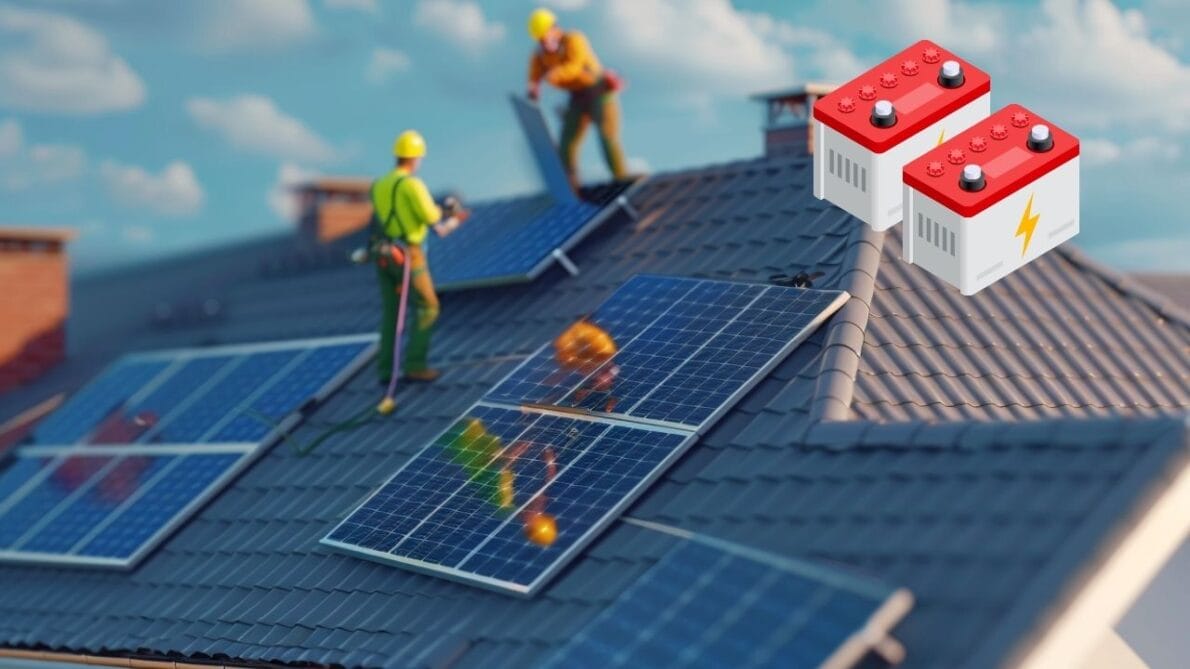


Are You Thinking of Cutting Ties with Utilities and Generating Your Own Energy? The Off-Grid Solar Energy System Is the Ideal Solution for Those Seeking Energy Independence. But the Question Arises: How Many Batteries Are Needed to Sustain This Autonomy?
Have you ever thought about not relying on electricity companies and having the ability to generate your own energy at home? This is possible with an off-grid solar energy system, which allows you to produce and store your own energy without being connected to the public power grid. This option is becoming increasingly popular among those who seek greater energy independence and a more ecological option.
But how does an off-grid system work? Basically, it captures sunlight through solar panels, converts that energy for use in your home and stores the excess in batteries for use when the sun isn’t shining. The big question that arises, then, is: how many batteries are needed to keep my house running without interruptions?
Understanding the Off-Grid Solar Energy System


Firstly, it is important to understand the basic components of an off-grid solar energy system. Solar panels are responsible for capturing sunlight and converting it into electricity. The inverter converts this direct current electricity (generated by the panels) into alternating current, which is the type of electricity used in your home. Batteries store the unused energy immediately, allowing you to use it at night or on cloudy days.
-
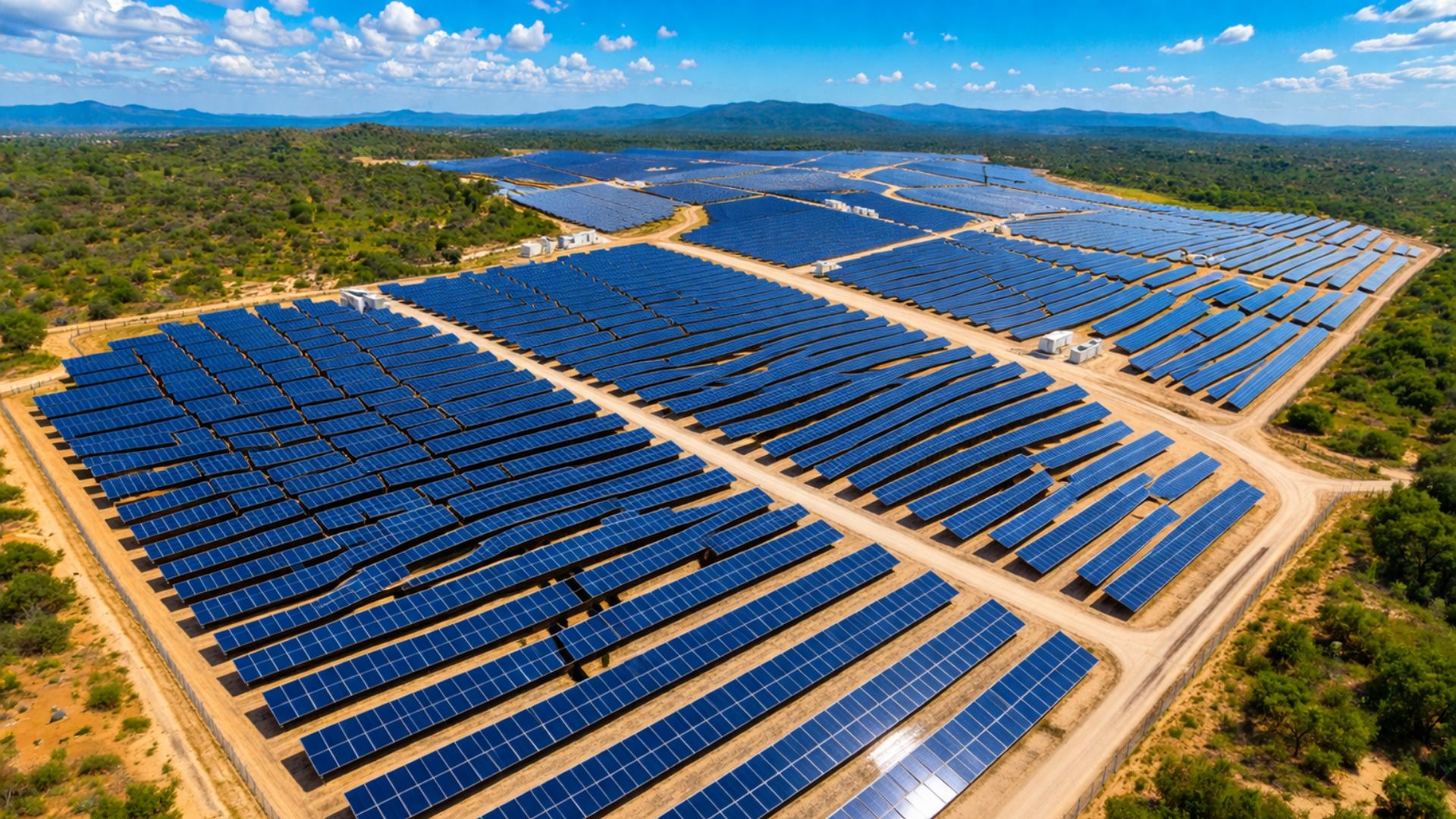
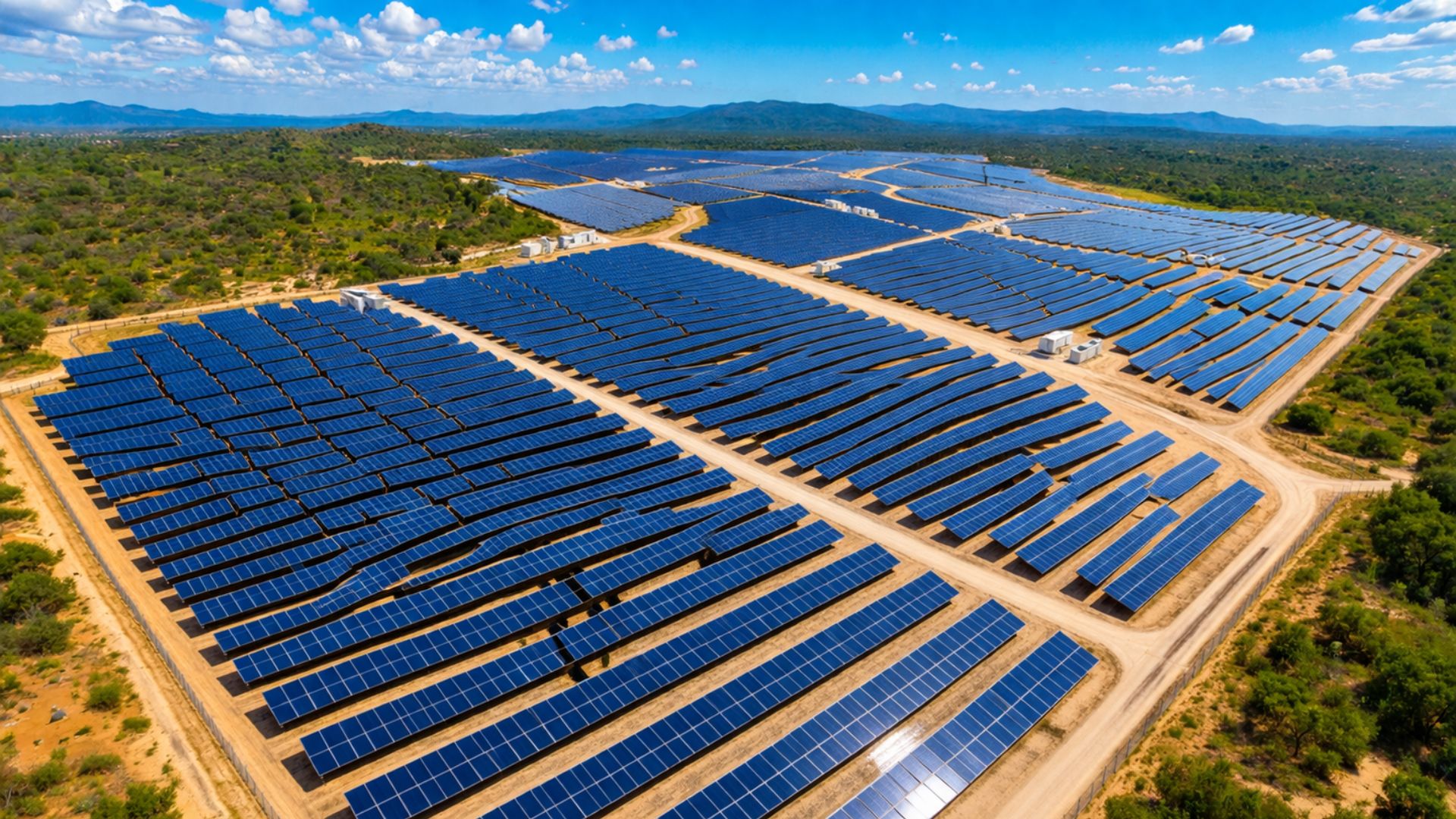
The Sol do Agreste Photovoltaic Complex begins operations in Pernambuco and accelerates the expansion of solar energy in Brazil, directly impacting the reduction of emissions and strengthening the sustainable energy matrix.
-
The Sol do Agreste Photovoltaic Complex begins operations in Pernambuco and accelerates the expansion of solar energy in Brazil, directly impacting the reduction of emissions and strengthening the sustainable energy matrix.
-
Renewable energy advances over protected areas in Brazil, and a survey by the Energy Transition Observatory reveals silent impacts that challenge environmental conservation and pressure sensitive traditional territories.

-
Rio Grande do Sul accelerates energy transition: State invests in renewable technologies and consolidates decarbonization strategies and pathways to attract billions in new industrial investments.


Determining Energy Consumption
First of all, you need to know how much energy your home consumes. This consumption is measured in kilowatt-hours (kWh). For example, if you determine that your home uses 100 kWh per month, this will be the starting point to calculate how many batteries your system will need.
Once you know the monthly consumption, the next step is to adjust this value to compensate for the inefficiencies of the system. Inverters and batteries do not operate at 100% efficiency — they generally operate between 80% and 90%. Therefore, if your consumption is 100 kWh, in practice, you will need to generate more than that to cover the system losses.
By dividing the adjusted monthly consumption by the number of days in the month, you obtain the necessary daily consumption. In our example, this would be about 4.63 kWh per day, which would yield 138 kWh (a little more to cover the loss). The system’s autonomy refers to the number of days that you want your solar energy system to provide energy without the need for recharging. The higher the desired autonomy, the more batteries will be required.
Choosing and Sizing Batteries
The capacity of the batteries is a crucial point for maximizing solar energy utilization. Lead-acid batteries are common due to their cost-effectiveness and reliability. They are rated by their capacity in ampere-hours (Ah), which tells us how much charge they can store. Knowing the necessary daily energy, you calculate how much storage capacity is needed to cover your daily use with a safety margin, considering the recommended depth of discharge of 30% — that is, we will only use 30% of the battery’s total capacity to prolong its lifespan.
After calculating the total necessary capacity, you need to configure your batteries in series and parallel to achieve the required voltage and capacity. For example, if each battery is 12 volts and you need 24 volts, two batteries will be connected in series. If more capacity is needed, more batteries are added in parallel.
How to Calculate the Number of Batteries Needed
Using the example of a house with a daily consumption of 4.63 kWh, let’s calculate the number of batteries needed for one day’s autonomy, considering a depth of discharge of 30% (this means we only use 30% of the battery’s total capacity to prolong its lifespan).
First, we calculate the total capacity needed to store enough energy for one day. If we are planning to use only 30% of the battery capacity, we need a total capacity that is at least three times greater than our daily consumption to account for that. In other words, 4.63 kWh / 30% = 15.43 kWh.
To convert the necessary capacity from kWh to ampere-hours, we divide by the system voltage. Assuming a 24-volt system, we have 15.43 kWh * 1000 (to convert kWh to Wh) / 24 V = 643 Ah.
If we use a lead-acid battery with a capacity of 220 Ah, we need to calculate how many of these batteries are needed. To do this, we divide the total capacity needed by the capacity of a single battery: 643 Ah / 220 Ah ≈ 3 batteries.
Therefore, with 220 Ah and 12-volt batteries, you will need 3 sets of 2 batteries connected in series (totaling 6 batteries) to meet the daily energy needs of the house with a one-day autonomy. The price varies greatly from place to place and also depends on which type of battery would be used, but that is a discussion for another day.










Queria saber se faz diferença entre conectar aparelho de 110 ou 220v?
Nada pessoal com a pág,
é só um adendo mesmo. As vezes me pergunto sobre questões de clima, aquecimento, energia renovável…. se realmente é necessário “cuidar do planeta”. Pq algo de errado não tá “certo”, pois é muito contraditório o “preço” da salvação do planeta. O aluguel do Sol ☀️ é muitoooo alto. As vezes o remédio sai mais caro que a cura. Infelizmente.
Queria saber tudo em valores reais.