





 English
  Francês
  Alemão
  Italiano
  Japonês
  Norueguês
  Portuguese
  Spanish
 3 min of reading



Several New Operators Are Emerging in the Espírito Santo Basin as Petrobras’s Sales of Onshore and Shallow Water Assets Progress
The state of Espírito Santo has been one of the biggest beneficiaries of Petrobras’s divestment plans. The expectation is that the arrival of new companies will generate jobs and income in the region. Last Thursday (27), Petrobras closed a US$ 155 million deal with Karavan SPE Cricaré, a partnership between Karavan and Seacrest, for participation in 27 E&P areas located in the onshore area of the Espírito Santo basin.
See Also Other News
- Technical Level Recruitment and Selection for Positions at the Second Plant of Inpasa Brazil That Started Operating on August 21 in Nova Mutum (MT)
- Government Collected 505 Million Reais Today (08/28) from Auctioning Terminals at the Port of Santos
- 2 Years Without Layoffs – Petrobras and the Union Sign Agreement Ensuring No Layoffs Without Cause Until August 2022
These fields had an average production of 1,700b/d (barrels per day) of oil and 14,000m3/d (cubic meters per day) of natural gas in the first half of the year. The expectation is that the new operator will seize exploration opportunities in the fields to increase production. The sale is part of Petrobras’s US$ 20-30 billion asset sales program for 2020-24.
-
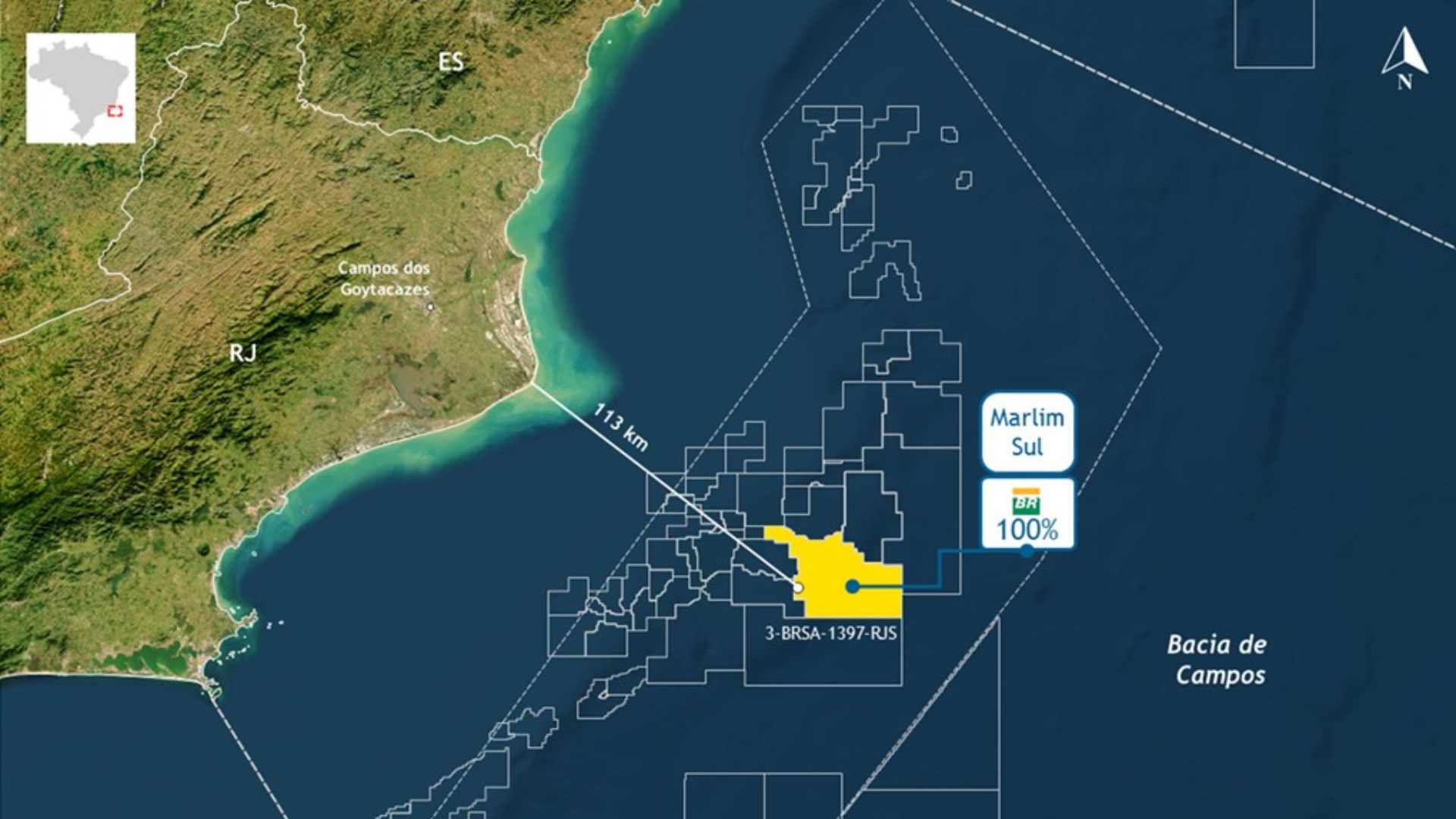
Petrobras finds high-quality oil in the pre-salt at 113 km from RJ and reignites expectations about strategic reserves in the Campos Basin.

-
Ocyan opens registrations for startups focused on innovation in the oil and gas sector and will select projects for Innovation Day with the support of Nexio.

-
Petrobras announces new oil discovery in the pre-salt of the Campos Basin and reinforces Brazil’s prominence with high-quality reserves that can increase production and energy revenues.
-
Alert in the fuel market: Analysts and a former director of ANP warn that oil prices may worsen in the coming months due to global instability.


Last week, Petrobras also announced the start of the sales processes for the onshore fields Cancã, Cancã Leste, Fazenda Alegre, Fazenda São Rafael, and Fazenda Santa Luzia and associated infrastructure in the same basin.
The NOC is also selling its stakes in two exploration blocks (ES-T-506 and ES-T-516), as well as six offshore blocks (ES-M-596, ES-M-598, ES-M-671, ES-M-673, ES-M-743, and BM-ES-23, where the discoveries were made in the deep waters of Parque dos Doces) and the fields of Camarupim, Camarupim Norte, Canapu, and Golfinho, all in the Espírito Santo basin.
Last year, the independent Imetame also closed a deal with Petrobras for the purchase of the onshore fields in ES Lagoa Parda, Lagoa Parda Norte, and Lagoa Piabanha.
The Region’s Appeal Is Due Not Only to Its Proximity to Brazil’s Largest and Most Productive Basins, Campos and Santos, but Also to the Installed Infrastructure in Espírito Santo
The state has a natural gas processing unit, the Cacimbas plant, with a capacity of 18.1Mm3/d. It began operations in 2008 and already receives gas from offshore fields in the Espírito Santo basin. Shipyards are also installed in the state, such as Jurong Aracruz, which was responsible for the construction of various platforms that are now producing in the pre-salt region.
According to data from ANP, the Espírito Santo basin currently has 21 blocks in the exploration phase, with 11 onshore and 10 offshore. The maritime concessions are operated by large companies such as Equinor, Repsol, and CNOOC from China. The latter two acquired the blocks in 2017 during the 14th round of concessions and are still in the initial phase of exploration, so the basin is expected to see more activity in the coming years.
Petrobras Maintains Focus on Pre-Salt and Sale of Onshore and Shallow Water Fields from the State in the Espírito Santo Basin Stimulates New Activities
Petrobras shifted its focus away from the area in 2015 when an explosion onboard the FPSO Cidade de São Mateus killed nine people. The unit was responsible for the production of the fields of Camarupim and Camarupim Norte, where production is currently halted.
The expectation is that the arrival of new companies in the region, both onshore and offshore, will reverse the decline in activities, with new wells being drilled and more data acquisitions underway.
At the end of 2019, the Espírito Santo basin had 43.1Mb (million barrels) of oil and 9Bm3 (billion cubic meters) of proved, probable, and possible (3P) reserves offshore, as well as 49.2Mb of oil and 227Mm3 of 3P gas reserves onshore.
Source: Bnamericas







Seja o primeiro a reagir!