





 Portuguese
  English
  Spanish
  4 min of reading
  0 comments


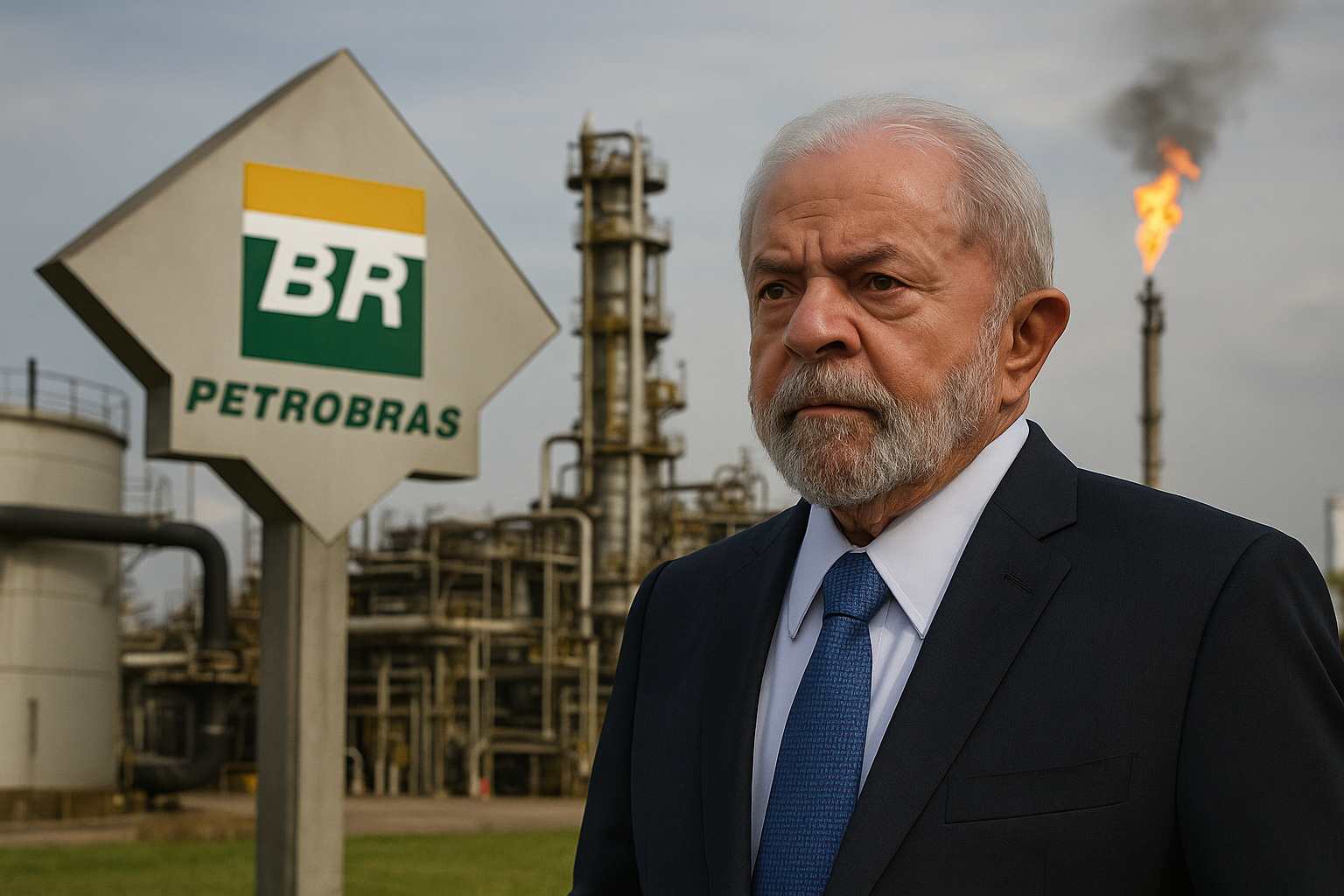
The Fall of Brent Intensifies the Conflict Between the Government and Petrobras and Puts the Future of the State-Owned Company’s Investments at Risk Until 2029
The sharp devaluation of oil has reignited tensions between President Lula and the board of Petrobras, amid the dispute over the multi-billion investment plan for 2026–2029.
With Brent priced at around US$ 61 per barrel, the government seeks to maintain the pace of investments, while the state company tries to protect its cash flow in the face of global uncertainty.
The plan approved in 2023 anticipated US$ 111 billion in investments by 2029, with US$ 98 billion already underway and US$ 13 billion still under evaluation.
However, the new price reality puts in doubt the financial viability of the original strategy, especially following the 16% drop in the barrel’s value since October 2024.
Magda Chambriard Calls for Caution Amid Brent’s Decline
The president of Petrobras, Magda Chambriard, has advocated for a technical and prudent review of the investment program.
In August 2025, during a meeting with investors, she revealed that nearly completed projects were resent for re-evaluation, known internally as “gate two”.
According to her, this review is necessary to adjust costs and preserve the financial balance of the company.
-
Unemployment rises again to 5.8% at the beginning of 2026, raising alarms about the end of temporary positions and its impact on the Brazilian job market.

-
Document organization can cut invisible costs in small businesses, a simple step that prevents waste, rework, and losses in daily operations.

-
Chinese giant worth nearly R$ 4 billion that manufactures cables for electric cars, solar energy, and robotics wants to open a factory in SC.
-
Many employers do not know, but the law guarantees domestic workers a 25% increase in salary during trips, 50% for overtime, 20% for night shifts, and 17 additional benefits that can lead to labor lawsuits if not paid.


Meanwhile, Lula insists that Petrobras should continue investing heavily to strengthen reindustrialization, energy transition, and job creation.
During an event in Bahia, in September 2025, the president stated that the state company “has not yet given everything it can give to the Brazilian people”, a phrase interpreted as direct pressure on the board.
Oil Price Drop and Effects on the Global Scenario
According to the International Energy Agency (IEA), the oil market is expected to register a surplus in 2026, driven by the slowdown in China and high American production.
This combination tends to keep prices low and reduce the profit margin of oil companies, directly affecting the cash flow of Petrobras.
State executives warn that maintaining the pace of investments in this context would require increased debt and could compromise dividend payments, including to the Union, the majority shareholder.
Even so, associates of the Planalto emphasize that Lula does not intend to reduce investments, as he considers them essential to boost the economy and the industrial sector.
Divided Board and Signs of Tension
The Board of Directors of Petrobras is divided between government representatives and minority shareholders, which has intensified internal conflicts.
Internal sources indicate that the deadlock is expected to dominate meetings until the end of 2025, with discussions about fiscal discipline and political ambition.
In September 2025, Chambriard posted on her social media a chart showing the continuous decline of Brent, interpreted as a technical alert about the urgency for a review of the plan.
The gesture was seen as a subtle but firm positioning in the face of rising pressure from the Planalto for expansion.
Petrobras Between Growth and Fiscal Responsibility
With the barrel below US$ 65 and the projection of low prices until 2026, Petrobras needs to balance expansion and sustainability.
Market analysts assert that any hasty decision could jeopardize the company’s liquidity and competitiveness.
On the other hand, Lula intensifies the growth rhetoric, claiming that reducing investments now would be a strategic mistake.
In the background of Brasília, few believe that the president will accept a timid investment plan in a pre-election period.
Timeline of the Dispute
- 2023: Board approves a plan of US$ 111 billion by 2029.
- August 2025: Chambriard announces re-evaluation of projects due to the drop in oil prices.
- September 2025: Lula publicly advocates for an increase in investments.
- October 2025: Brent falls to US$ 61 per barrel, 16% lower than in 2024.
- 2026: IEA forecasts a global oil surplus and falling prices.
What Lies Ahead for Petrobras?
Experts claim that the conflict between Lula and the Petrobras board will define the direction of the state company in the coming years.
The company is trying to maintain financial stability without breaking away from the political growth narrative advocated by the government.
Meanwhile, investors are awaiting the official review of the strategic plan, expected in early 2026, which should indicate new investment parameters and realistic goals for the 2026–2029 period.
What do you think should prevail: Petrobras’ financial prudence or the government’s political ambition to expand investments?







-

Uma pessoa reagiu a isso.