





 Português
  Inglês
  Espanhol
 3 min de leitura
  0 comentários


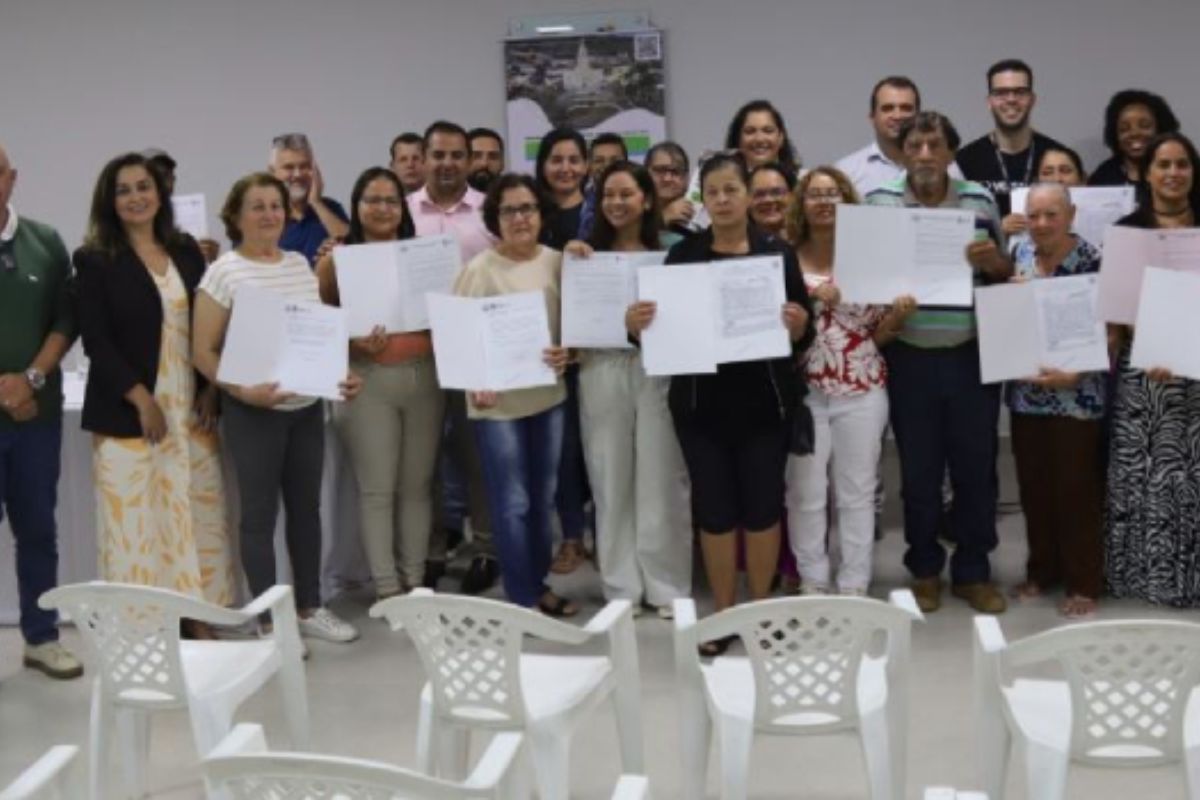
With Minas Reurb, Minas Gerais Celebrates Land Regularization Day, Strengthening Sustainable Urban Development and Ensuring More Than 19 Thousand Property Titles Since 2019
The Land Regularization Day is prominently celebrated in Minas Gerais, where the Minas Reurb program, coordinated by the Secretariat of State for Economic Development (Sede-MG), has transformed the urban landscape since 2019.
The initiative has already benefited more than 241 thousand people, promoting legal security and social integration, according to a news article published.
Since the program’s inception, more than 80 thousand deeds have been issued, with 19 thousand titles effectively delivered in 298 municipalities in Minas Gerais, reinforcing the state’s commitment to the ordered and sustainable development of cities.
-
Alone, the producer applies 7,400 hectares with the T100 drone in an optimized structure, replaces the generator with a silent battery, and demonstrates how technology reduces costs, increases productivity, and even challenges the uniport in the field.

-
China banned the export of 22 tons of meat from Argentina.

-
JBS, founded by the Batista brothers, continues to conquer the world: entrepreneurs built a ‘factory in the desert’ creating 3,000 jobs.
-
With only 1% of Brazil’s territory, Santa Catarina has built one of the most competitive industrial parks in the country, with 64,000 companies, nearly 1 million jobs, and a growth rate of 5.3% while the national industry is practically stagnant.


With the support of Cohab Minas and the Metropolitan Agency of Vale do Aço (ARMVA), the program has stimulated economic growth and community strengthening.
In September, for example, more than a thousand families from the Vale do Jequitinhonha, in the municipalities of Caraí and Catuji, received their documents, marking a new chapter in the history of land regularization in the state.
Minas Reurb and the Impact on Sustainable Urban Development
Sustainable urban development is one of the pillars of Minas Reurb, which seeks to guarantee legal ownership of properties and stimulate city planning.
According to the Undersecretary of Property Management of Sede-MG, Eduardo Quintanilha, the program represents a virtuous public policy, as it allows thousands of residents to achieve the dream of having the property registered in their name.
Urban land regularization is not limited to the issuance of titles. It enables access to basic infrastructure, sanitation, energy, and transport, expanding the economic potential of the serviced regions.
This process strengthens the role of municipalities and promotes the rational use of land, preventing the disordered expansion of urban areas.
Property Regularization and the Seven Steps of the Municipal Process
Urban property regularization in Minas Gerais follows a rigorous process consisting of seven stages.
It all begins with the request from the legitimate parties, followed by the administrative processing of the application, preparation of the Land Regularization Project (PRF), sanitizing the process, decision by the competent authority, issuance of the Land Regularization Certificate (CRF), and finally, registration at the registry office.
These stages ensure transparency and legality, guaranteeing that each family receives the title within the criteria established by legislation.
The request can be made by public agencies, such as the Federal Government, Public Prosecutor’s Office, Public Defender’s Office, municipalities, or by the residents themselves.
The municipal management classifies the urban nucleus into two modalities: Reurb S, aimed at low-income areas, and Reurb E, intended for communities with a differentiated economic profile.
Citizenship and Social Valuation Strengthen the Local Economy
Citizenship and social valuation are direct effects of land regularization in Minas Gerais, promoting dignity and security for thousands of families.
In Catuji, for example, resident Marcelina Barbosa celebrated receiving the document for her property, expressing the significance of the moment for the entire community.
The superintendent of Urban Land Regularization of Sede-MG, Raquel Luiza, highlights that the program strengthens urban planning and improves the efficiency of public services.
With the formalization of properties, the state increases municipal revenue and stimulates private investment in infrastructure, housing, and mobility.
Those interested in participating or obtaining more information about Minas Reurb can contact Sede-MG at (31) 3915-9761 or by email at minas.reurb@desenvolvimento.mg.gov.br.
The service channel guides citizens and municipal managers on the steps and requirements of the process.









Seja o primeiro a reagir!