





 Portuguese
  English
  Spanish
  4 min of reading
  0 comments


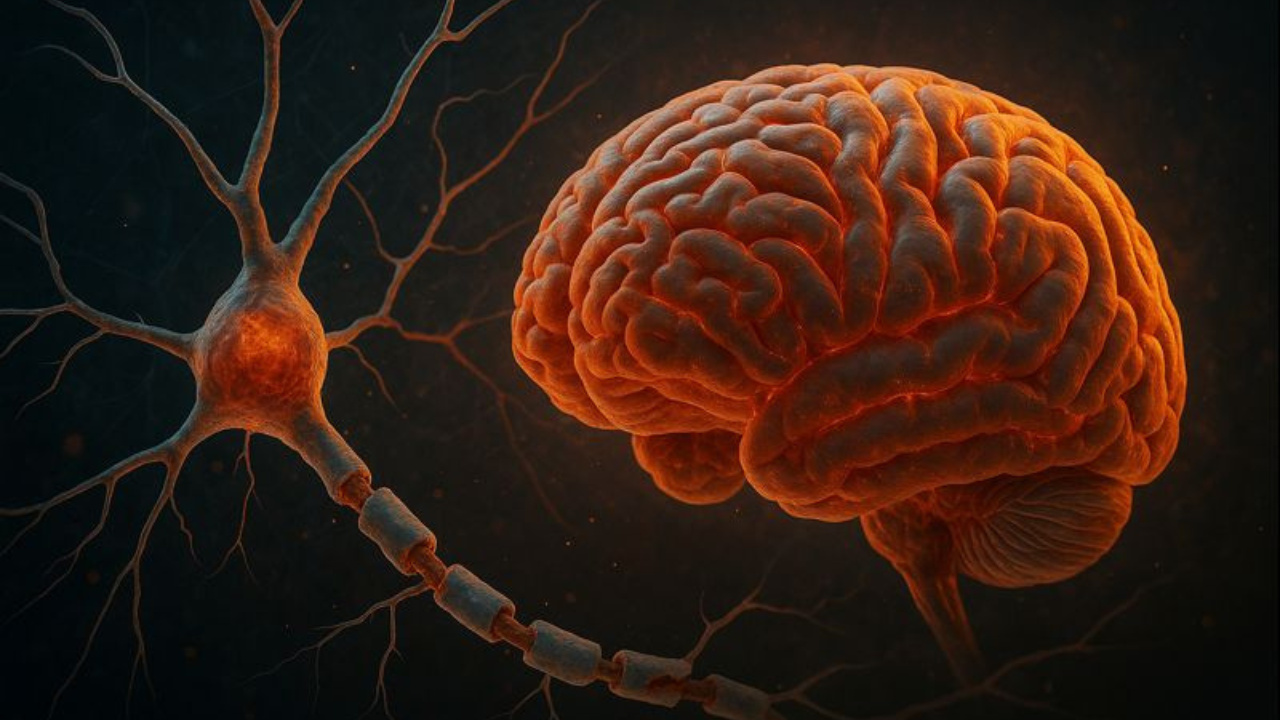
Research Reveals That Signs of Multiple Sclerosis Appear Years Before Symptoms, Opening the Way for Early Diagnosis.
The multiple sclerosis, an autoimmune neurological disease that primarily affects women between 20 and 40 years old, can begin to be identified up to seven years before the first clinical symptoms.
Recent research shows that early diagnosis, based on the analysis of biomarkers in the blood, allows predicting disease progression, starting treatment earlier, and reducing sequelae.
The advancement occurs in research centers and reference hospitals, such as Einstein Hospital, and addresses an urgent need: to prevent the disease from compromising essential brain functions before even being perceived by the patient.
-
A “silent skill” is allowing Brazilians to earn up to R$ 22,000 per month without a degree and become indispensable for companies that rely on millions of data to survive.

-
Researchers at the Toyota Research Institute found that if a human uses robotic arms to flip a pancake 300 times in an afternoon, the robot learns to do it on its own the next morning, and this is currently the most promising method to solve the biggest bottleneck in modern robotics.

-
Goodbye iron: a common item in households is starting to lose space to technology that smooths clothes in minutes without an ironing board and with less energy consumption.

-
Antarctica reveals an unusual clue high in the Hudson Mountains, and what appeared to be just an isolated rock began to expose a secret hidden under the ice for ages.


Currently, when multiple sclerosis is confirmed, the brain may already show significant damage, affecting vision, motor coordination, and balance.
For this reason, identifying invisible signs of the disease has become a priority in modern neurology.
Multiple Sclerosis and the Challenge of Early Diagnosis
The silent progression is one of the main characteristics of multiple sclerosis.
Before the classic outbreaks, the brain suffers from continuous processes of brain inflammation, which impair basic functions without generating clear symptoms.
According to neurologist Rodrigo Barbosa Thomaz, coordinator of the Center of Excellence in Multiple Sclerosis and Demyelinating Diseases at Einstein Hospital, many patients live with subtle signs without associating them with the disease.
“Even before the peaks of inflammation, we have patients with primary brain functions impaired, but often without associating the symptoms with the disease,” he explains.
Often, intense fatigue, mood changes, anxiety, and cognitive difficulties are interpreted as stress or tiredness, which delays early diagnosis and the initiation of treatment.
Brain Inflammation Begins Years Before Outbreaks
Science already knows that brain inflammation associated with multiple sclerosis does not only arise during outbreaks. It occurs in continuous waves, slowly damaging nerve fibers.
These inflammatory processes directly affect neurons, even when traditional tests, such as magnetic resonance imaging, do not yet show evident lesions.
Therefore, relying solely on visible symptoms has become insufficient for an accurate diagnosis.
Biomarkers Reveal Invisible Signs of the Disease
The most promising advancement in the early diagnosis of multiple sclerosis lies in the identification of biomarkers in the blood.
Studies indicate that researchers can detect the myelin oligodendrocyte glycoprotein (MOG) up to seven years before the appearance of symptoms.
This marker indicates the first damage to neuronal filaments, anticipating the process of demyelination, which characterizes the disease.
Subsequently, there is an increase in the IL-3 protein, responsible for recruiting defense cells that attack the brain and spinal cord.
About a year later, the light chain of neurofilament (NfL) appears, another biomarker that signals direct damage to neuronal tissue.
Technology and Artificial Intelligence in Personalized Care
The isolated analysis of biomarkers does not replace clinical evaluation. However, when combined with imaging tests and the patient’s history, it significantly enhances diagnostic accuracy.
“The assessment of multiple markers, associated with artificial intelligence algorithms, tends to personalize care,” says Rodrigo Thomaz.
According to the specialist, this approach helps identify who is at higher risk of progression, sequelae, and who can avoid outbreaks with early treatment.
Thus, medicine is moving towards more individualized strategies, reducing the physical and emotional impacts of multiple sclerosis.
What Is Multiple Sclerosis and Why Does It Cause Demyelination
The multiple sclerosis is an autoimmune and demyelinating disease. This means that the immune system starts attacking the myelin sheath, a structure that surrounds neurons and accelerates the transmission of nerve impulses.
“This myelin is diffused in the brain and is essential for the speed of nerve responses,” explains the specialist.
When demyelination occurs, communication between neurons becomes slower or fails, resulting in motor, visual, and cognitive symptoms.
Why Early Diagnosis Changes the Future of the Patient
Current treatments can reduce outbreaks, slow disease progression, and, in some cases, stabilize the condition.
However, the timing of initiation directly determines the effectiveness of the treatment.
Therefore, early diagnosis, combined with the strategic use of biomarkers and the understanding of brain inflammation, represents a paradigm shift.
Detecting multiple sclerosis before the damage becomes irreversible can preserve quality of life and allow thousands of patients to maintain autonomy for longer.







Seja o primeiro a reagir!