





 Portuguese
  English
  Spanish
  5 min of reading
  0 comments


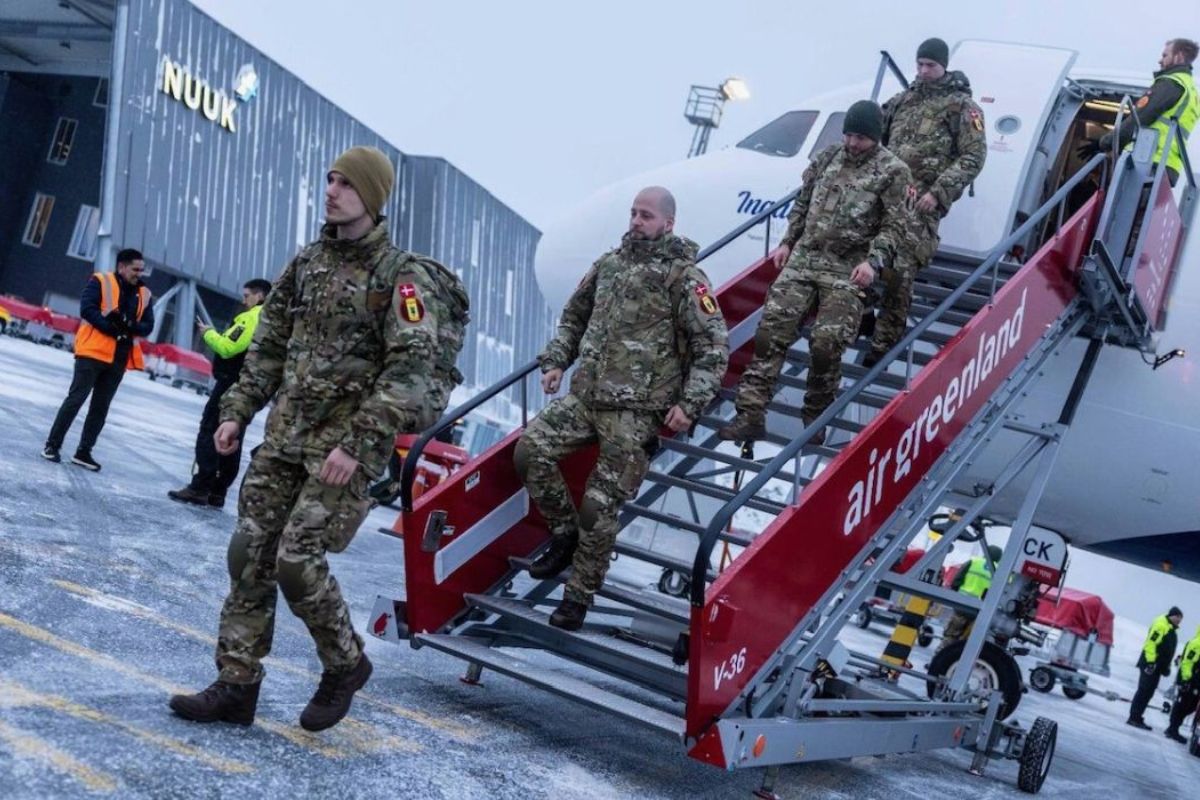
After Donald Trump’s Threats and 10% Tariffs Against Denmark, New Troops Land in Greenland, Where Copenhagen Promises Reinforced Presence in 2026 and Begins the Arctic Endurance Exercise. Allies Like Germany and the United Kingdom Enter the Mobilization, While Davos Becomes a Negotiation Stage with European and NATO Leaders.
Greenland has entered the center of an escalation that Denmark is now treating as a real risk, after new Danish troops arrived in the territory on the night of Monday (19). The military reinforcement was taken as a direct response to U.S. President Donald Trump, who reiterated the desire to annex the island and began linking the dispute to arguments of “total control” and global security.
On the same day, a spokesperson for the Danish Armed Forces told CNN that there would be a “substantial increase” in the contingent. Meanwhile, the official profile of the Danish Army announced the start of the military exercise Arctic Endurance in the region and reinforced the message that the country will maintain a reinforced presence in Greenland in 2026, signaling clearly for the long term to allies and adversaries.
Troops Land and Denmark Takes a Containment Stance in the Arctic

The arrival of the new contingent in Greenland, registered on the night of Monday (19), is treated by Copenhagen as more than a routine rotation.
-
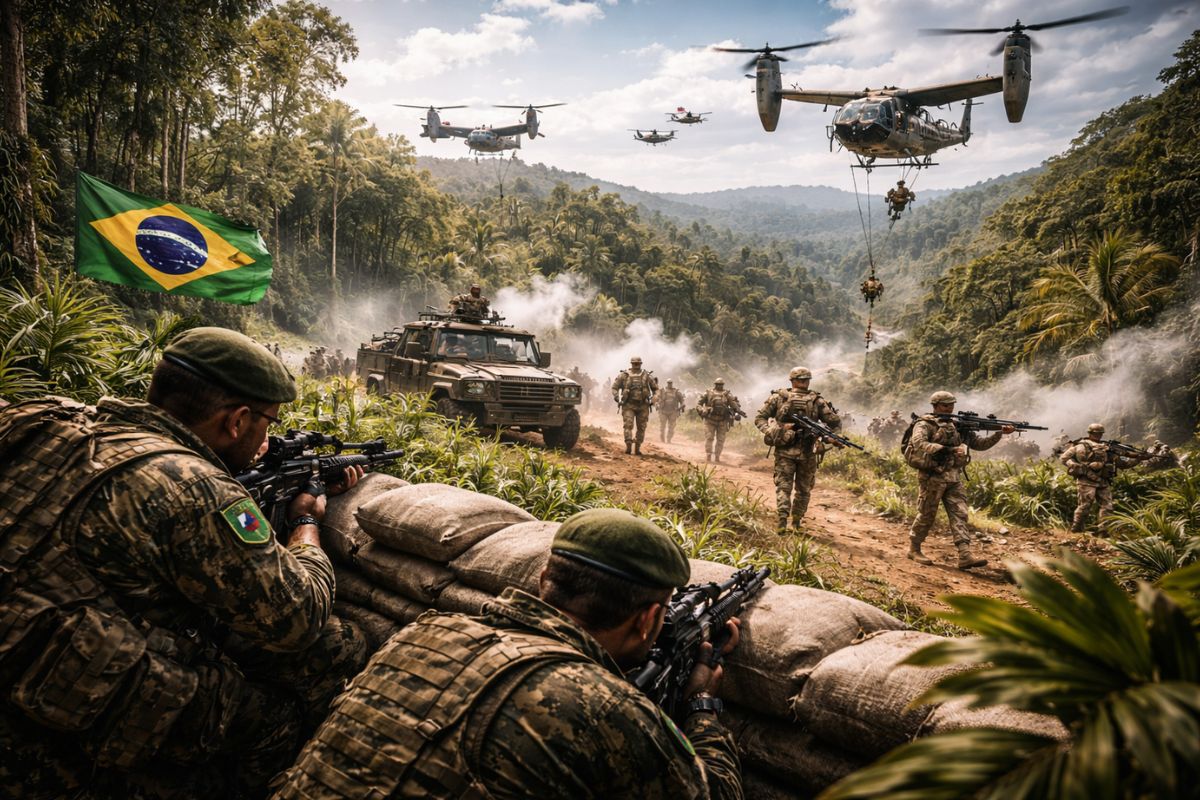
If the USA were to go to war with Brazil, Washington’s greatest fear would not be the attack itself, but facing a vast territory, prolonged resistance, and a costly, chaotic, and unpredictable occupation.
-
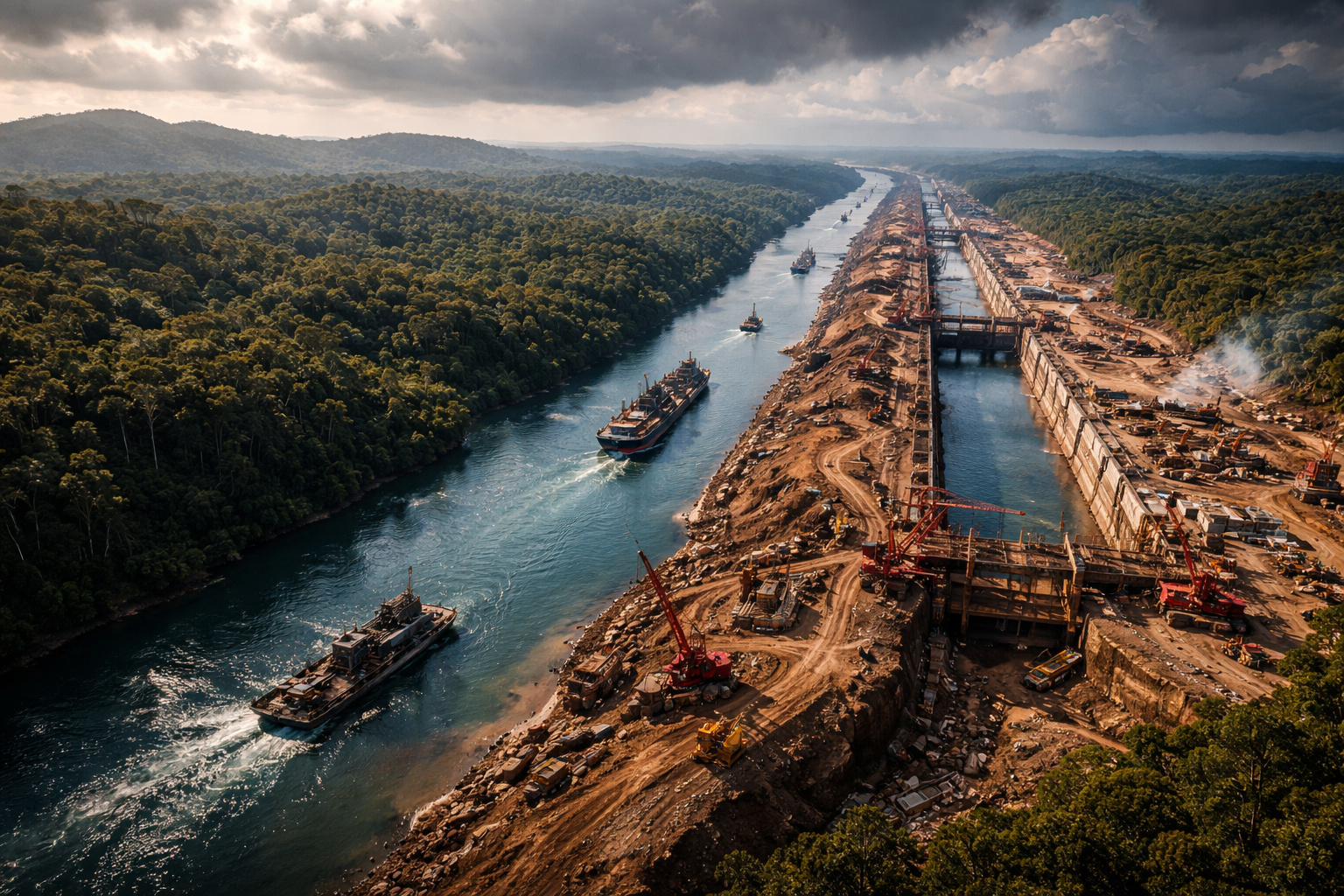
In 2013, Nicaragua sold the concession for a canal to rival Panama to a Chinese billionaire who lost 85% of his fortune, disappeared, and was declared bankrupt. Now the project resurfaces with a new route, a new Chinese partner, and a cost of $64.5 billion.
-
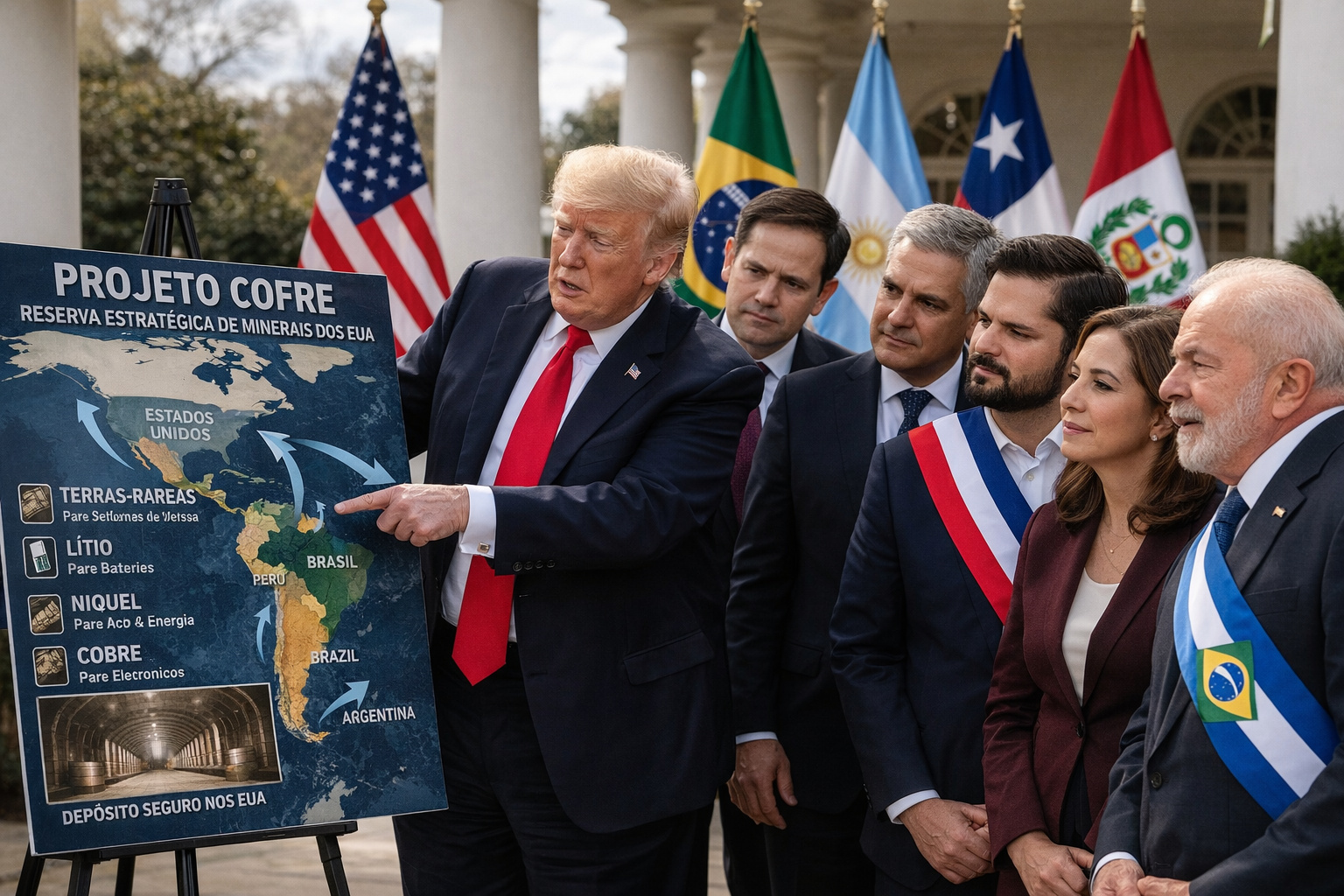
The USA announces a mysterious billion-dollar vault project to store critical minerals, but what intrigues experts is not just the plan itself, but why Latin America, including Brazil, has entered the center of this global dispute against China.
-
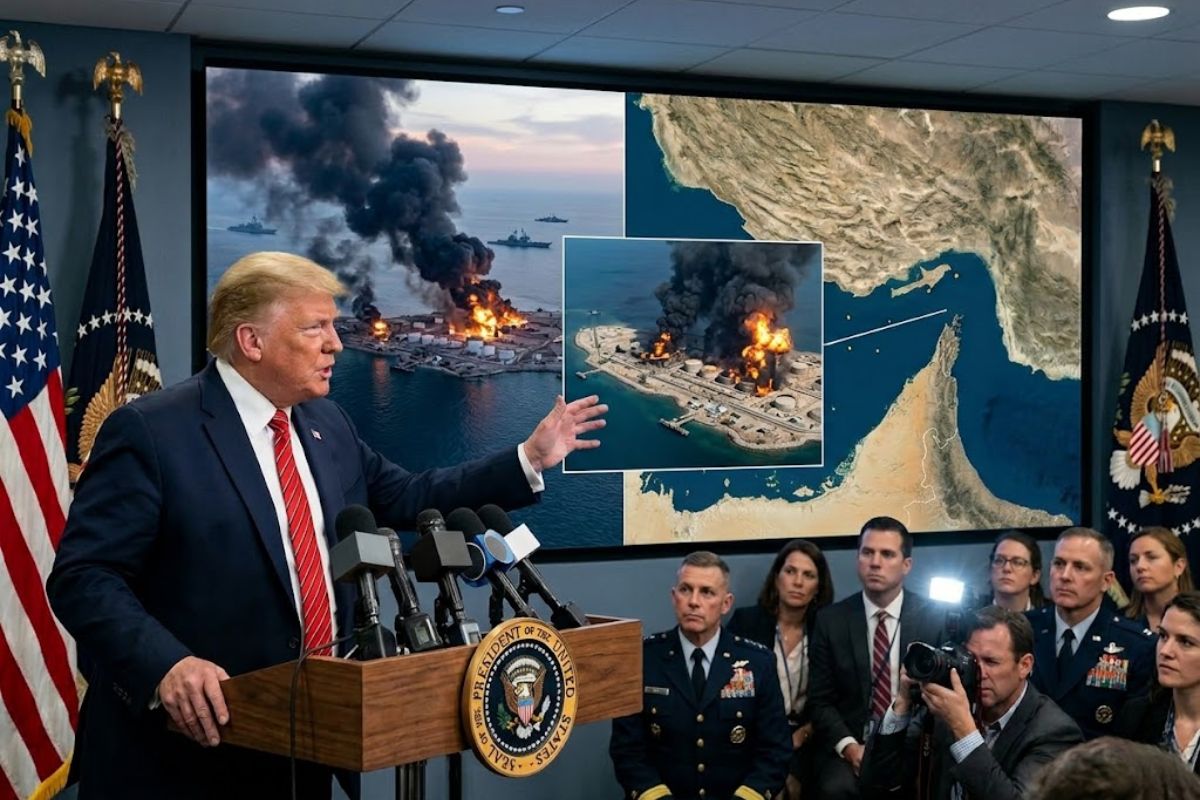
Trump Announces Bombing of U.S. Military Targets on Iranian Island Responsible for About 90% of Iran’s Oil Exports, Warns of Further Attacks if Navigation in Strategic Strait of Hormuz Is Threatened

The gesture acts as a deterrent in a territory where extreme weather, logistical distance, and limited infrastructure make any military mobilization a high-cost and high-symbolism event.
By placing the Arctic Endurance exercise at the center of official communication, Denmark seeks to show that it is not just about sending soldiers, but about testing endurance, permanence, and readiness in Arctic conditions.
The implicit message is that the defense of the territory is now seen as a continuous operation, with planning to sustain the reinforcement beyond 2026.
European Allies Enter the Equation and Increase Greenland’s Political Weight
The escalation in Greenland was not limited to Denmark and the United States.
Danish military personnel are now operating in a political and strategic coordination environment with European partners, after allied countries such as Germany, Sweden, Norway, France, Finland, the Netherlands, and the United Kingdom mobilized soldiers in light of rising tensions.
This composition changes the nature of the risk: it ceases to be a bilateral controversy and takes on the character of a crisis with multiple actors, where any additional action could trigger a chain reaction.
The presence of allies also serves as diplomatic shielding because it transforms the issue into a collective concern, raising the political cost of any isolated attack on the territory.
Why Greenland Is Sensitive for Copenhagen and for Outsiders
Greenland is an autonomous territory of the Kingdom of Denmark and carries a historical weight that amplifies the current dispute.
The record of colonization in the 18th century is often cited to explain why the island is linked to the Danish state and, at the same time, maintains its own political identity and active local leadership with a public voice.
In times of crisis, this autonomous condition is crucial: it allows Greenlandic authorities to speak as a direct interested party, and not just as an administrative extension of Copenhagen.
On Monday (19), the territory’s Prime Minister, Jens-Frederik Nielsen, stated that Greenland will not yield to pressures and will continue to seek dialogue with the Trump government, in an attempt not to turn the impasse into a point of no return.
Davos Becomes a Stage and Trump Increases Pressure with Tariffs and Open Threat
The advance of the crisis in Greenland has also gained an international stage.
Donald Trump agreed to meet this week in Davos, Switzerland, with European leaders and NATO representatives during the World Economic Forum.
By placing the discussion at the center of a global event, the issue ceases to be a backroom conversation and begins to be treated as a dispute with real effects on the transatlantic agenda.
Trump said he expects little resistance from Europe to moves on Greenland.
And even before the meeting, he increased pressure through economic means: on Saturday (17), he imposed tariffs of 10% on Denmark and other European countries that opposed the annexation.
The tariff becomes a tool of political coercion because it signals that disagreement could have an immediate cost, not just diplomatic.
The Element of “Total Control” and the Silence on Military Force That Increases Fear
Trump’s rhetoric escalated by linking Greenland to an idea of global security conditioned to possession.
In a message to Norway’s Prime Minister, Jonas, Trump implied that his move on the Arctic island connects to the episode of the Nobel Peace Prize awarded in 2025 to Venezuelan María Corina Machado, stating: “I no longer feel obligated to think solely about peace”, while asserting that it would “always” be paramount.
In the same message, Trump added that “the world is not safe unless we have complete and total control of Greenland”.
The phrase is the type of argument that turns a political wish into a narrative of necessity, and it is exactly this that raises alarms in Denmark: when the topic becomes “total control,” the discussion shifts from commercial or symbolic to seeming like a justification for harsher action.
Uncertainty increased when, in an interview with NBC News on Monday, Trump avoided responding to whether the United States would use military force to annex the territory, limiting himself to saying: “No comment.”
For Copenhagen, the risk is not just in what has been said, but in what remains open, because silence preserves the threat as a tool, keeping doubt active and pressuring Denmark to demonstrate response capability on the ground.
What Changes for the Region from Now On
With troops arriving in Greenland, an Arctic exercise begun, and a coalition of allies moving, the territory becomes a thermometer for a larger dispute: how far will European tolerance go for an attempt to redraw borders through political, economic, and potentially military pressure.
From the Danish side, the strategy appears to be twofold: physical reinforcement in the territory to raise the cost of any advance and political mobilization with allies to transform the crisis into a collective commitment.
On Trump’s side, the combination of annexation as a goal, tariffs as leverage, and ambiguity about the use of force creates a scenario where every statement adds tension, and every gesture of defense becomes a signal of escalation.
Do you think Greenland will become the main flashpoint between the United States and Europe in 2026, or is there still real space for dialogue to ease the crisis?








Seja o primeiro a reagir!