





 Portuguese
  English
  Spanish
  4 min of reading
  0 comments


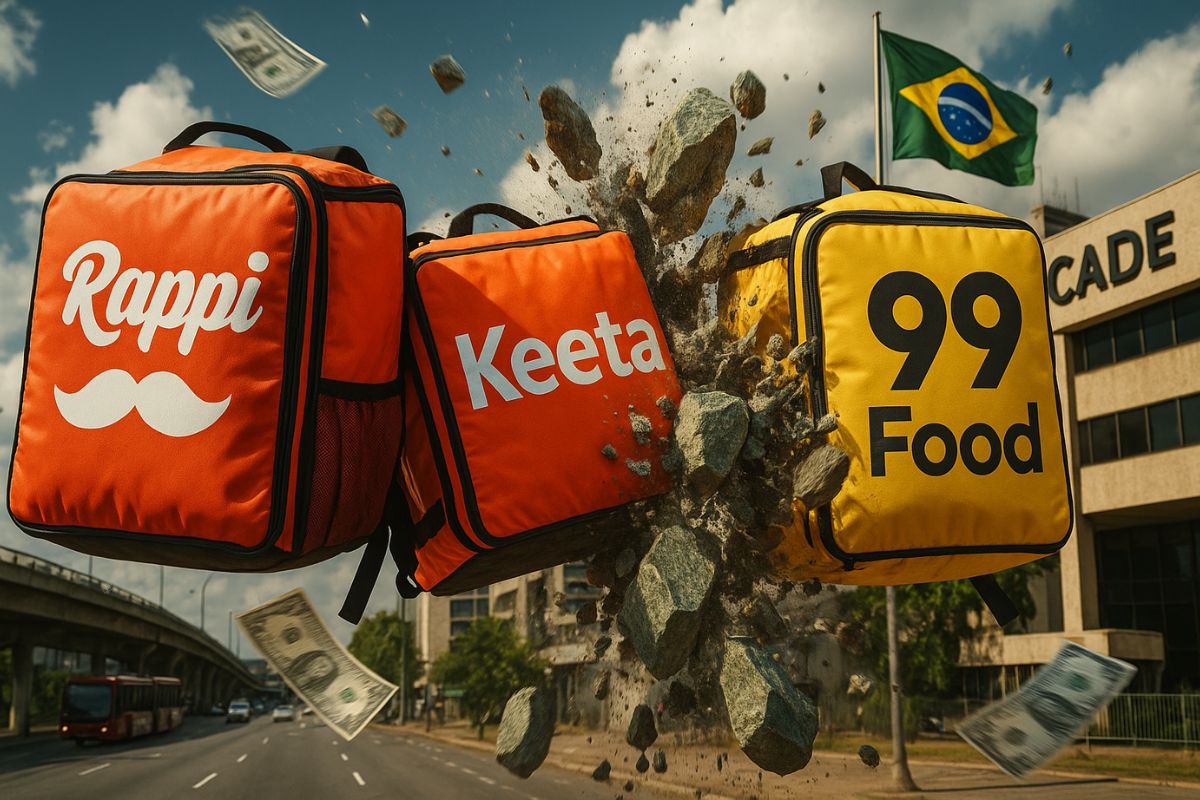
The Battle Between Apps Rappi, Keeta, and 99Food Has Reached the Cade and Ignites the Debate About the New Monopoly in Delivery, Following Allegations of Exclusivity Clauses with Restaurants, Possible Contractual Restrictions, and Concentration Risk That Threatens Competition and the Entry of New Players Into the Brazilian Market
The dispute between delivery giants Rappi, Keeta, and 99Food has moved from phones to the Administrative Council for Economic Defense (Cade), the body that regulates competition in Brazil. Rappi has requested to join a process opened against 99Food, alleging anticompetitive practices and exclusivity clauses that would prevent restaurants from operating with other apps.
According to O Globo, the case comes months after the entry of Keeta, from the Chinese group Meituan, into the country and raises the alarm again about the risk of a new monopoly in delivery, in a market already concentrated by iFood. 99Food, for its part, defends itself by saying that the clauses are partial, temporary, and legitimate, but experts warn that the dispute could redefine the competitive balance between platforms.
The Accusations of Anticompetitive Practices
According to the representation presented to Cade, Rappi accuses 99Food of adopting restrictive contractual clauses that prohibit restaurants from maintaining commercial relationships with competitors such as Rappi and Keeta during the duration of the contracts. In case of breach, there would be heavy fines, as well as an extension of the restrictions to franchises and branches.
-
With an investment of R$ 612 million, a capacity to process 1.2 million liters of milk per day, Piracanjuba inaugurates a mega cheese factory that increases national production, reduces dependence on imports, and repositions Brazil on the global dairy map.

-
Brazilian city gains industrial hub for 85 companies that is equivalent to 55 football fields.

-
Peugeot and Citroën factory in Argentina cuts production by half and opens a layoff program for more than 2,000 employees after Brazil drastically reduced purchases of Argentine vehicles.

-
A Brazilian city gains a factory worth R$ 300 million with the capacity to process 200 thousand tons of wheat per year, a mill of 660 tons/day, silos for 42 thousand tons, and an industrial area of 276 thousand m².

Keeta, which plans to start operations in Brazil later this year, made a similar complaint. Both companies argue that the exclusivity model harms free competition and the right of restaurants to choose, reproducing practices already fought against in 2023, when Cade reached an agreement with iFood after similar investigations.
The Defense of 99Food and the Allegation of “Rhetoric”
In documents submitted to Cade, 99Food denies wrongdoing and states that the so-called “ban clause” has no legal basis, being merely inflated rhetoric from competitors. The company asserts that the exclusivities would be partial and temporary, linked to direct investments in marketing and restaurant infrastructure, which, according to them, would justify commercial counterclaims.
99Food also argues that its market share is still marginal, with no power to block competitors’ access or significantly alter sector dynamics. The company recently resumed operations in Brazil, operating in São Paulo and Goiânia, and is trying to regain space in a market dominated by large players.
The Risk of a New Monopoly in Brazilian Delivery
The dispute rekindles the fear of a duopoly forming between iFood and 99Food, should Cade not impose limits on exclusivity practices. For Rappi, repeating behaviors considered harmful to competition would be a setback for the market and a direct barrier to the entry of new players, which would reduce business opportunities and impact delivery workers and consumers.
Behind the scenes, analysts highlight that the delivery market in Brazil moves billions and that healthy competition is essential to maintain fair prices and expand innovation. A new monopoly in delivery could generate knock-on effects, such as lower commissions paid to delivery workers, increased fees to restaurants, and less diversity of available apps.
The Role of Cade and the Impact on the Sector
Cade, responsible for ensuring free competition, has already intervened in 2023 in the iFood case, imposing restrictions on exclusivity contracts with restaurants. The new process with 99Food will be a test for the effectiveness of regulation in the increasingly concentrated technology and digital platforms segment.
Experts in competition law emphasize that if the allegations are confirmed, Cade may require contractual changes, impose fines, and order cessation of conduct commitments. This could reconfigure the market, balancing power between platforms and restoring the principle of equal access to the customer and delivery worker base.
Delivery Workers and Restaurants at the Center of the Dispute
Behind the legal disputes and billion-dollar figures, there are restaurants and delivery workers, who feel the effects of exclusivity in practice. When an app concentrates the market, establishments lose negotiating power and become more dependent on a single platform to generate sales.
Similarly, delivery workers may see their income impacted, as the lack of competition reduces earning margins and the number of available rides. With more active players, the sector tends to pay better and offer more flexible conditions, fostering a fairer balance.
A Market in Transformation and Surveillance
The entry of Keeta and the clash between Rappi and 99Food show that the delivery market is in a new phase of consolidation. The coming months will be decisive in determining whether Brazil will maintain a competitive ecosystem or return to concentrating power in the hands of a few apps.
The decision of Cade could set a precedent for other digital sectors and signal how the country deals with platform monopolies. Meanwhile, restaurants, delivery workers, and consumers are watching the developments that could change prices, fees, and labor relations throughout the sector.
The battle between Rappi, Keeta, and 99Food at Cade goes far beyond the competition between apps, putting at stake the future of competition and commercial freedom in Brazilian delivery.








Seja o primeiro a reagir!