





 Português
  Inglês
  Espanhol
  3 min de leitura
  0 comentários


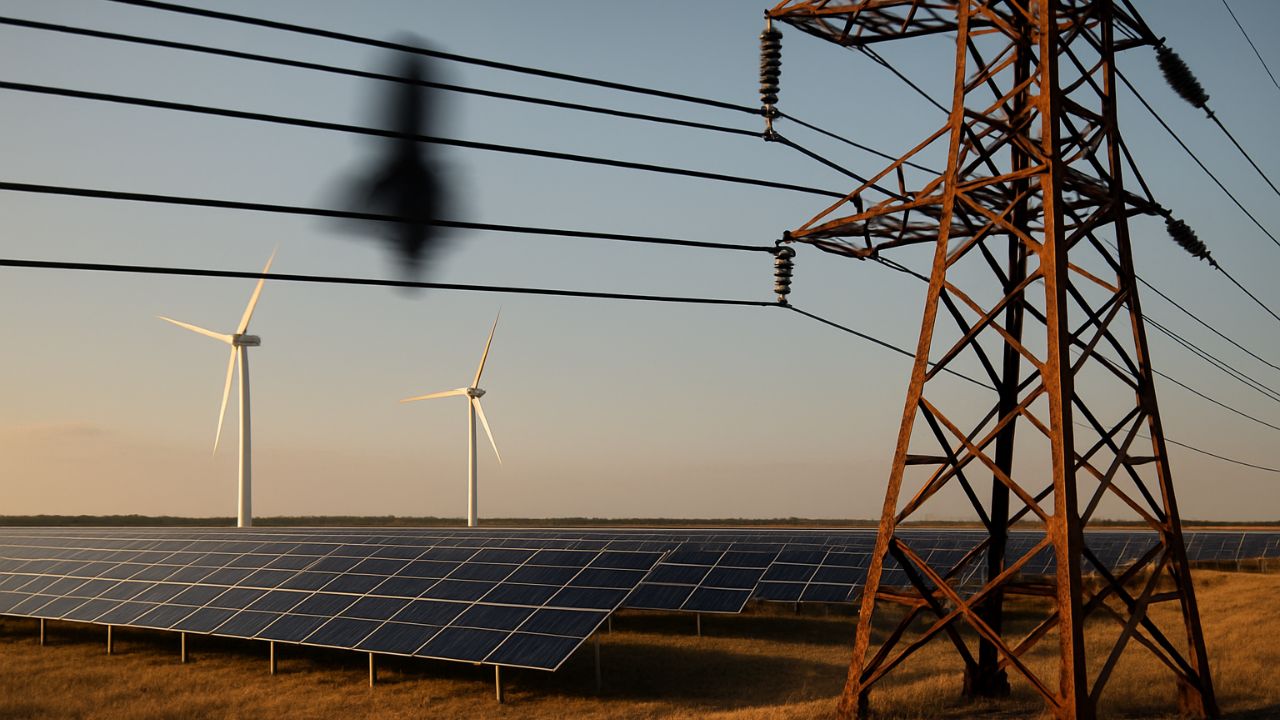
As Generation Grows, Brazil Hits a Wall with an Old Power Grid That Could Compromise All Advances in Clean Energy
Even with the significant growth of sources like solar and wind, Brazil faces a silent obstacle: the transmission network. Without modernizing this infrastructure, the country risks wasting its renewable energy potential and stalling its energy transition.
The Infrastructure Challenge on the Path to Clean Energy
The expansion of renewable energy in Brazil depends not only on the installation of solar panels or wind turbines. As highlighted by the magazine Exame, the major obstacle lies in the transmission network, which needs to be modernized to handle the intermittency and decentralization typical of these sources. Many of the lines still follow outdated standards, designed for a centralized and inflexible system.
This technological lag represents a real problem: even if there is abundant supply of clean energy, it may not reach consumers if the grid is not prepared to receive and distribute that volume dynamically and safely. This situation calls into question the effectiveness of the energy transition itself.
-
Renewable energy advances over protected areas in Brazil, and a survey by the Energy Transition Observatory reveals silent impacts that challenge environmental conservation and pressure sensitive traditional territories.

-
Rio Grande do Sul accelerates energy transition: State invests in renewable technologies and consolidates decarbonization strategies and pathways to attract billions in new industrial investments.

-
With 160,000 m² of collectors, an area larger than 20 football fields, Silkeborg, in Denmark, hosts a solar thermal plant that heats 19,500 homes and could become the largest solar heating plant in the world.

-
A study reveals the expansion of renewable energy procurement in Brazil and shows how companies are taking advantage of opportunities to reduce expenses, ensure energy efficiency, and strengthen strategic environmental commitments.


Technologies That Promise to Transform
The path to overcoming this barrier involves adopting so-called Grid Enhancing Technologies (GETs), already successfully implemented in countries like Belgium and the United States. These technologies modernize the power grid without requiring new lines or large infrastructure works.
Among the main solutions cited by Exame are Dynamic Line Rating (DLR), which adjusts the capacity of lines according to the weather, and the use of high-capacity cables, which increase energy transport with fewer losses. Additionally, there is the HVDC (High Voltage Direct Current) technology, ideal for long distances, and FACTS systems, which optimize network control. The deployment of batteries also plays a fundamental role, helping to store energy at the right moments.
Brazil Begins to Advance, But Still Timidly
In the Brazilian scenario, the first steps are being taken. According to Exame, ANEEL has already authorized the use of FACTS in São Paulo, and some pilot projects adopt higher-capacity cables. However, the pace is still slow, and experts warn of the urgency for a robust national strategy focused on modernizing infrastructure.
The specialized platform Canal Energia also reinforces the need for coordinated planning, highlighting that investment in transmission must go hand in hand with generation auctions. Otherwise, there will be a structural imbalance between what is produced and what can effectively be delivered to consumers.
Without a Modern Grid, There Is No Truly Sustainable Energy
The message is clear: the future of clean energy in Brazil will not be defined solely by the number of plants built, but by the intelligence of the grid connecting it all. Modernizing transmission is more than a technical step; it is a strategic decision involving energy security, competitiveness, and long-term sustainability.
It is no coincidence that the American slogan “No Transition Without Transmission” has gained ground in global energy discussions. In Brazil, this phrase fits perfectly: there’s no point in multiplying solar and wind farms if the power grid cannot keep up. Without modern transmission, the energy transition becomes an empty promise, and the country remains hostage to a last-century infrastructure to deal with present-day challenges.









Seja o primeiro a reagir!