





 Portuguese
  English
  Spanish
  3 min of reading
  0 comments



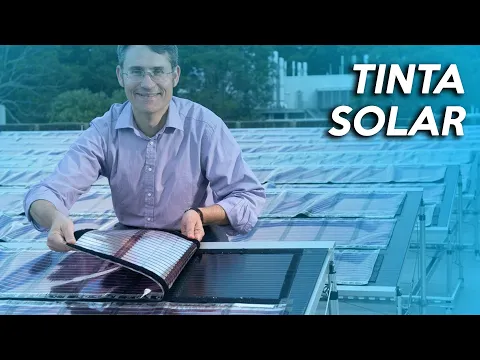
The Solar Paint Is An Innovation That Promises To Transform Any Surface Into A Source Of Clean Energy. There Are Several Forms Of This Technology, Including Hydrogen Paint, Quantum Dot Cell, And Perovskite, Each With Its Own Characteristics And Benefits.
Solar energy has been a rapidly growing source of renewable energy, especially in the United States, where the annual growth rate is 42%. Now, a new innovation promises to revolutionize the sector even further: solar paint. This technology promises to turn any surface into a source of clean energy, saving electrical energy and contributing to a more sustainable future.
Imagine applying a special paint to your house roof, walls, or even existing photovoltaic panels to generate extra electricity. This is the promise of solar paints, which go beyond conventional methods of capturing solar energy.
Discover The Solar Paints Being Developed By Scientists Around The World
Hydrogen Solar Paint
At the Royal Melbourne Institute of Technology in Australia, scientists have developed an innovative solar paint that does not rely solely on sunlight but also on moisture present in the air.
-
The Sol do Agreste Photovoltaic Complex begins operations in Pernambuco and accelerates the expansion of solar energy in Brazil, directly impacting the reduction of emissions and strengthening the sustainable energy matrix.

-
The Sol do Agreste Photovoltaic Complex begins operations in Pernambuco and accelerates the expansion of solar energy in Brazil, directly impacting the reduction of emissions and strengthening the sustainable energy matrix.

-
Renewable energy advances over protected areas in Brazil, and a survey by the Energy Transition Observatory reveals silent impacts that challenge environmental conservation and pressure sensitive traditional territories.

-
Rio Grande do Sul accelerates energy transition: State invests in renewable technologies and consolidates decarbonization strategies and pathways to attract billions in new industrial investments.


How does it work? By collecting water vapor, this paint generates electricity.

It contains a mixture of compounds that act as semiconductors, catalyzing the splitting of water atoms into hydrogen and oxygen.
Titanium oxide and synthetic molybdenum sulfide are the main components of this revolutionary solar paint.
Quantum Dot Solar Cells (CQD)
Researchers at the University of Toronto created CQD paint to increase the efficiency of solar cells by up to 11%.
This technology uses nanoscale semiconductors embedded in a photon-absorbing film.
The nanoparticles present in the paint allow for greater light absorption, including in the near-infrared spectrum.

Imagine spraying these cells onto flexible surfaces or printing sunlight-sensitive dots on flexible films.
Garden furniture, airplane wings, and even the roof of a car could become energy generators.
Perovskite Solar Paint
Named after the Russian mineralogist Lev Perovski, perovskite is a semiconductor material that converts solar energy into electricity.
In 2009, Japanese scientists pioneered the use of perovskites in solar applications.
More recently, researchers at the University of Sheffield created perovskite-based solar molecules, applying them through a spray painting method.

These photovoltaic cells, also called spray solar cells, have a high light absorption capacity.
Imagine painting any exposed surface with this paint and harnessing the power of the sun.
Despite Being Revolutionary, There Are Still Many Challenges
Although solar paints promise a revolution in the energy sector, they face significant challenges, such as low energy conversion efficiency.
Currently, these paints can capture only about 3 to 8% of the incident energy, compared to traditional photovoltaic panels.
However, researchers are dedicated to overcoming these obstacles, aiming to make paint a viable and affordable option for clean energy generation.
As we move toward a more sustainable future, solar paint has the potential to become an essential tool in the transition to renewable energy sources.
While still in the early stages of development, these innovative technologies represent a significant step toward a cleaner and energetically self-sufficient world.
How To Generate Energy Using Only A Paint?










Seja o primeiro a reagir!