





 English
  Francês
  Alemão
  Italiano
  Japonês
  Norueguês
  Portuguese
  Spanish
  5 min of reading
  0 comments



Administrative Recognition in the Santa Catarina Judiciary Opens the Way for Special Retirement for Employees with Fibromyalgia, Following Changes in Federal Legislation Allowing for Equivalence to Persons with Disabilities Through Individual Assessment, Which May Reduce Minimum Age and Time of Contribution.
The Santa Catarina Court of Justice (TJSC) has already begun recognizing, in the administrative sphere, the right to special retirement for state judiciary employees diagnosed with fibromyalgia and related conditions, according to information released by the Santa Catarina Judiciary Workers’ Union (SINJUSC).
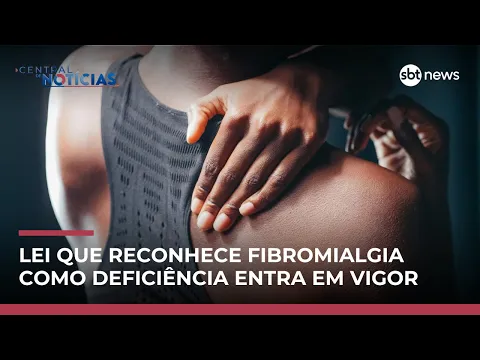
This recognition is based on Federal Law 15,176, enacted in July 2025 and in effect since January 2026, which now allows, in specific situations, the equivalence of people with fibromyalgia to persons with disabilities.
This opens up the possibility of reducing the minimum age and time of contribution requirements, provided the employee is classified as a person with a disability after an individual technical assessment.
-
Employee Fired After Accumulating 114 Days of Medical Leave in One Year, Labor Court Upholds Company’s Decision

-
Employee Fired While Treating Depression Wins in Court and Vale Is Required to Rehire Him Following Decision Based on the CLT and INSS Benefits

-
Workers Should Be Aware! March 6 Will Be The Fifth Business Day Of March And The Final Deadline For Companies To Pay Salaries According To The CLT

-
2026 FGTS Anniversary Withdrawal Is Released According to Birth Month, Sets Amounts by Balance Range, Establishes Deadlines for March and April, and Changes Rules in Case of Dismissal


This classification is precisely what allows access to the different rules set forth in the specific pension regime of the State of Santa Catarina.
Change in Federal Law and Pension Implications
Enacted in 2025, Law 15,176 amended provisions of Law 14,705, from 2023, by establishing national guidelines for the protection and care of people with fibromyalgia, chronic fatigue, complex regional pain syndrome, and related diseases.
Among the innovations brought by the regulation is the provision that individuals affected by these conditions may be equated to persons with disabilities, provided that specific technical criteria are met.


The legal text states that “the equivalence of a person affected by the diseases referred to in Article 1 of this Law to a person with a disability is conditional upon an evaluation of biopsychosocial factors by a multidisciplinary and interdisciplinary team.”
This evaluation should take into account impairments in the functions and structures of the body, socio-environmental, psychological, and personal factors, in addition to limitations in activity performance and restrictions on participation in society.
Another important point is that the law established a 180-day period between its publication and the start of its effects, meaning its practical implementation only began in January 2026.
How Special Retirement Works in the Santa Catarina Regime
At the state level, access to retirement for persons with disabilities is provided for in Article 64-B of Complementary Law 412/2008, which governs the specific pension regime for public servants in Santa Catarina.
This provision sets distinct requirements for time of contribution according to the degree of disability recognized in the assessment process.
In cases classified as severe disability, the legislation allows retirement with 20 years of contribution.
For classifications of moderate or mild disability, the minimum required times vary according to the employee’s gender.
There is also the possibility of retirement by age, set at 60 years for men and 55 years for women, provided they prove at least 15 years of contribution and the existence of the disability during this period.
It is based on this set of rules that the TJSC has been analyzing administrative requests related to fibromyalgia, always in an individualized manner and conditioned to technical evaluation.
Administrative Decision Cited by the Union
According to SINJUSC, a recent administrative decision by the TJSC recognized the right to special retirement for an employee diagnosed with fibromyalgia.
According to the report released by the union, this classification allowed the worker to retire about eight years earlier than what would be required by the general rules of the pension regime.
In addition to the early retirement benefit, the decision also ensured the right to a retention bonus for the period when the employee already met the requirements for special retirement but remained active.
Despite this recognition, the union’s legal advisory emphasizes that each situation must be individually analyzed.
One of the main points of concern involves the effects of the choice on rights such as completeness and parity.
In the cited case, opting for special retirement could result in the loss of these rights, with the benefit being calculated at “100% of the average of 80% of the highest salaries.”
This is explained by the fact that while the employee entered public service in 1997, completeness and parity are only guaranteed under specific transitional rules.
Internal Limitations and Registration Difficulties
Even with progress in legal recognition, operational barriers persist within the administrative structure.
The director of SINJUSC, Daniele Burigo, who lives with fibromyalgia and is awaiting the conclusion of an administrative process on the subject, states that the recognition has not yet fully reflected in internal systems.
According to her, “the new federal law is an important milestone and the result of years of struggle.”
Nonetheless, Daniele points out that “despite the recognition, the registration is not yet in the functional record, as the ERP system does not provide an option for fibromyalgia, which prevents access to all rights guaranteed by law.”
This technical limitation may delay or even hinder, in practice, access to rights already recognized in the legal framework.
Until there is standardization in records, employees remain dependent on detailed administrative analyses and, in many cases, specialized legal support.
Legal Guidance for Individual Cases
Given the complexity of pension rules and the requirement for technical assessments, SINJUSC recommends that employees seeking assistance obtain legal guidance before formalizing requests.
The union informs that it has the assistance of the Pita Machado Law Firm to provide support to the category.
Inquiries can be sent through Conecte SINJUSC, a WhatsApp support channel maintained by the entity.
Seeking specialized guidance is considered essential for evaluating documents, functional history, and alignment with applicable transition rules for each situation.
What Characterizes Fibromyalgia
According to the Brazilian Society of Rheumatology, fibromyalgia is a clinical syndrome characterized by widespread pain, especially in the muscles.
In addition to persistent pain, the condition usually includes fatigue, non-restorative sleep, and other symptoms such as memory and attention changes, anxiety, depression, and gastrointestinal disorders.
Data presented by the entity indicate that the condition is significantly more frequent among women.
Estimates suggest that out of every ten people diagnosed with fibromyalgia, between seven and nine are female.
Federal legislation makes it clear that a simple diagnosis does not automatically guarantee equivalence to the condition of a person with a disability.
The analysis always depends on the biopsychosocial assessment and the actual functional impact of the disease on the employee’s life.
With the TJSC already recognizing requests in concrete situations, expectations are growing for new applications to be submitted.
How will the Judiciary and the State organize and standardize these procedures to ensure predictability, without disregarding the particularities of each case?









Seja o primeiro a reagir!