





 Portuguese
  English
  Spanish
  5 min of reading
  3 comments


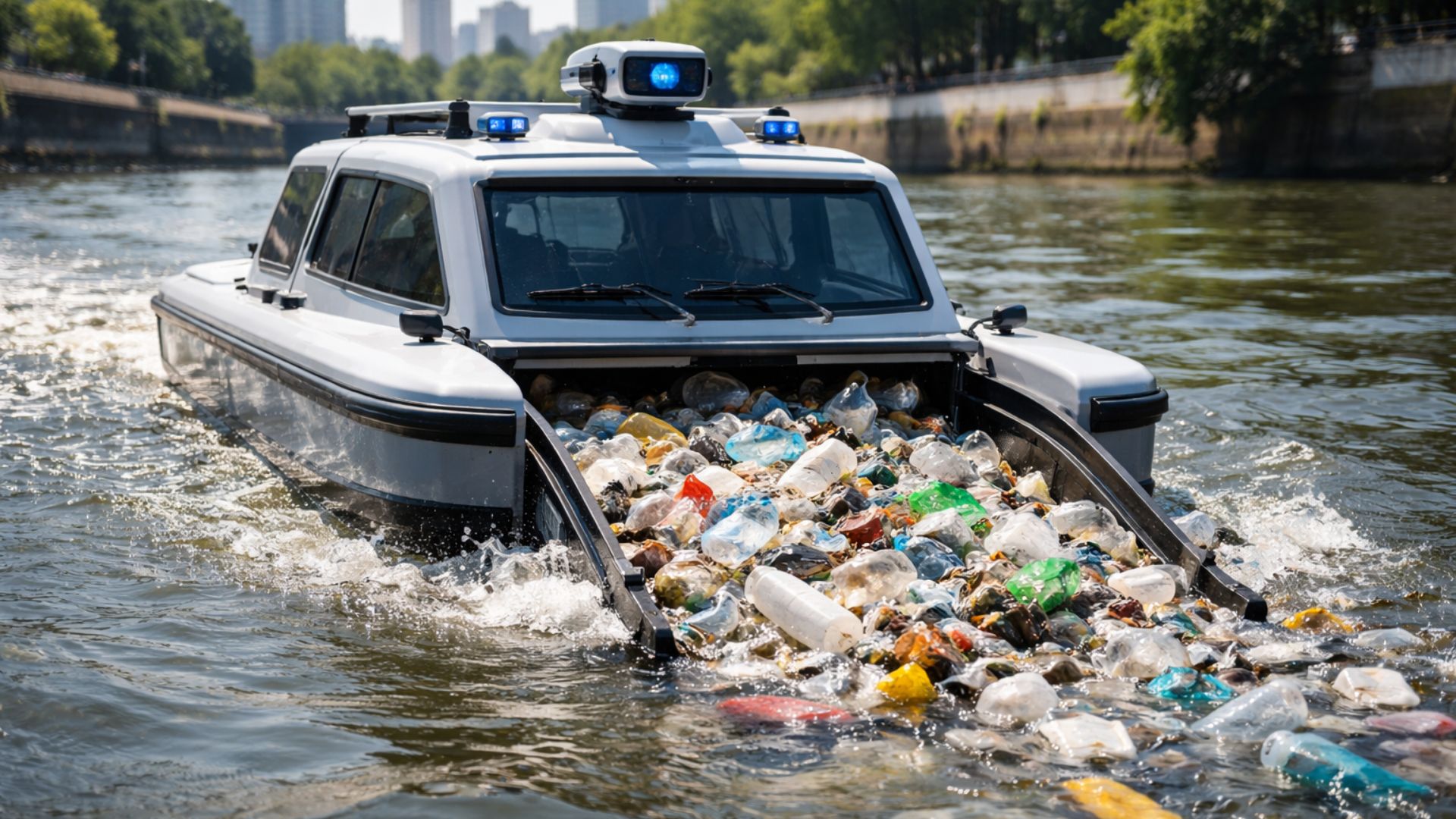


Technology Unites Electric Boats And Artificial Intelligence To Remove Trash From Rivers And Ports Before It Reaches The Sea, With A Collection Capacity Of Up To 200 Kg Per Operation And Thousands Of Kilos Removed In India, In Addition To Generating Strategic Data For Environmental Management.
Two young entrepreneurs created electric and autonomous vessels that use artificial intelligence to collect floating trash in rivers, channels, and port areas, with a reported capacity of up to 200 kg per operation and records of removal totaling tons in actions in India.
Called Clearbot and presented as an initiative born in Hong Kong, the solution combines autonomous navigation in busy environments, identification of surface waste, and capture of the material in a compartment, before the current carries it away.
River Cleanup Before Trash Reaches The Sea
Instead of waiting for tides, rains, and winds to push plastics and packaging to beaches and mangroves, the proposal is to intercept the problem within the waterways, mainly in urban stretches where the accumulation tends to be daily.
-
What can really trigger large volcanic eruptions? Research suggests that gas returning to the magma may be more dangerous than gas escaping from it.
-
Found in one of the most radioactive places on Earth, this Chernobyl fungus may be doing something with radiation that no one has been able to explain to this day.
-
A bright yellow mushroom imported from Asia escaped from a cultivation farm in the United States in 2010 and is now aggressively spreading across 25 states, destroying entire communities of native fungi in American forests.

-
Buried under China, a colossal machine weighing 20,000 tons began operating as the largest neutrino detector on the planet and, in just 59 days, surpassed results that science took half a century to achieve.


In these areas, lightweight waste like Styrofoam, bottles, and bags tends to concentrate in eddies and along banks, creating an involuntary “finish line” for irregular disposal and urban drainage that carries material to ditches, channels, and estuaries.
The company describes its boats as fully electric and capable of operating autonomously or under remote supervision, depending on the scenario and local requirements, something that can make a difference in areas with small vessel traffic.
Artificial Intelligence To Identify Trash And Avoid Obstacles

To guide navigation and recognize what should be collected, Clearbot reports using cameras and computer vision models trained to differentiate floating debris and simultaneously detect typical interior water obstacles, such as buoys and structures.
The development of these models, according to public materials about the project, began with images captured in the field and scaled up as operations accumulated a larger bank of examples, which usually enhances recognition capacity in varied situations.
Autonomous navigation in water imposes challenges that do not appear the same way on streets, because reflections, ripples, and low visibility can confuse sensors; thus, the project also mentions training for obstacle avoidance during operation.
Collection Capacity And Numbers Released By The Company
In demonstration pages, Clearbot states that certain models can collect 200 kg of trash at once, indicating that electrification and autonomy reduce fuel, decrease team needs, and increase collection frequency.
In those same materials, the organization attributes the removal of 4,691 kg of waste in a trash removal project in Bharatpur, in the Indian state of Rajasthan, to a partnership with the local municipal authority.
In a project associated with the Jawaharlal Nehru Port Authority in the Mumbai area, the company reports approximately 3,000 kg collected, also in a context of cleaning a defined area with emphasis on monitoring what was removed.
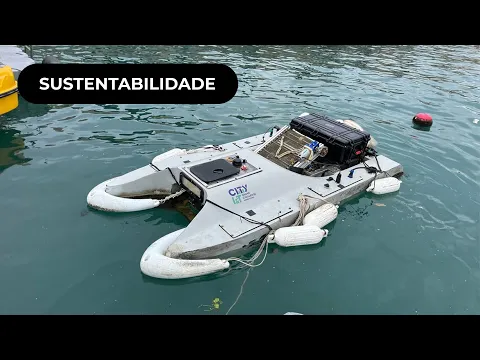

Alongside the numbers, the project’s documentation mentions that the technology can be applied not only to plastic waste but also to invasive aquatic plants, in which case the goal is to remove accumulated biomass in canals and rivers.
Strategic Data For Cities And Ports
A repeated differentiator in the service descriptions is the transformation of cleanup into data, recording where the collection occurred, how much material was captured, and which types of waste appear most frequently at each monitored point.
In practice, these records can be presented in reports and dashboards, according to what the company discloses, allowing managers to identify critical points and track trends over time, rather than relying solely on isolated actions.
While cleaning efforts often produce striking before-and-after images, the actual flow of waste tends to replenish the scenario in a short time, especially in densely populated areas, where irregular disposal finds a transport corridor in the water.
On the other hand, automation does not eliminate what happens after removal since the material needs to be unloaded, separated, and disposed of correctly, and part of what reaches the water is already degraded or contaminated, which usually reduces the possibility of recycling.
Structure Of Electric Boats And Operation In Coastal Areas

Materials about Clearbot indicate vessels in an approximate range of 10 to 16 feet in length, with a structure designed to work in river and coastal environments, where there is variation in current, interference, and the need for maneuvering.
Furthermore, the company and publications about the project highlight the use of onboard computing aimed at executing AI with low consumption, precisely to keep the electric boat operating without relying on a combustion engine.
This combination of applied robotics and visible impact helps explain why the subject draws attention beyond the traditional environmental audience, as the robot boat refers to a daily problem that is easily recognizable in cities.
Still, the proposal relies less on promises and more on pilots and projects described in portfolios and institutional materials, with removal numbers presented on a case-by-case basis and a focus on recurring service provision.
By transforming cleanup into a measurable routine, with indicators and tracking of critical points, the initiative tries to address the maintenance dilemma, which seeks to prevent trash removal from being just an occasional event interrupted when mobilization ends.
If The Technology Can Already Intercept Part Of The Trash Floating In The Waters And Convert The Operation Into Data, What Is Missing For Cities And Ports To Use This Information To Reduce The Input Of Waste At The Source And Prevent The Same Problem From Reappearing The Next Day?







Infelizmente não existe ensinamento nas escolas do Brasil,deveria haver aulas de como separar o lixo em casa,se tivéssemos este cuidado,não teriamos rios,mares,etc com tanto lixo,o povo porco !
É urgente o investimento na limpeza dos Rios e marés.
Para recolher o próprio lixo que jogaram nas ruas da cidade… se o povo fosse educado, de não atirar lixo nas ruas, não haveria necessidade de todo esse ‘frisson’ com essa invenção altamente tecnológica