





 Portuguese
  English
  Spanish
  4 min of reading
  0 comments


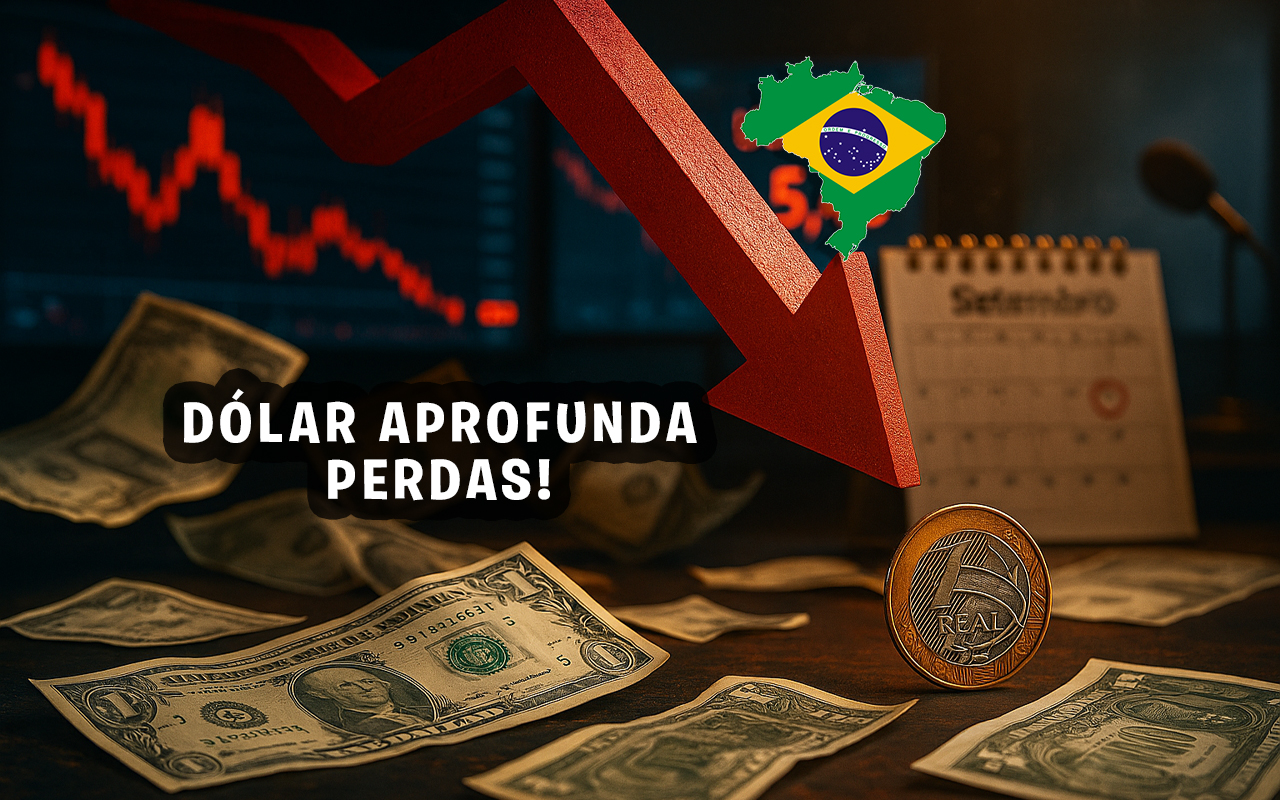
The August Payroll Showed Only 22 Thousand Jobs and Unemployment at 4.3% in the U.S. The Dollar Today Fell in Brazil to Around R$ 5.40, With a Decline in Treasuries and the DXY, Reinforcing Cuts in Interest Rate Bets by the Fed This Month.
The spot dollar fell to R$ 5.4059 around 9:48 AM this Friday (05), while the future dollar for the first maturity dropped to R$ 5.4350 on the B3. The movement intensified shortly after the release of the U.S. labor market numbers. According to Reuters, the American currency weakened globally after the weak data.
Abroad, the dollar index (DXY) decreased to the range of 97.5–98.0, reflecting a lower premium of the dollar against major currencies. This weakening was accompanied by a decline in the Treasury yields, signaling a repricing of rates in the U.S.
For local investors, the combination of a weaker dollar abroad and risk appetite tends to favor emerging currencies like the real, especially in sessions guided by relevant macro data and expectations of monetary policy in the U.S.
-
The government requests the Federal Revenue Service for a new system to automate the income tax declaration, reducing errors, time, and bureaucracy for millions of Brazilians.

-
Pix in installments, international Pix, and contactless payment without internet: the Central Bank revealed the new features coming to the tool that is already used by almost every adult in Brazil.

-
Mercado Livre has just started selling medications with delivery in up to three hours to your door, and this move could completely change the way Brazilians buy medicines on a daily basis.

-
In Dubai, rising tensions from the war in the Middle East are causing super-rich individuals to leave the Gulf and direct their fortunes to a new financial refuge in Asia.

What Came in the U.S. Payroll, 22 Thousand Jobs and Unemployment at 4.3%
The official report from the Bureau of Labor Statistics (BLS) showed the creation of 22 thousand jobs in August and an unemployment rate of 4.3%. There was an increase in healthcare, partially offset by losses in the federal public sector and in mining and oil and gas. There were also revisions in previous months, reinforcing the reading of a slowdown in the labor market.
The figure was well below the median of estimates, which pointed to about 75 thousand jobs. The negative surprise intensified the reading of weaker activity and, consequently, less pressure on inflation ahead.
In practice, numbers like these open space for the Federal Reserve to consider interest rate cuts, especially when combined with signals of relief on other fronts.
Why This Affects Currency: DXY and Treasuries Declining
With the weak payroll, the Treasury yields fell significantly, with the 2-year bond decreasing to around 3.48% at the beginning of the day. Lower U.S. rates tend to weaken the dollar, putting pressure on the DXY downward and favoring currencies of emerging countries.
Lower U.S. rates reduce the opportunity cost of holding dollars and can redirect flows to risk assets, including currency, stocks, and commodities. At the same time, part of the market is already discussing the probability of a 25 basis point cut and even a chance of a 50 basis point cut at the September meeting.
For Brazil, when external forces push the dollar down, the local dollar rate usually follows suit unless domestic factors pull it in the opposite direction.
Market Prices in Fed Cuts, Effects on the Dollar Today and on the Future Dollar
Market reports indicate a high probability of a Fed cut in September, a move that has been priced in and gained strength with today’s data. As a result, the future dollar and spot dollar in Brazil quickly adjusted downward right after the release.
Besides the exchange rate, U.S. stocks fluctuated throughout the session, and the decline in yields reinforced the reading of near-term monetary easing. The correlation between rates, DXY, and dollar quotes in Brazil should remain on the radar throughout the day.
For those tracking the dollar today and the future dollar, levels around R$ 5.40–5.45 should remain as intraday attention ranges, potentially being revisited as new projections for the CPI and speeches from Fed officials come out.
Brazil in Focus: BC Announces Cap for Pix and TED in Unauthorized Institutions
On the domestic front, the Central Bank announced measures to enhance security for the National Financial System. Among them is a cap of R$ 15 thousand per transfer for unauthorized payment institutions operating through technology providers (PSTI), as well as the advancement of the licensing deadline for these institutions to May 2026. The declared goal is to combat organized crime and reduce fraud.
According to Agência Brasil, the texts with additional requirements are to be published in the DOU later this Friday, with staggered effectiveness. The monetary authority also detailed that the changes do not directly affect authorized banks nor alter the use of Pix by retail in general.
While this package is not the main driver of the dollar’s decline today, it tends to reduce local uncertainty, which can contribute to a slightly more favorable perception of domestic risk.
And you, do you believe that the fall of the dollar after the weak payroll in the U.S. is just a temporary relief or the start of a trend with a possible Fed rate cut as soon as September? Does this change anything in your day-to-day decisions? Do you expect dollar below R$ 5.40 or fear a reversal? Leave your opinion in the comments.









-

-

-

6 pessoas reagiram a isso.