





 Portuguese
  English
  Spanish
  4 min of reading
  0 comments


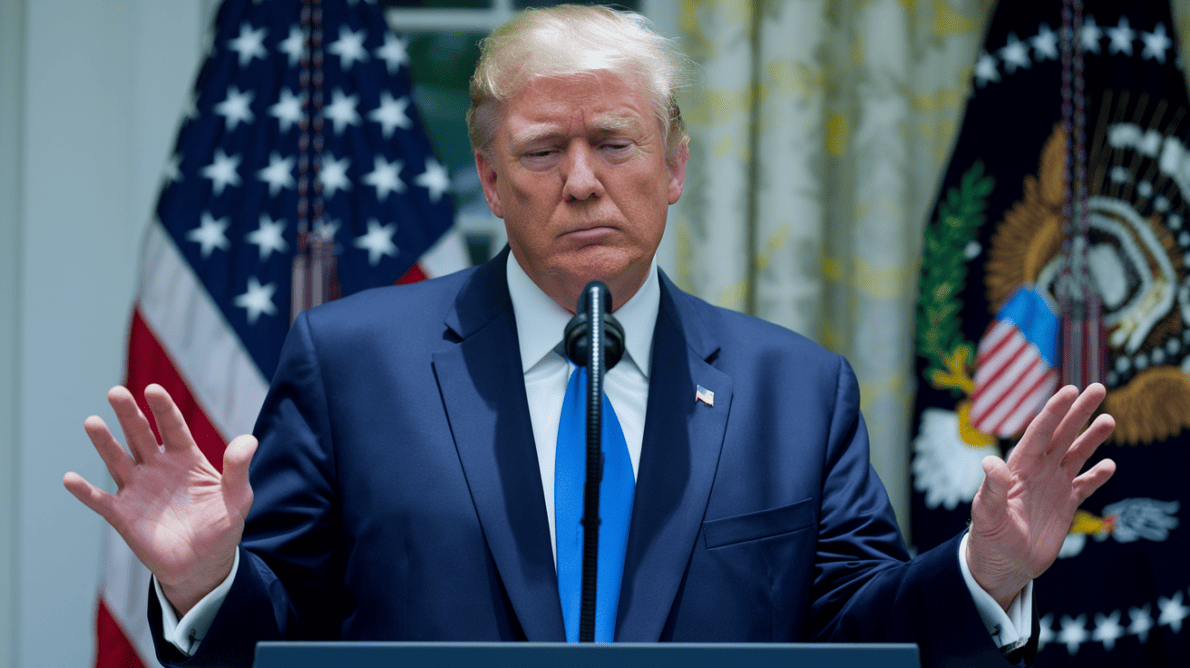
US President Donald Trump Announced The Partial Suspension Of Tariffs For 90 Days. However, The Government Will Keep The 10% Surcharge On Products From Several Countries, Including Brazil.
US President Donald Trump has partially retreated from the recently announced tariff policy, less than 24 hours after it went into effect. The decision came after intense pressure from businessmen, lawmakers, foreign governments, and the financial market itself, according to a report by the Wall Street Journal published on Wednesday (9).
The measure was announced by Trump himself through a social media post. The president informed that part of the tariffs will be suspended for 90 days. However, the government will maintain the 10% surcharge on products from several countries, including Brazil, and will increase the tariff on imported Chinese products to 125%.
Behind The Scenes Of The Decision
According to the report from the Wall Street Journal, the reversal began to be considered after internal meetings and external pressures. Treasury Secretary Scott Bessent played a central role in the change of position. He reportedly spent the weekend in contact with Wall Street representatives and traveled to Florida to present alternatives to the US president.
-
With an investment of R$ 612 million, a capacity to process 1.2 million liters of milk per day, Piracanjuba inaugurates a mega cheese factory that increases national production, reduces dependence on imports, and repositions Brazil on the global dairy map.

-
Brazilian city gains industrial hub for 85 companies that is equivalent to 55 football fields.

-
Peugeot and Citroën factory in Argentina cuts production by half and opens a layoff program for more than 2,000 employees after Brazil drastically reduced purchases of Argentine vehicles.

-
A Brazilian city gains a factory worth R$ 300 million with the capacity to process 200 thousand tons of wheat per year, a mill of 660 tons/day, silos for 42 thousand tons, and an industrial area of 276 thousand m².


Bessent reportedly emphasized the need to seek trade agreements and avoid an immediate negative impact on the American economy. The decisive conversation is said to have occurred during the return to Washington aboard Air Force One. Along with Bessent and Commerce Secretary Howard Lutnick, Trump decided to formalize the retreat.

Surcharges Maintained And Temporary Exceptions
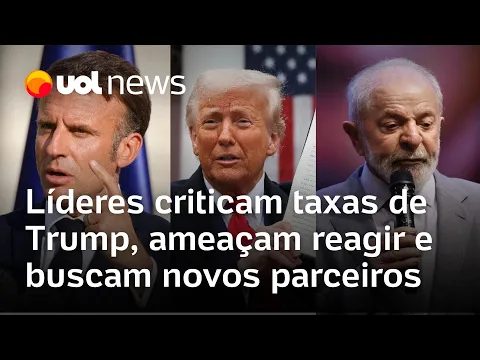
Despite the partial retreat, Donald Trump’s tariff policy remains in effect for several countries. The global 10% surcharge continues to be applied to partners like Brazil. The tariff on Chinese products has been raised to 125%.
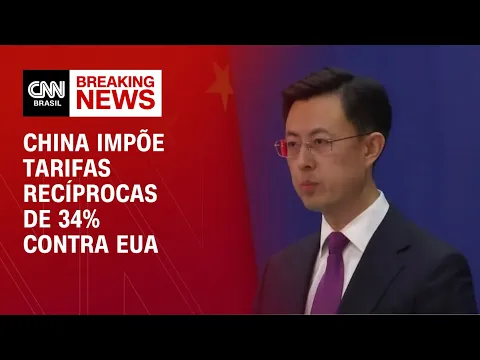
The 90-day suspension is expected to apply only to a portion of the recently instituted tariffs, which may open space for new negotiations with allied countries. According to Trump himself, the decision to suspend part of the measures was made “with the heart,” without consulting lawyers, and aimed to avoid penalizing nations that do not pose a commercial threat to the United States.
Global Reactions And In The Financial Market
More than 75 countries have reportedly expressed interest in negotiating the relaxation of tariffs, with Japan leading the talks, as reported by the WSJ. One of the factors that influenced the president’s decision was the declaration of JPMorgan Chase CEO Jamie Dimon. In an interview with Fox Business, Dimon warned that the new tariffs could trigger an economic recession in the United States.
According to sources close to the government, Trump watched the interview live and was moved by the statements. At the same time, government members had already been discussing possible adjustments to the tariff policy since last week.
While Trump was publishing the official statement, the US Trade Representative, Jamieson Greer, was participating in a hearing in Congress on the topic. Greer was only informed of the reversal during the session, which caused surprise and highlighted a lack of internal alignment.
Criticism And Support
The US president’s fluctuating stance has drawn criticism from opposition lawmakers. Democratic Representative Steven Horsford labeled the change as a sign of “amateurism.” On the other hand, the financial market reacted positively to the retreat, with the main stock indexes in the United States registering a strong rise in the session following the announcement.
However, on Thursday (10), US futures indexes are operating in decline, reflecting the volatility of the markets amid uncertainty about the continuity of American commercial policy.
Timeline: Escalation Of Tariffs Between The US And China
The current tariff policy of the United States began shortly after Donald Trump resumed the presidency:
- February 1: Trump raises tariffs on Chinese products by 10%
- February 4: China responds with tariffs of 15% on coal and liquefied natural gas, as well as 10% on US oil and machinery
- March 3: New tariffs of 25% are applied on imports from Mexico and Canada, along with a new increase of 10% on Chinese products
- March 4: China expands its retaliation, with tariffs of up to 15% on various US agricultural products
- April 9: Trump announces the temporary suspension of part of the tariffs for 90 days but increases tariffs on China to 125%
- April 10: China responds with tariffs of 84% on US imports
Future Paths
Despite the partial retreat, the landscape of trade disputes remains open. The maintenance of elevated tariffs against China suggests that the Trump administration will continue to adopt a tougher stance with its main partner and commercial competitor.
Experts indicate that the coming days will be crucial to understand the direction of US trade policy. The expectation is that new rounds of negotiations will take place between Washington and the governments impacted by Donald Trump’s tariffs, especially countries with strategic ties or existing trade agreements.
Source: Infomoney






Seja o primeiro a reagir!