





 Portuguese
  English
  Spanish
  6 min of reading
  0 comments


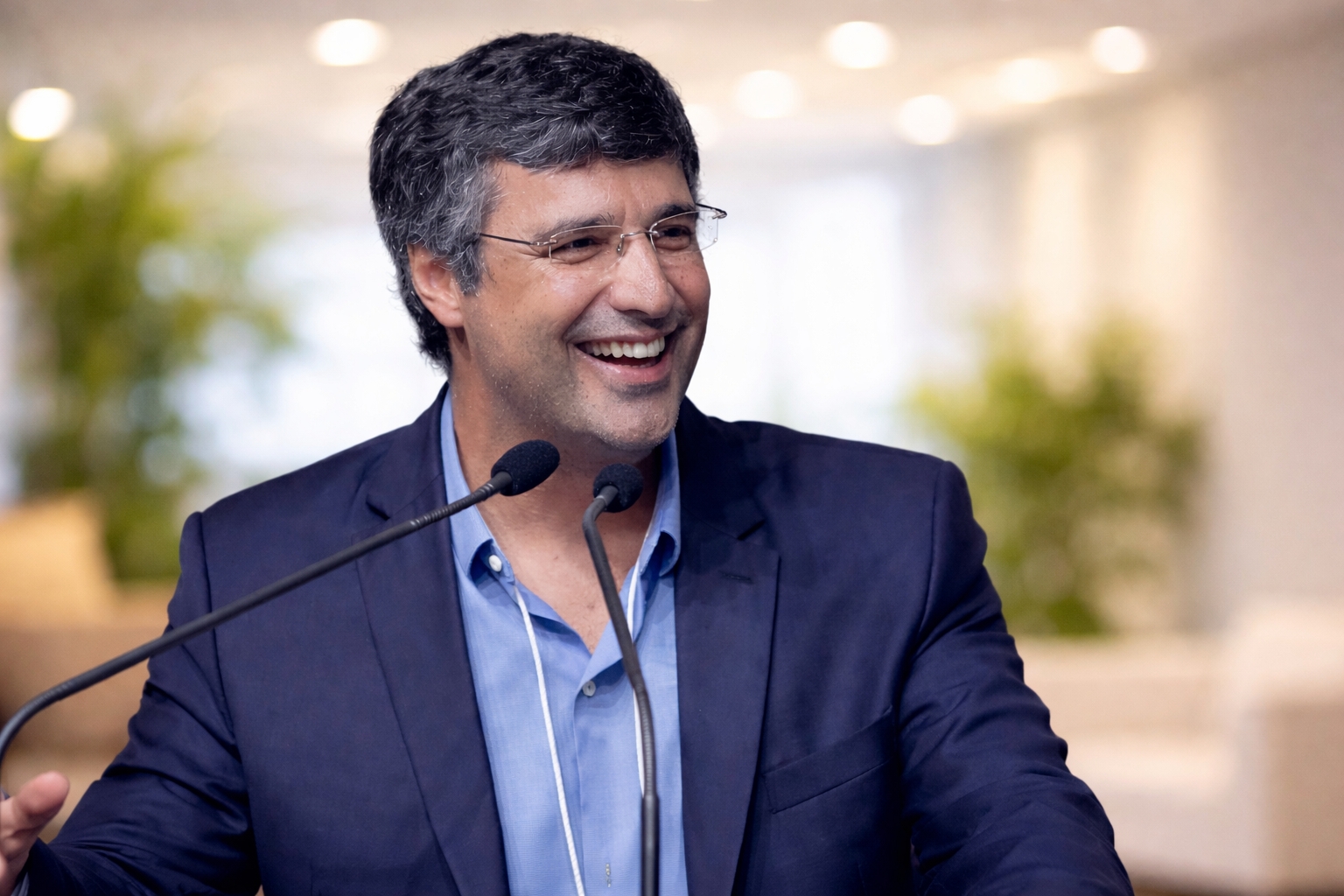
Discover How BTG, Led by André Esteves, Became the Largest Bank in Latin America, Transforming the Billionaire into a Symbol of Wealth, Aggressive Partnership, and a Money-Making Machine that Today Influences Brazil’s Infrastructure.
The Man Who Transformed BTG into a Money-Making Machine in Brazil. If there is one name that crosses Brazilian capitalism as if it had a reserved seat at any decision-making table, that name is André Esteves. At the helm of BTG, considered the largest bank in Latin America in investments, he built a path that combines calculated risk, relentless partnership, and a surgical reading of crises.
The result? A fortune amounting to around R$ 100 billion and a bank that became synonymous with a money-making machine in Brazil.
Today, BTG Pactual manages around R$ 2 trillion in assets and has a market value of over R$ 300 billion, according to public data from the bank’s investor relations department and information available on B3.
-
The government requests the Federal Revenue Service for a new system to automate the income tax declaration, reducing errors, time, and bureaucracy for millions of Brazilians.

-
Pix in installments, international Pix, and contactless payment without internet: the Central Bank revealed the new features coming to the tool that is already used by almost every adult in Brazil.

-
Mercado Livre has just started selling medications with delivery in up to three hours to your door, and this move could completely change the way Brazilians buy medicines on a daily basis.

-
In Dubai, rising tensions from the war in the Middle East are causing super-rich individuals to leave the Gulf and direct their fortunes to a new financial refuge in Asia.

In the last year, net income exceeded billions of reais, maintaining an average close to R$ 1 billion per month. Numbers that explain why many have provocatively referred to Esteves as the “owner of Brazil“.
But this story begins far from the financial elite.
From Tijuca to the Top: The Unlikely Start of a Billionaire
André Esteves was born in 1968, grew up in Tijuca, and did not come from the aristocracy of Leblon. The son of a university professor, raised practically by his mother and grandmother, he chose mathematics and computer science at UFRJ. Nothing of the traditional script from Faria Lima.
In 1989, at the age of 21, he joined Pactual Bank as a systems analyst. The environment was highly competitive. The bank had been founded by names like Luiz César Fernandes, Paulo Guedes, and André Jacurski.
The culture imported from the legendary Banco Garantia was simple and brutal: low fixed salary, unlimited bonuses, and a real chance to become a partner by buying your own chair. It was the model of partnership taken to the extreme.
Esteves did not take long. He migrated to the trading desk and, at 24, became the youngest partner in the bank’s history. Pactual was growing at around 30% per year. The new generation began to dominate profits.
The Founder’s Fall and the Birth of a New Era
While the young wing operated with an obsession for efficiency, founder Luiz César Fernandes decided to create Latin America Private Equity. The idea was to use million-dollar bonuses to acquire companies.
The execution was disastrous. Purchases without adequate due diligence, problematic assets, and management marked by excess. In 1998, the deficit reached US$ 142 million. Insolvent, the founder asked for advances on future bonuses.
The partners initially accepted, but withdrew days later. Led by names like Eduardo Plass, Gilberto Sayão, and Esteves himself, they imposed an ultimatum: we capitalize the bank, but you give up control.
In 1999, Luiz César sold his final 14% stake for US$ 84 million and discreetly left. From then on, leadership was taken over by a young and aggressive group. Pactual became the most profitable house in the country.
From Intermediary to Risk-Taker
The strategy changed radically. The bank moved from merely structuring operations for clients to using its own capital to take positions. It led issuances, coordinated IPOs, and became a protagonist in the Bovespa boom.
Between 2003 and 2006, it was among the three largest coordinators of public offerings in Brazil. In 2004, it participated in 8 out of the 11 offerings made in the country. Assets under management jumped from US$ 6 billion to over US$ 25 billion in a few years.
The valuation skyrocketed.
UBS Acquired Pactual for US$ 2.6 Billion, Potentially Reaching US$ 3.1 Billion, and Strategic Return
In 2006, UBS acquired Pactual for US$ 2.6 billion, potentially reaching US$ 3.1 billion. It paid multiples between 13 and 15 times earnings — a rare premium for Brazilian banks.
Esteves became UBS’s global head of fixed income. But the cultural shock was inevitable. Hierarchical structure, withheld bonuses, lower risk appetite. He wanted to accelerate. The bank wanted to hold back.
Before UBS was rescued by the Swiss government during the 2008 crisis — an episode extensively documented by Reuters — Esteves left.
Prohibited from opening a bank until 2011, he created BTG Investments. Amid the global chaos, he bought the Brazilian operation of Lehman Brothers and resold it days later for a profit. Quick. Surgical move.
In 2009, he returned to the major leagues: he repurchased Pactual for US$ 2.5 billion. When he sold it, the equity was US$ 400 million. When he repurchased it, it was US$ 2.1 billion. He paid practically the same for a bank five times larger.
Global Scale and Unbridled Ambition
In the following decade, BTG accelerated. In 2010, it raised US$ 1.8 billion with investors like Singapore’s GIC and Asian sovereign funds. In 2012, it went public raising over US$ 2 billion.
It bought the Chilean Celfin, the Colombian Bolsa y Renta, and, in Switzerland, BSI for US$ 1.7 billion — the largest international acquisition made by a Brazilian bank.
But the most audacious domestic move was Banco Pan, acquired for R$ 450 million after frauds nearly brought it to bankruptcy. BTG cleaned up the operation and transformed it into the current Banco PAN, which ended 2024 with a profit of R$ 855 million and more than 31 million clients.
The Shock of 2015: Imprisonment and a Test of Partnership
On November 25, 2015, André Esteves was arrested preventively in Operation Lava Jato. Shares dropped by 40%. Clients withdrew billions.
The market was betting on a collapse.
The partners chose to defend the institution. They sold assets, including BSI, liquidated positions, and honored withdrawals. No key partner abandoned ship. The partnership proved its worth.
Years later, the Supreme Court annulled the case. The bank had survived.
From Faria Lima to Brazil’s Infrastructure
The lesson was clear: relying solely on financial assets was risky. It was time to buy infrastructure.
The emblematic case was MPX, from Eike Batista. BTG converted debt into equity, took control, and the company became Eneva. Today, it is the largest private natural gas operator in Brazil, with a market value exceeding R$ 40 billion.
In 2024, a capital increase operation diluted the participation of the Moreira Sales family. By January 2026, the exit was completed. Control was concentrated in the group linked to BTG.
This move consolidated influence over strategic energy assets, reinforcing the image that the bank was no longer just a bank and began operating at the heart of the real economy.
The Expansion into Retail and the Common Investor
Until 2015, BTG mainly served ultra-wealthy companies and families. There was a limit to growth.
The solution was scale. BTG Pactual Digital democratized products that were previously restricted to the elite. The bank started to compete for the middle-class investor.
As a result, the group now serves over 30 million Brazilians.
The Symbolic Acquisition of JGP
At the top of the pyramid, BTG acquired the wealth management division of JGP, founded by André Jacurski — Esteves’ mentor. A complete cycle.
The intern who joined in 1989 ended up acquiring the company from his former master.
The Operating System of Brazilian Capitalism
In the end, André Esteves built something bigger than a bank. He built a system. A conglomerate that operates in energy, credit, asset management, private banking, retail, and investments.
A gear designed to profit from Brazil’s volatility, risk, and crises.
That is why BTG became synonymous with financial power. And that is why many see Esteves as more than just a banker; they see a strategist who learned to turn turmoil into opportunity.
If you’ve made it this far, I want to know your opinion: Is André Esteves just a brilliant billionaire or has he truly become a central figure in the country’s economic machinery? Leave your comment below and share this article with anyone interested in understanding how financial power works behind the scenes in Brazil.









Seja o primeiro a reagir!