





 Portuguese
  English
  Spanish
  4 min of reading
  13 comments


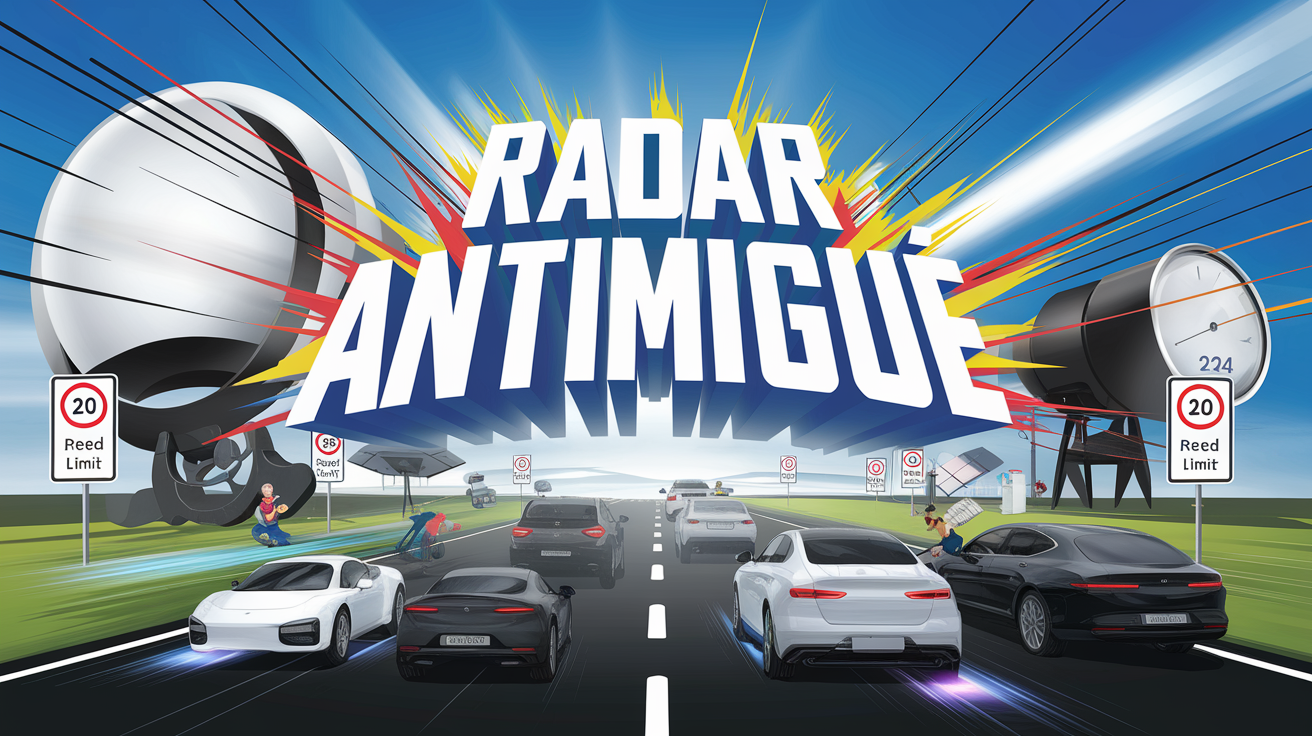


Brazil Tests the “Anti-migue” Radar, Which Calculates the Average Speed Between Two Points and Promises to End Practices Such as Braking Before Radars. Inspired by Italy, Where It Reduced Accidents by 50%, the System Still Faces Legal Challenges in the Country. While Drivers Try to Bypass the Device, Experts Defend Its Effectiveness for Safety and CO2 Emission Reduction.
A new technology is making waves on Brazilian roads. It is the average speed radar, nicknamed “anti-migue” by those who are familiar with how it works.
Although the system has the potential to revolutionize enforcement on the highways, “smart” drivers are working hard to find ways to bypass the equipment.
But is it possible to dodge this advancement? Before answering, it is necessary to understand how it works and the impact it has already caused in other countries.
-
Mercado Livre has just started selling medications with delivery in up to three hours to your door, and this move could completely change the way Brazilians buy medicines on a daily basis.

-
In Dubai, rising tensions from the war in the Middle East are causing super-rich individuals to leave the Gulf and direct their fortunes to a new financial refuge in Asia.

-
Jeep Avenger begins production in Brazil, debuting as the brand’s new entry-level SUV and inaugurating an unprecedented phase by becoming the first national Jeep manufactured outside of Goiana, as part of a R$ 3 billion plan.
-
Costing R$ 12,490, the new Shineray Urban Lite 150 “cheap one” arrives in Brazil with a CVT transmission, digital dashboard, and LED lights, making it more affordable than the Biz and targeting those who want to abandon the bus.

What Is the Average Speed Radar?
Brazil began testing the average speed radar in October 2024.
This system goes beyond conventional radars, which calculate the instantaneous speed of a vehicle as it passes a specific point.
The “anti-migue” consists of two or more devices that measure the time it takes for a vehicle to travel the distance between them.
If the recorded time is less than allowed for the maximum speed of the road, it means that the driver has exceeded the limit and will be subject to a fine.
According to the UOL portal, the average speed radar is being tested in Uberaba (MG), on the urban stretch of BR-050.
In this location, the concessionaire Eco050 installed two cameras separated by 11 kilometers.
With a speed limit of 80 km/h, the minimum time required to complete the stretch without infractions is 7 minutes and 16 seconds.
If the driver covers this distance in less time, the system automatically detects the speeding violation.
Italian Inspiration and Drivers’ “Tricks”
The idea of implementing the average speed radar in Brazil came from Italy, where the system has been operating for over 20 years.
There, the device is known as “tutor” and is credited with reducing accidents by up to 50% in some road stretches.
However, even in light of the benefits, Italian drivers have also developed strategies to try to deceive the system.
One of the most common practices is to take pauses between the two timing points, such as stopping for fuel or rest.
In this way, they “compensate” the time spent off the road and can exceed the speed upon returning.
Apps like Waze also contribute by indicating the average speed in real-time to help adjust the driver’s behavior.
To combat these tactics, Italian authorities began to reduce the distance between radars.
By 2024, the country already had 176 tutors covering 1,760 kilometers of highways, with average distances of 10 kilometers between points.
Additionally, the Italian Supreme Court ruled that it is not necessary to differentiate tutors from conventional radars through signage.
Challenges in Brazil
In Brazil, the biggest obstacle to implementing the average speed system is still legislation.
Currently, the Brazilian Traffic Code (CTB) does not provide the necessary regulations to issue fines based on this type of enforcement.
There are still questions about how tolerance times will be calculated and whether drivers can be fined multiple times along the same road.
For this reason, the tests in Uberaba are being conducted in an educational manner, without imposing penalties.
Bruno Araújo Silva, Operations Manager at Eco050, highlighted the benefits of the average speed radar in an interview with the UOL portal:
“With the average speed system, there is no way for the driver to slow down just before the radar and speed up right after. This requires adherence to the limit throughout the entire route.”
Another positive point highlighted by Eco050 is the reduction of brake wear and CO2 emissions, as the system encourages smoother driving.
The initiative has even received an award from the National Land Transport Agency (ANTT), which continues to monitor results to support future changes in the CTB.
Drivers Try to Bypass the Technology
Despite the benefits, videos circulating on the internet show that Brazilian drivers have already started thinking about ways to circumvent the average speed radar.
Strategies inspired by Italians, such as taking breaks during the journey, have been mentioned.
However, experts assert that the proximity between measurement points in Brazil should complicate these practices.
Another detail is that enforcement still depends on technological and legal adjustments.
So far, the tests conducted by the Federal Highway Police (PRF) and ANTT are focused on education and data collection.
There is no official schedule for the beginning of fines for average speed.
The Future of the “Anti-migue” Radar
If regulation advances, the implementation of the average speed radar could transform Brazilian highways.
In addition to improving safety, the system has the potential to reduce vehicle maintenance costs and lessen the environmental impact of road transport.
The expectation is that the results obtained in countries like Italy will serve as inspiration to make Brazilian roads safer.
Meanwhile, the question remains: will “smart” drivers truly be able to bypass this technology?
Or are we heading towards a safer and fairer traffic system? Share your opinion in the comments!






Rodovia bem cuidada e em estado precário não adianta, brasileiro anda acima da velocidade do mesmo jeito,e válido esse sistema e mais com a tecnologia de hoje o carro já devia sair de fábrica com sistema que automaticamente ao ultrapassar o limite da velocidade já se conectava direto com sistema de trânsito online e já atuava o cidadão,pois e cada louco no volante por ai que dá medo, quando estou na rodovia viajando eu anoto as placas dos apressados e ligo pra polícia não estou nem aí,um pouco desses alguns kms mata alguém e foge
Campanha educativa e rodovias em condições de se trafegar com segurança,cadê o dinheiro do IPVA? Eu quase capoto o carro na BR 116 ao desviar de um buraco a noite, não dei sorte, foi Deus que me protegeu, multar é fácil dinheiro dos **** para satisfazer as mamatas dos políticos, Pronto falei.
Comparar as estradas brasileiras com as da Europa é simplesmente ridículo.la em alguns lugares a velocidade é de 70km o permitido, só que não precisa correr mais do que isso pois as estradas não são esburacadas não tem tráfego intenso atrapalhando as viagens,nos fim de semana as pistas de faixa simples não é permitido o tráfego de caminhões e portanto vc consegue fazer uma viagem segura sem precisar alta velocidade. Aqui no brasil é uma zona caminhão enfileirado um nos outros interrompendo a possibilidade de ultrapassar e as estradas são as piores possiveis portanto acho que a preocupação seria de melhorar as condições das estradas antes de instalar esse radares.