





 Portuguese
  English
  Spanish
  3 min of reading
  0 comments


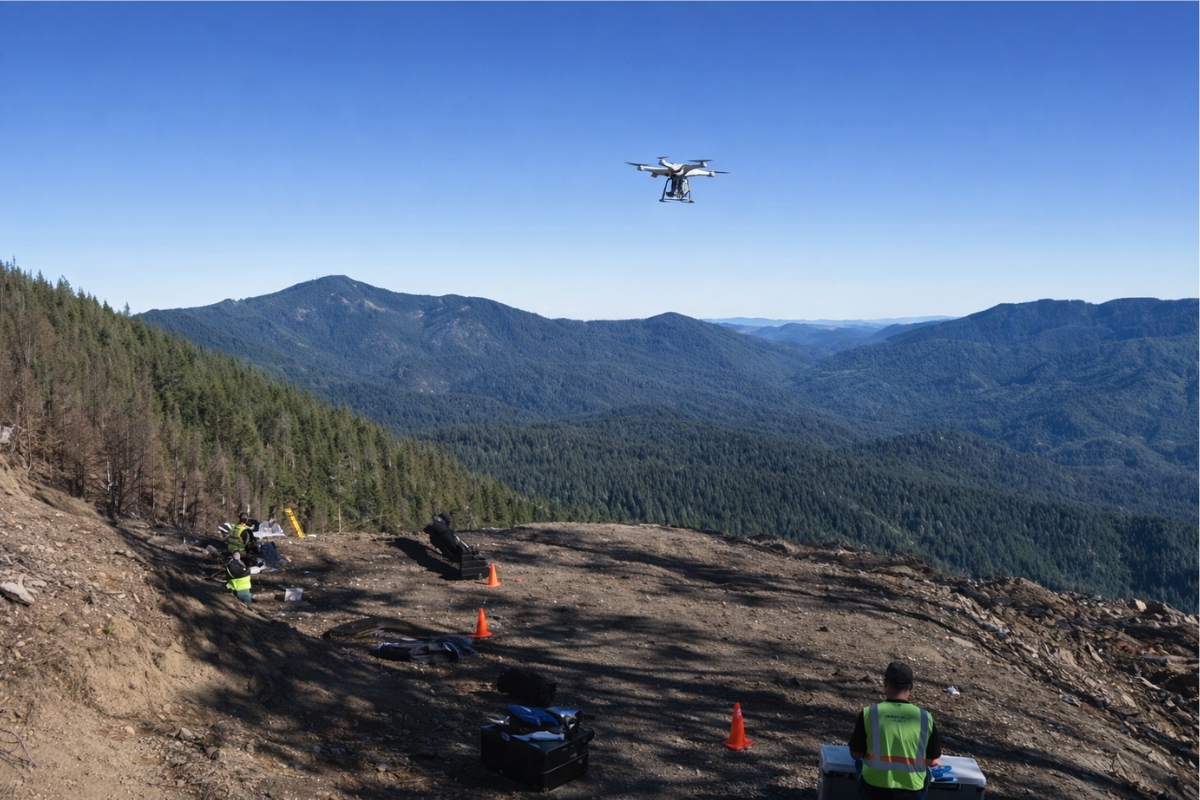
In The United States, The Company DroneSeed Conducted Reforestation With Swarms Of Drones After Fires Burned More Than 3 Million Hectares In 2020 To Accelerate Forest Recovery, Reducing Planting Time And Attracting Attention From The Environmental Sector.
The 2020 wildfire season was the most devastating ever recorded in the United States, with more than 3 million hectares destroyed by fire in various regions of the country.
Normally, recovering these areas would take years and require hundreds of workers planting seedlings manually grown in nurseries. The traditional process is slow and relies on large teams in the field.
A company based in Seattle has developed a technological alternative that promises to accelerate large-scale reforestation. The proposal uses swarms of drones to drop seeds in areas devastated by fire.
-
Motorola launched the Signature with a gold seal from DxOMark, tying with the iPhone 17 Pro in camera performance, Snapdragon 8 Gen 5 that surpassed 3 million in benchmarks, and a zoom that impresses even at night.

-
Satellites reveal beneath the Sahara a giant river buried for thousands of kilometers: study shows that the largest hot desert on the planet was once traversed by a river system comparable to the largest on Earth.

-
Scientists have captured something never seen in space: newly born stars are creating gigantic rings of light a thousand times larger than the distance between the Earth and the Sun, and this changes everything we knew about stellar birth.

-
Geologists find traces of a continent that disappeared 155 million years ago after separating from Australia and reveal that it did not sink, but broke into fragments scattered across Southeast Asia.
What seemed impossible years ago is now being applied in real forests on the American West Coast.
Swarms Of Drones Can Plant Up To 20 Hectares Per Day
DroneSeed uses drones that are 2.5 meters in size operating in swarms of up to five units at the same time.
These drones follow pre-programmed routes and can cover up to 20 hectares per day, significantly accelerating planting.
Each drone can carry up to 25 kilos of seed pods, allowing for large quantities of material to be released in hard-to-reach areas.
According to the company, the system is six times faster than traditional manual planting, which typically covers just under 1 hectare per day.
The time needed to put seeds in the ground has also dropped drastically, from three years to around three months.

Technology Identifies The Best Locations To Plant Trees
The process begins with detailed mapping of the terrain using advanced technology.
The company uses Lidar, the same detection system used in autonomous cars, to create three-dimensional models of the terrain.
Sensors analyze different light wavelengths to identify differences between gravel and areas with healthy soil.
This information allows for defining points with the highest chances of tree growth, increasing the efficiency of reforestation.
This detailed mapping is what guides the programmed routes of the drones.
Special Pods Help Seeds Survive In The Soil
The seeds are released into specially designed pods to increase survival chances.
These so-called seed pods contain fertilizers, nutrients, and agents that help prevent pests.
The material is made of dry fiber that absorbs moisture and expands as the environment becomes wetter, reducing the risk of drying out.
This detail is considered essential, as drying out is one of the main causes of seed loss.
The pods also include extremely hot pepper, used to prevent squirrels and other animals from eating the seeds.
Tests Show Planting Up To 100 Trees Per Hectare
DroneSeed claims that tests conducted in New Zealand and Washington State indicate that the system can plant nearly 100 trees per hectare.
The company is already involved in the reforestation of areas affected by fires in California and Oregon, as well as evaluating new locations on the West Coast of the United States.
The use of drones to spread seeds is not new, as planes and helicopters have already conducted this type of operation.
Experts say that aerial seeding is often cheaper and simpler than manual planting, although it typically has a lower success rate.
Still, the correct choice of species and planting locations can greatly increase the method’s efficiency.
With the intensification of climate change and the increase of wildfires, the demand for quick reforestation solutions continues to grow.
Drone technology emerges as a promising alternative, but it is not yet considered a definitive solution for recovering destroyed forests.
Do You Think Drones Can Replace Manual Planting In Forest Recovery? Leave Your Opinion In The Comments.








Seja o primeiro a reagir!