





 Portuguese
  English
  Spanish
  5 min of reading
  7 comments


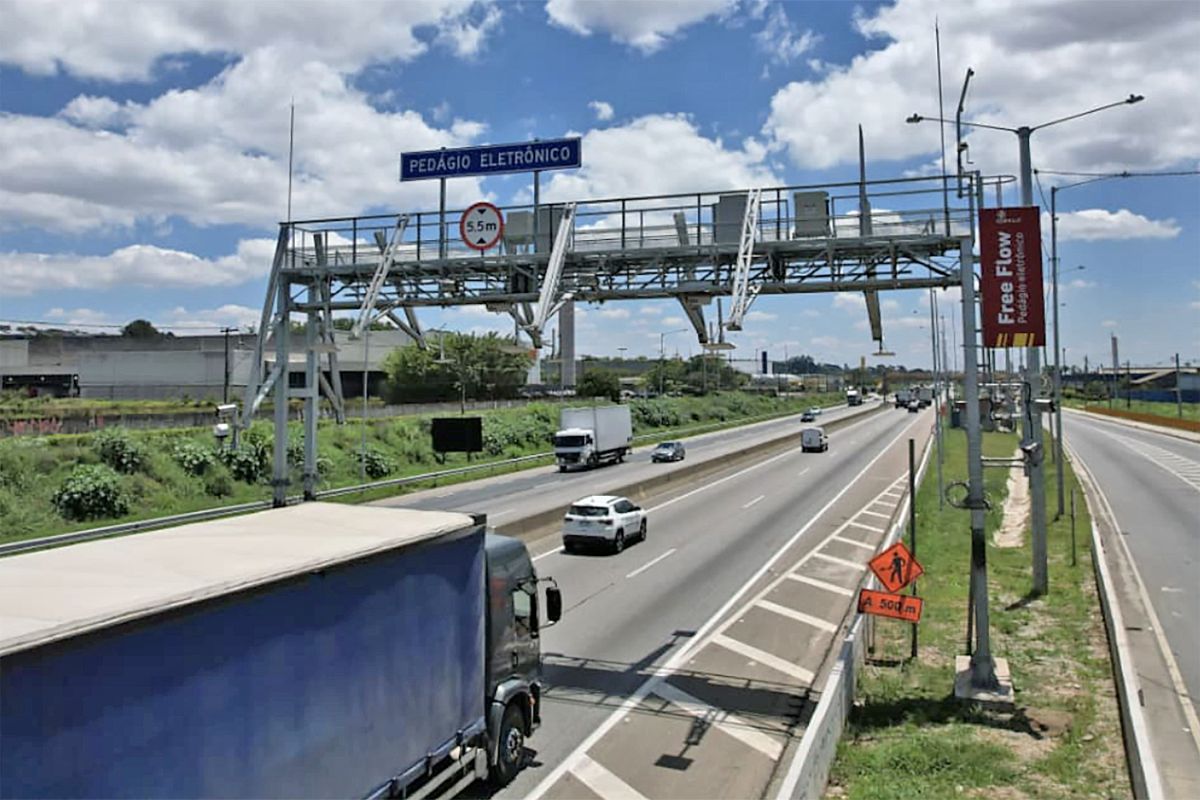


Dynamic Toll on the Dutra in Guarulhos Starts This Saturday, December 6, with Free Flow System and 21 Toll Gantries Only in the Express Lane Between Marginal Tietê and Arujá While the Marginal Lane Remains Free and the Fee Varies from R$ 1.37 to R$ 9.06 Depending on Traffic on the Highway During Peak Hours.
Guarulhos will have dynamic urban toll on the Presidente Dutra Highway starting this Saturday, December 6, 2025, when the concessionaire CCR RioSP begins charging in the express lane towards São Paulo International Airport. The new model covers the stretch that passes through neighborhoods in the North Zone of the capital and the city of Guarulhos, which had never been charged before.
The system uses Free Flow technology, with no booths or barriers, featuring 21 automatic toll gantries between Marginal Tietê in São Paulo and Arujá. The basic fee starts at R$ 1.37, but it can be multiplied by up to five times on holidays and during peak hours, while those who choose the marginal lane can continue driving without paying anything on that stretch of the Dutra.
How Dynamic Toll Works on the Dutra in Guarulhos
In the new model, drivers do not stop at any toll plazas. Cameras and sensors installed on the gantries identify the vehicle’s license plate or electronic tag and record the stretch traveled in the express lane of the corridor between Marginal Tietê and Guarulhos, up to Arujá.
-
Unemployment rises again to 5.8% at the beginning of 2026, raising alarms about the end of temporary positions and its impact on the Brazilian job market.

-
Document organization can cut invisible costs in small businesses, a simple step that prevents waste, rework, and losses in daily operations.

-
Chinese giant worth nearly R$ 4 billion that manufactures cables for electric cars, solar energy, and robotics wants to open a factory in SC.

-
Many employers do not know, but the law guarantees domestic workers a 25% increase in salary during trips, 50% for overtime, 20% for night shifts, and 17 additional benefits that can lead to labor lawsuits if not paid.


According to CCR RioSP, the toll is dynamic and varies according to the time of day and the flow of vehicles on the highway.
The values were defined in a contract approved by the National Land Transport Agency.
Simulations released show that, on normal days, the charge towards the airport starts at R$ 1.37, but on holidays and peak hours it can range from R$ 1.81 to R$ 9.06, depending on the exact moment of passage.
The concessionaire has made available on its website a calculator for drivers to simulate the toll before traveling.
The idea is to allow frequent users of the Dutra, especially residents of Guarulhos who rely on the express lane, to adjust their route and timing to pay less or decide to stay in the marginal lane, which remains free of charges on that stretch.
Values per Stretch Between Marginal Tietê, Guarulhos, and Arujá
When leaving São Paulo via the marginal lane, drivers can access the express lane at km 228.850. At this point, panels display the values according to the destination in Guarulhos or further on the Dutra. The charge is always proportional to the stretch effectively traveled in the express lane:
- Fernão Dias Highway: R$ 0.25
- Tiradentes Avenue: R$ 0.52
- Guarulhos Airport: R$ 1.37
- Bonsucesso Neighborhood: R$ 2.69
- Pimentas Neighborhood: R$ 2.80
- Jardim Aracília: R$ 2.82
The above values are the basic fares, before the dynamic variation based on time and traffic. Those who stay only in the marginal lane do not pay the urban toll in Guarulhos.
Those who pass through the traditional toll plaza in Arujá, which continues to operate normally, and follow in the express lane in both directions, do not incur another charge from the Free Flow system on the same route.
Who Pays, Who Does Not Pay, and How to Make the Payment
In practice, the urban toll primarily falls on those who use the express lane of the Dutra to access Guarulhos Airport, Fernão Dias, or neighborhoods in the region.
Drivers who opt entirely for the marginal lane, in São Paulo and Guarulhos, remain exempt on the urban stretch between Marginal Tietê and Arujá.
Vehicles with electronic tags receive a 5 percent discount on each trip, with the amount automatically debited from the contracted operator’s invoice. For those who do not use a tag, the license plate is read by the gantries, and the driver has up to 30 days to pay through the website pedagiodigital.com or via the CCR app, after the passage registration.
To facilitate, the concessionaire installed two self-service kiosks for in-person payment, one at the operational base in São Paulo and another in Arujá.
The company emphasizes that it does not issue bank slips for this charge. Another important point is that motorcycles pay half the fare compared to the standard amount charged for cars on the same stretch and time.
Contract, Construction, and Impact on Traffic in Guarulhos
The urban toll in Guarulhos is part of the concession contract signed after the auction of the Dutra held in October 2021, during the government of then-president Jair Bolsonaro.
At the time, the CCR S.A group won the bid by offering a grant of R$ 1.77 billion and committed to invest in significant improvements in the corridor between São Paulo, Guarulhos, and the surrounding area.
To start charging in a stretch that for decades had intense and free traffic, the company had to deliver a package of works in the region.
Among them are the widening of the express lane to three lanes in each direction between Highway Hélio Smidt, which provides access to the airport, and the approach to the capital, as well as a new viaduct specifically for Guarulhos Airport, reducing access time.
New connections with the Tatuapé viaduct were also created, facilitating the route to the East Zone, and three additional viaducts connecting the Dutra to Fernão Dias, to improve flow between the two highways.
In the Jacu Pêssego area, at km 213, a new turnaround device was implemented, helping to alleviate the traditional bottleneck at the Bonsucesso interchange in Guarulhos.
Additionally, the concessionaire reports having made the restructuring of 27 walkways and improved lighting, focusing on road and pedestrian safety in this urban stretch of the Dutra that cuts through densely populated areas of São Paulo and Guarulhos. The company’s service channels have been prepared to answer questions about the functioning of the toll and the dynamic fee.
In light of all these changes on the Dutra and the new charging model in the express lane, do you think that the urban toll in Guarulhos is a fair measure or will it weigh too heavily on the pockets of those who rely on the highway every day?










Quando mora em condomínio não paga taxa ,vai num restaurante top paga se mais caro ,hotel 5 estrela paga se mais caro ,estrada também estradas boas só com pedágio,eu sou carreteiro e falo porque vivo isso ,andem em estradas sem pedágios Brasil a fora ,depois reclamem dos pedágios,e pneu que perde é falta de apoio caso tenha alguma pane ,outra coisa não consegue pagar pedágios vende o carro e vai de ônibus né
Para quem vai para o aeroporto na saída para a Helio Smidt demora mais do que pela local 🤣🤣🤣
Eu acho que o povo tem mais é que se lascar. Votou errado, recolha.