





 Portuguese
  English
  Spanish
  6 min of reading
  3 comments


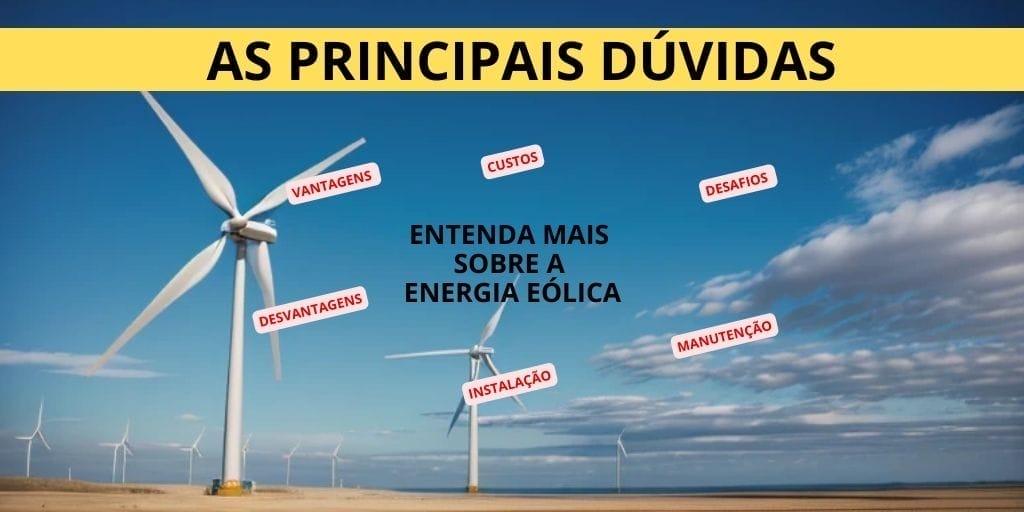

Wind energy has gained prominence as a clean and renewable solution to meet global energy demands. However, many still have questions about its operation, advantages, disadvantages, and other aspects of this technology.
In this article from Click Petroleum and Gas, we will explore the answers to the eight main questions about wind energy.
To provide a comprehensive overview of the subject, we consulted reliable sources, such as the Brazilian Wind Energy Association (ABEEólica) and the National Electric Energy Agency (ANEEL).
-
Renewable energy advances over protected areas in Brazil, and a survey by the Energy Transition Observatory reveals silent impacts that challenge environmental conservation and pressure sensitive traditional territories.

-
Rio Grande do Sul accelerates energy transition: State invests in renewable technologies and consolidates decarbonization strategies and pathways to attract billions in new industrial investments.

-
With 160,000 m² of collectors, an area larger than 20 football fields, Silkeborg, in Denmark, hosts a solar thermal plant that heats 19,500 homes and could become the largest solar heating plant in the world.

-
A study reveals the expansion of renewable energy procurement in Brazil and shows how companies are taking advantage of opportunities to reduce expenses, ensure energy efficiency, and strengthen strategic environmental commitments.


Wind Energy in Brazil
Brazil has stood out on the global stage as one of the main producers of wind energy. With many natural resources, the country has an enormous potential for energy generation from winds.
According to the Brazilian Wind Energy Association, Brazil currently leads Latin America and is one of the five largest wind energy producers in the world.
As Click Petroleum and Gas has reported, the Northeast region of Brazil is especially favored due to its climatic conditions, with constant and strong winds ideal for the installation of wind farms.
States such as Rio Grande do Norte, Bahia, and Ceará are the largest producers, significantly contributing to the country’s energy matrix. According to ANEEL data, the installed capacity of wind energy in Brazil surpassed 20 gigawatts (GW) in 2023, accounting for about 10% of the total electricity generation.
In addition to contributing to sustainability and reducing greenhouse gas emissions, wind energy has boosted the regional economy, creating jobs and development in areas where wind farms are installed. Continuous investment in infrastructure and technology promises to expand this energy source even further in the coming years.
The Main Questions About the Topic
Below, you can find the eight main questions regarding the topic. Check it out:
How Does Wind Energy Capture Work?
Wind energy capture occurs through turbines, which are structures equipped with blades similar to those of a fan. These blades are connected to a generator that transforms the kinetic energy of the wind into electrical energy.
As the wind blows, the blades rotate, moving a shaft connected to a generator. This generator converts the motion energy into electricity. According to the Brazilian Wind Energy Association, a single turbine can generate enough energy to supply thousands of households, depending on its size and the wind speed at the location.
What Are the Advantages and Disadvantages of Wind Energy?
Wind energy presents several advantages. Among the highlighted benefits are sustainability, as it is an inexhaustible source and does not emit polluting gases; job creation, both in the installation and maintenance of the turbines; and a reduction in electricity bills, as the wind is free.
According to the Ministry of Mines and Energy, Brazil has significant wind potential, especially in the Northeast region, where wind intensity is higher and more consistent.
However, there are also disadvantages. The intermittency of the wind can pose a challenge, as energy generation depends on the availability of this natural resource.
In addition, turbines can cause visual and noise impacts, and some people report discomfort from the noise generated. According to experts, it is crucial to carry out proper planning to minimize these impacts and ensure the system’s efficiency.
What Is the Environmental Impact of Wind Energy?
The environmental impact of wind energy is significantly lower compared to fossil sources, such as coal and oil.
Wind turbines do not produce carbon emissions during operation, contributing to the reduction of greenhouse gases.
According to studies by the National Electric Energy Agency, wind energy has helped avoid millions of tons of CO₂ emissions.
However, there are impacts that deserve attention. The installation of turbines may affect local wildlife, especially birds and bats, that may collide with the blades.
In this sense, researchers suggest implementing measures to reduce these impacts, such as choosing appropriate locations for turbine installation and using technologies to keep animals away from the blades.
What Is the Cost of Installing and Maintaining Wind Turbines?
The cost of installing wind turbines can vary considerably, depending on the size and capacity of the system. On average, the initial investment is high, but the operational and maintenance costs are relatively low.
According to the Global Wind Energy Council (GWEC), installation costs range from $1,000 to $1,500 per installed kilowatt (kW). Turbine maintenance involves regular inspections, lubrication of components, and replacement of worn-out parts.
According to industry data, the lifespan of a wind turbine is approximately 20 to 25 years, and annual maintenance may cost around 2 to 3% of the initial investment. This cost is offset by the savings in energy bills over the years.
How Is Wind Energy Integrated Into the Electric Generation System?
Wind energy is integrated into the electric generation system through transmission and distribution networks, just like other energy sources. Wind turbines produce electricity in alternating current (AC), which is compatible with the national electrical system.
According to the National Electric System Operator (ONS), the energy generated by the turbines is sent to substations, where it is transformed and distributed to consumers.
Integrating wind energy into the electrical system requires planning and investment in infrastructure. Studies indicate that the variability of wind generation can be managed through energy matrix diversification and the use of storage technologies, such as batteries and pumped hydroelectric plants.
Do I Need Authorization to Install Wind Energy at Home?
One of the main questions, based on comments made on Click Petroleum and Gas publications, is about the need for authorization. Here, the answer: yes, to install a residential wind energy system, it is necessary to obtain specific authorizations, which may vary by location.
In general, it is necessary to comply with municipal, state, and federal regulations. According to ANEEL, interested parties must request a distributed microgeneration authorization, which allows the system to be connected to the electrical grid.
In addition to authorizations, it is essential to conduct a feasibility study to verify that the location is suitable for turbine installation. According to experts, feasibility depends on wind speed and consistency, as well as factors such as terrain topography and proximity to obstacles that may interfere with air circulation.
What Are the Main Technical Challenges of Wind Energy?
Wind energy faces some technical challenges that need to be overcome to maximize its efficiency. The variability of the wind is one of the main challenges, as energy production depends on the intensity and consistency of this natural resource. To mitigate this problem, wind farms are often installed in locations with predictable and consistent winds.
Another challenge is the transmission of generated energy from remote areas to urban centers, where demand is higher. According to experts, this requires investment in transmission and distribution infrastructure. Additionally, integration with other energy sources and grid management are essential to ensure system stability.
Is Wind Energy Viable in Urban Areas?
The viability of wind energy in urban areas is limited due to the presence of obstacles, such as buildings and other structures, that can interfere with wind circulation. However, smaller-scale projects, such as small wind turbines, have shown promise for residential and commercial applications in cities.
These small turbines are designed to operate at lower wind speeds and can be installed on rooftops or open areas. According to studies, although the contribution of these turbines is smaller compared to large turbines installed in wind farms, they can complement other renewable energy sources, such as solar, and reduce the dependence on grid energy.
Now It’s Up to You, Reader!
Do you think wind energy could become the primary energy source in Brazil in the coming years? Why? Leave your answers in the comments! Until next time!







Eu acho que pode ser muito eficiente, mas eles precisam vê uma forma de reduzir tantos lixos que ficam na produção da pás eólica, eu trabalho na sinoma blade ,e muito lixo que junta só pra fazer uma pá
Não acredito que a energia éolica será a principal fonte de energia, mas tenho certeza que ela tem tudo para se popularizar aqui no Brasil
Obrigado pelo comentário, Edgar! Abraços