





 Portuguese
  English
  Spanish
  3 min of reading
  25 comments


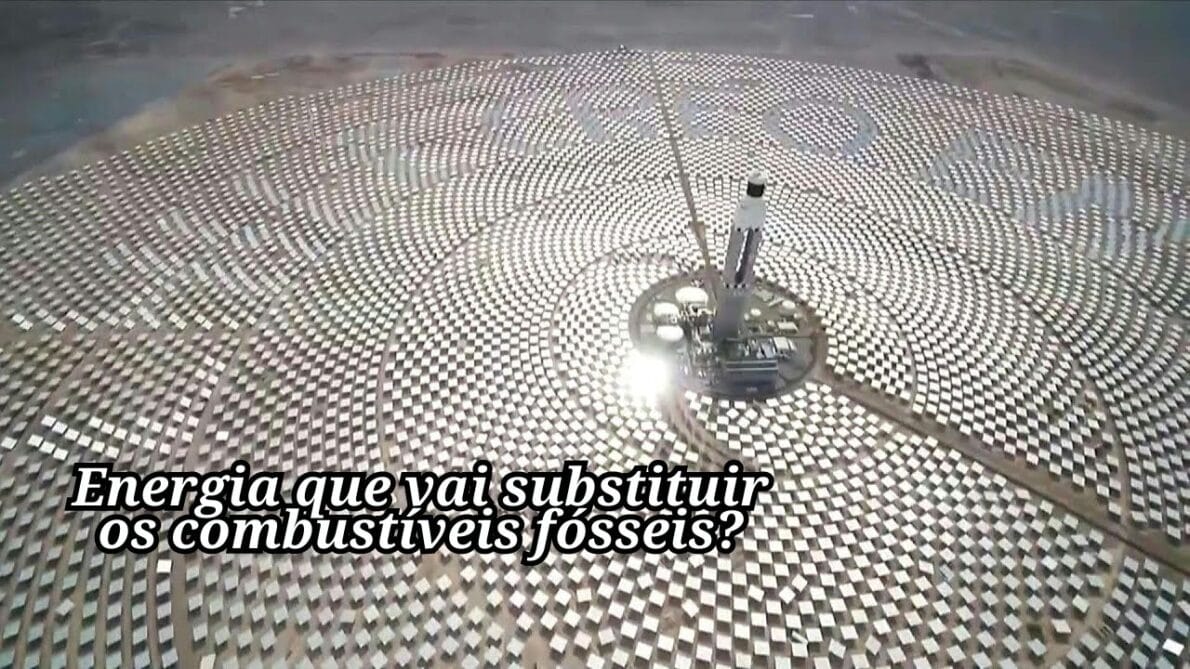

Experiments In Chile Show That Molten Salt Can Store Large Amounts Of Energy And Replace Fossil Fuels On Days Without Sun Or Wind.
Imagine a future where the sun and wind are the main sources of energy, but without the old problem of depending on weather conditions? Well, that future is already being designed in the Atacama Desert, in Chile, where scientists and engineers are using molten salt to store heat and generate electricity even when the sun isn’t shining and the winds are weak. And the most incredible part? This could finally leave fossil fuels in the past!
In Cerro Dominador, in the heart of the Atacama Desert, one of the sunniest places on Earth. Here, 10,600 mirrors concentrate sunlight at the top of a tower, heating molten salt to over 500ºC. This salt doesn’t vaporize and, stored in insulated tanks, can retain heat for weeks or even months, allowing energy to be used continuously. It’s a solution that enables electricity generation 24 hours a day, without relying on the weather.
Molten Salt Can Change The Game
The great advantage of this technology is that it stores the sun’s heat, enabling continuous use of the turbines that generate electricity. This eliminates one of the biggest challenges of renewable energy: storage.
-
Renewable energy advances over protected areas in Brazil, and a survey by the Energy Transition Observatory reveals silent impacts that challenge environmental conservation and pressure sensitive traditional territories.

-
Rio Grande do Sul accelerates energy transition: State invests in renewable technologies and consolidates decarbonization strategies and pathways to attract billions in new industrial investments.

-
With 160,000 m² of collectors, an area larger than 20 football fields, Silkeborg, in Denmark, hosts a solar thermal plant that heats 19,500 homes and could become the largest solar heating plant in the world.

-
A study reveals the expansion of renewable energy procurement in Brazil and shows how companies are taking advantage of opportunities to reduce expenses, ensure energy efficiency, and strengthen strategic environmental commitments.


Fossil fuels, such as gas and coal, have always had the upper hand for being more predictable, but molten salt can change that game. “With this technology, we can begin to drastically reduce dependency on fossil fuels,” stated one of the project managers.
Researchers from the University of Antofagasta are working to optimize the formula of this special salt, known as “solar salt.” Made from sodium nitrate and potassium nitrate, it is perfect for storing heat, but there are still challenges, such as the corrosion of tanks and pipes used in the process.
However, expectations are high: once refined, this technology could be applied globally, not just in deserts, but also in areas that suffer from a lack of stable energy.
Chile Could Become A Major Exporter Of Green Hydrogen
Another interesting point is that by using molten salt, researchers believe that Chile could become a major exporter of green hydrogen, a clean and promising energy source. The European Union, for example, already plans to import 10 million tons of renewable hydrogen by 2030, and Chile could lead this green revolution.
“If this works, the global impact will be immense. We are talking about a technology that can transform thermoelectric plants into true clean energy factories,” commented the project manager.
The biggest challenge, however, lies in the adaptation of the power grids to support this new form of energy generation. Only in Chile, between 10% and 20% of renewable energy is lost due to a lack of capacity in the transmission network. Still, optimism prevails, with the first adaptation projects already underway.
Replacing Fossil Fuels
In the end, molten salt could be the key to a more sustainable future, replacing fossil fuels and helping to combat the climate crisis. Could this technology expand globally and finally free us from dependence on polluting fuels? What do you think? Share your thoughts in the comments!










Já e realidade em muitas usinas solares héliotermicas no mundo, sobretudo na Espanha, Japão, dubai e EUA (cidades e empresas gigantes ). Tudo começou na usina solar ivanpah no deserto de Mojave e que pertence ao grupo Google. Tais sais (molten salt) tb permitem somar/hibridizar outras fontes termicas, inclusive somente diurnas. Por exemplo, podem-se somar num predio/hospital/aeroporto com acima de 800 pessoas circulando: 1) termica solar coletada por ate 5 horas em calhas parabolicas concentradores solar nos tetos; 100% sustentável; 2) singaseificadores rápidos de todos os lixos e fezes, sendo o singas queimado em fire tubes para reaquecer continuadamente o molten salt; tb 100% sustentável; 3) biogás ou biometano (a partir de fezes animais vizinhos ou e prédios como na Alemanha) ja um pouco limpo ao tb ser queimado como acima.. EM TEMPO, TENHO 06 PATENTES PUBLICADAS ACERCA NO INPI. GRT
Vem um bocadinho tarde a notícia 😂! Já está a funcionar há cerca de 3 anos
Sensacional !!!!! O planeta e os seres humanos agradecem !!!!