





 Portuguese
  English
  Spanish
  4 min of reading
  0 comments


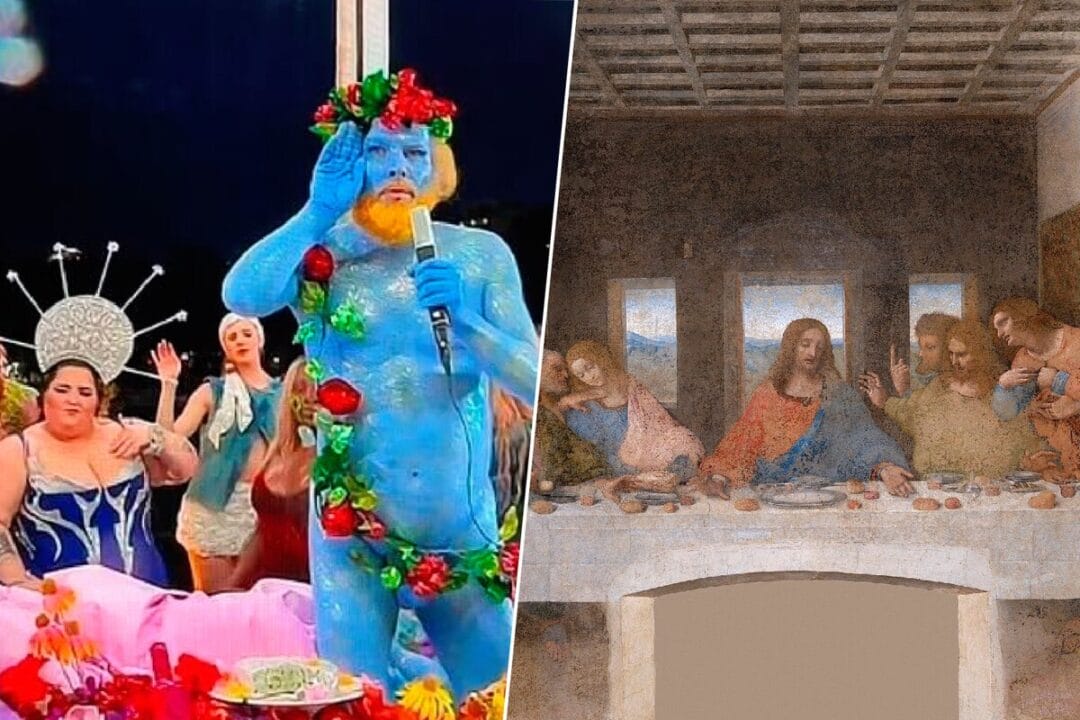
Olympic Games Opening Ceremony Sparks Controversy With Elon Musk and Trump Over Alleged Satanic Parody of The Last Supper. Discover the True Artwork That Caused the Confusion
After all the aftermath of an Olympic Games Opening Ceremony that left no one indifferent, among the debates and open fronts, one seems to stand out above the others, with relevant figures holding the Sword of Damocles before them (never better said). The truth is that it was very easy to get lost among so many references, but when came the sequence of a banquet featuring drag artists, many felt tremendously offended for supposedly mocking The Last Supper. The fact is that it was not representing the scene.
The Moment. Suddenly, on televisions around the world appears a man with a blonde beard, half-naked and completely painted blue. Behind him, a varied escort with everything in this kind of bacchanal and celebration: a lady with a crown, drag queens, many and very different: black, blonde with a beard, with rouge, with red hair, all animated by a group of dancers around. In the background, a representation that could remind one of the famous Last Supper by Leonardo Da Vinci.
The Reactions. They did not take long, of course. If the Olympic Games did not want to be controversial and give rise to a debate between Wokes and Anti-Wokes, the shot backfired. Elon Musk characterized the episode as a “disrespectful” manifestation for Christians. The American telecommunications company, C Spire, stated that it would withdraw its advertising around the Games after being “shocked by the mockery of The Last Supper”.
-
The largest South American oil company, Petrobras, is preparing for a historic leap in production with new FPSO platforms and the expansion of refining — projects that could add up to 900,000 barrels per day and strengthen Brazil’s energy security.

-
Billions of barrels in the Equatorial Margin could double Amapá’s oil production in Brazil and attract companies from the Campos Basin.

-
Mature Fields Take Center Stage and Are Expected to Generate New Opportunities in the Oil and Gas Sector

-
Offshore And New Investment Opportunities Will Be At The Center Of Discussions At Macaé Energy 2026


Even Trump came out to attack the “woke ideology” by describing what he saw as a “satanic” parody of Leonardo Da Vinci’s “The Last Supper.” Following Trump were other conservative figures such as the Speaker of the House of Representatives, Mike Johnson (Republican from Louisiana), and Trump’s own son, stating that “using the games to promote woke ideology has nothing to do with what the games represent.”
And yet, the scene was not representing Da Vinci’s work.
It Was Another Painting. Apparently, the scene being represented was “Festin des Dieux” by Jan Harmensz van Bijlert (1635), a work preserved in the Magnin Museum in Avignon, where the gods of Olympus celebrate the wedding of Thetis and Peleus. It is not us saying this. It was declared by both the Olympic Games and the artistic director of the ceremony, Thomas Jolly.
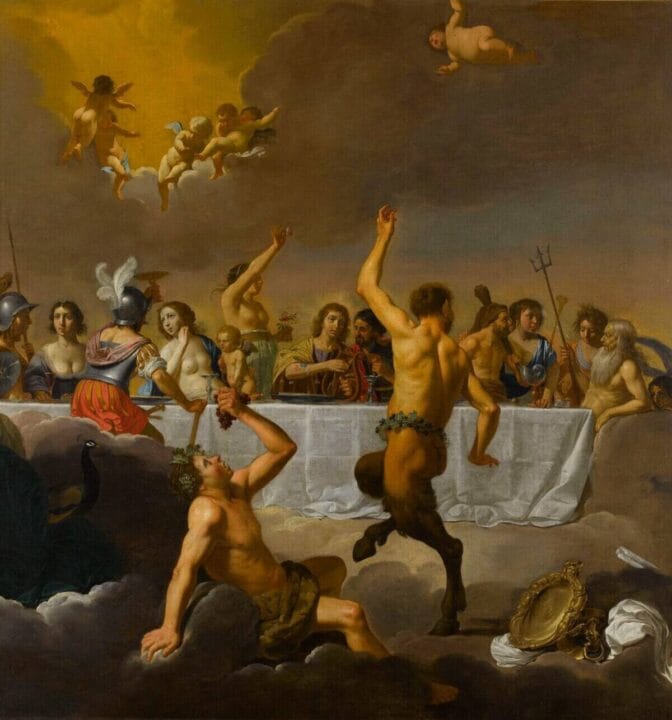
Jolly detailed to several media outlets in recent days that it was all due to a misunderstanding, as he never intended to mock The Last Supper. What the artist wanted to do was represent the scene depicting Dionysus, the god of wine and festivities, in “a great pagan feast linked to the gods of Olympus.”
In summary, he intended to reference the pagan gods, “you will never find in my work any desire to mock or demean anyone. I wanted a ceremony that united people, that reconciled, but also a ceremony that asserted our republican values of liberty, equality, and fraternity.”
Differences: The Last Supper. We are facing a masterpiece of the Renaissance that represents the biblical scene of the Last Supper of Jesus with his disciples, just before his arrest and crucifixion. The painting stands out for its detailed composition and innovative use of perspective, creating a sense of depth and realism.
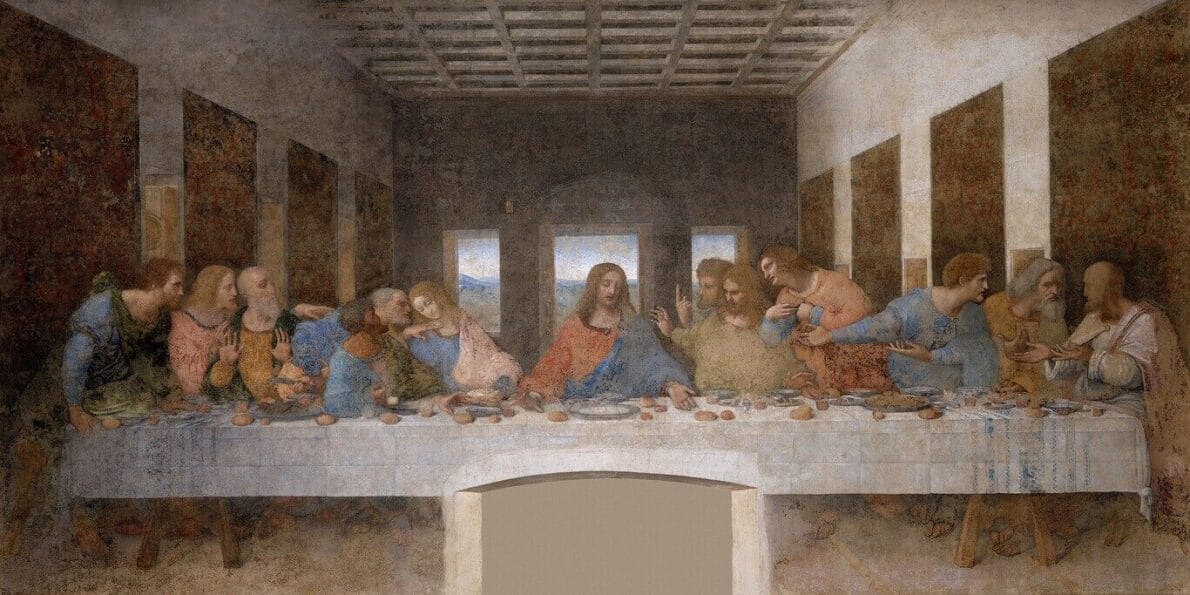
What We See: each apostle shows genuine human reactions to Jesus’ announcement that one of them would betray him, capturing the emotional complexity of the moment. The work is not just a religious representation, but also a study of human interaction and betrayal.
Differences: Festin des Dieux. We are facing a Baroque painting that depicts the gods of classical mythology enjoying a sumptuous banquet. The work symbolizes hedonism and opulence, showing the deities in a moment of celebration and excess.
What We See: through its detailed composition and use of vibrant colors, Van Bijlert captures the essence of divine pleasure and abundance. Like other works of the time, it can also be interpreted as a reflection on human frailty in the face of earthly pleasures, highlighting the tension between the divine and human worlds.
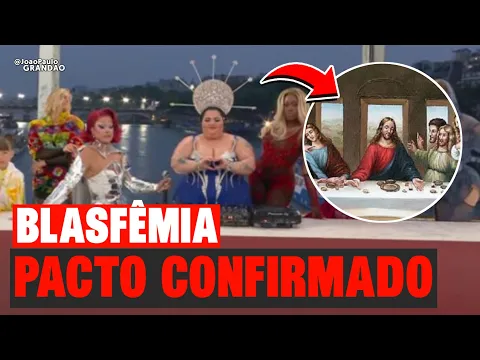

Woke and the Opposite. In some way, the controversy surrounding the moving painting scene at the Olympic Games reflects the times we live in. Aside from the absurdity that such a controversy assumes in the year 2024, the debate reflects the insistence of both sides to raise their voices. We mentioned a few weeks ago, it seems that now the end of the “Woke era” is approaching if we pay attention to the market and how brands and companies seem to be distancing themselves from their messages. Meanwhile, on the other side, with the possible return of Trump and everything that entails, the opposing discourse seems to be amplifying.
This also seems to be the message from companies like Microsoft or John Deere, or even Google. In fact, advertising itself also seems to be leaving wokeism behind. Perhaps, as José Luis Antúnez recently said, “it is possible that diversity is beginning to matter less.”
Or perhaps, advertising is just following the market without leading anything at all, and not the other way around.
Image | Paris 2024, Leonardo Da Vinci










-

Uma pessoa reagiu a isso.