





 Portuguese
  English
  Spanish
  5 min of reading
  0 comments


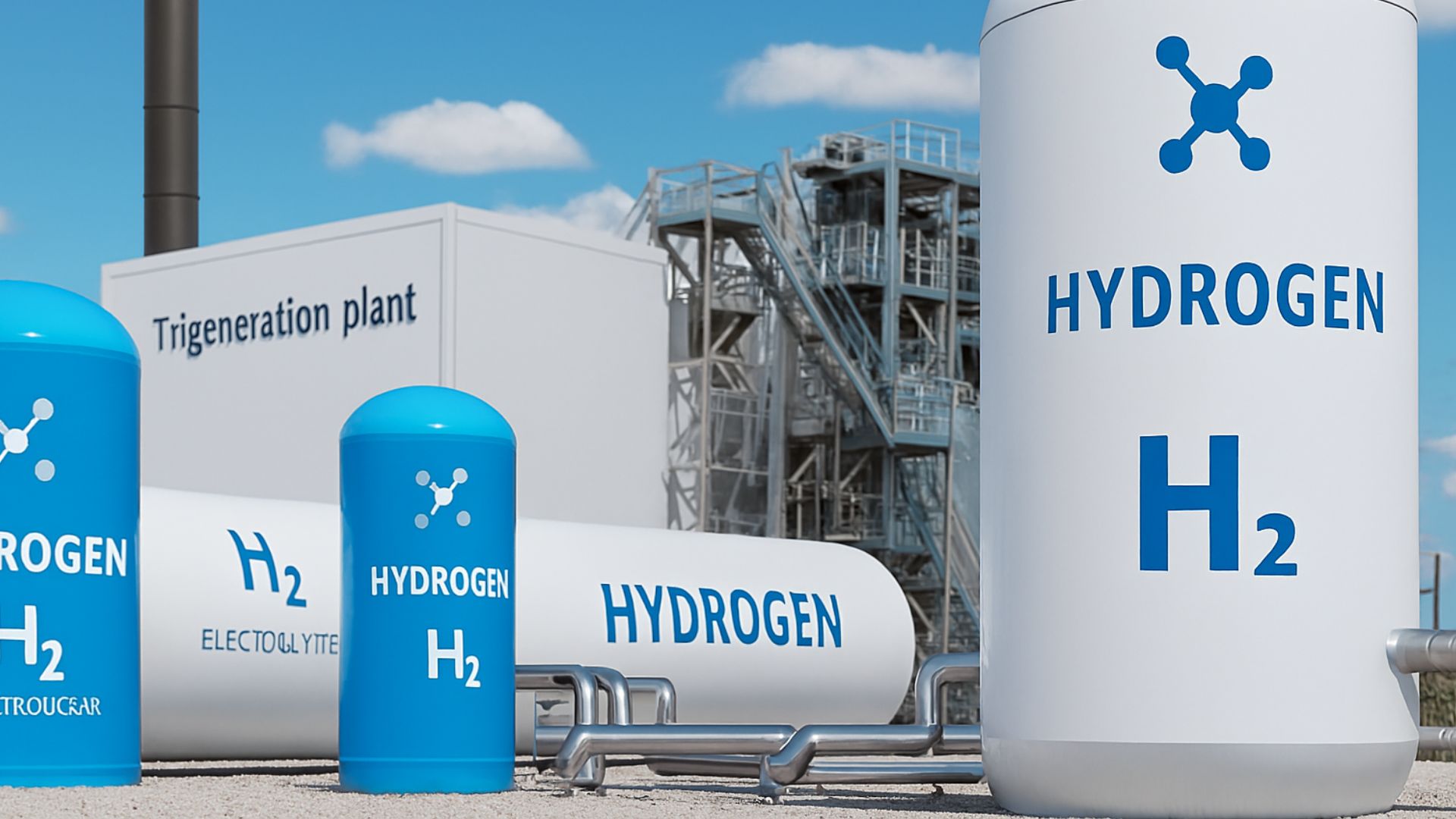
EDP Opens Electrolyzer in Portugal and Begins Testing with Hydrogen in Combined Cycle, Strengthening the Energy Transition in Europe
On September 15, 2025, EDP announced this Monday (15) the production of its first hydrogen molecule in Europe, marking a significant advance in the global energy transition. The milestone took place at the combined cycle plant in Lisbon, Portugal, as part of the European FLEXnCONFU project, which aims to validate the co-combustion of hydrogen with natural gas under real operational conditions.
During the ceremony, a 1.25 MW electrolyzer, responsible for generating the hydrogen used in the gas turbine, was inaugurated. This milestone positions EDP as a leader in the adoption of clean technologies and reinforces Europe’s role as a leader in energy innovation.
FLEXnCONFU Project by EDP: European Innovation in the Energy Transition
FLEXnCONFU — an acronym for “Flexibilization of Combined Cycle Power Plants through Power-to-X Solutions Using Non-Conventional Fuels” — is a pilot project funded by the Horizon Europe program of the European Union. It brings together 21 partners from ten European countries, aiming to test the technical, economic, and environmental feasibility of hydrogen co-combustion.
-
Renewable energy advances over protected areas in Brazil, and a survey by the Energy Transition Observatory reveals silent impacts that challenge environmental conservation and pressure sensitive traditional territories.

-
Rio Grande do Sul accelerates energy transition: State invests in renewable technologies and consolidates decarbonization strategies and pathways to attract billions in new industrial investments.

-
With 160,000 m² of collectors, an area larger than 20 football fields, Silkeborg, in Denmark, hosts a solar thermal plant that heats 19,500 homes and could become the largest solar heating plant in the world.

-
A study reveals the expansion of renewable energy procurement in Brazil and shows how companies are taking advantage of opportunities to reduce expenses, ensure energy efficiency, and strengthen strategic environmental commitments.

The initiative seeks to make combined cycle plants more flexible and sustainable, integrating technologies that allow operation with different energy vectors, such as hydrogen and ammonia. The electrolyzer installed in Portugal is one of two planned for the project — the second, located in Italy, will use ammonia in a laboratory setting.
Co-Combustion with Hydrogen: Efficiency and Sustainability
Co-combustion is a technique that allows the simultaneous burning of two fuels. In the case of EDP, the hydrogen generated by the electrolyzer was injected alongside natural gas in the Lisbon plant turbine. This approach reduces carbon emissions and improves energy efficiency, without requiring the complete replacement of existing infrastructure.
The Ribatejo combined cycle power plant, a project participant, was inaugurated in 2004 and has an installed capacity of 1,176 MW. The operation with hydrogen will continue until the beginning of 2026, during which data will be collected to guide EDP’s future investment decisions.
Technical Tests and Validations in Multiple Countries Across Europe
Since April 2020, FLEXnCONFU has undergone various stages of development. Independent laboratory tests were conducted in the United Kingdom and Italy, using different mixtures of hydrogen, ammonia, and natural gas. These studies are essential to ensure the safety, efficiency, and economic viability of the technology.
Practical validation in Portugal represents the pinnacle of these efforts, demonstrating that it is possible to integrate hydrogen into the European energy matrix safely and effectively. The expectation is that the results will serve as a foundation for large-scale projects, contributing to the decarbonization of the electricity sector.
EDP Investments and Institutional Support for the Energy Transition
The project is funded by Horizon Europe, the main research and innovation program of the European Union. This support demonstrates the institutional commitment to the energy transition and the adoption of clean technologies.
Moreover, EDP Renewables Brazil has also been investing in sustainable sources. Recently, the company obtained R$ 105.3 million from the Northeast Development Fund (FDNE) for the Borborema II wind farm in Paraíba. The total investment for the project is R$ 437.3 million, with an estimated generation of 337 direct and indirect jobs.
Hydrogen as a Strategic Vector for the Energy Transition
Green hydrogen — produced through water electrolysis with renewable energy — is considered one of the pillars of the energy transition. It can be used in various sectors, such as transport, industry, and power generation, replacing fossil fuels and reducing greenhouse gas emissions.
EDP’s initiative reinforces this trend, showing that it is possible to adapt gas turbines to operate with hydrogen, without compromising efficiency or safety. This flexibility is essential to accelerate decarbonization and ensure the stability of the electrical system in a scenario of increasing participation of renewable sources.

The Role of the Electrolyzer in Hydrogen Production
The electrolyzer inaugurated by EDP in Lisbon has a capacity of 1.25 MW and is responsible for converting electricity into hydrogen through water electrolysis. This technology is crucial for enabling green hydrogen, especially in regions with high availability of renewable energy.
The choice to install the electrolyzer in a combined cycle plant allows testing for direct integration between generation and consumption, optimizing resource use and reducing losses. This approach can serve as a model for other initiatives in Europe and worldwide.
Future Perspectives for EDP and Hydrogen in Europe
With the production of the first hydrogen molecule in Portugal, EDP takes a decisive step towards the energy transition. Data collected until 2026 will be crucial to define the company’s next investments, considering the national and international contexts of the hydrogen market.
Europe, in turn, continues to lead global decarbonization efforts, with public policies and incentives geared towards technological innovation. Projects like FLEXnCONFU show that it is possible to combine sustainability, efficiency, and safety, creating a cleaner and more resilient energy model.
EDP as a Global Reference in Energy Innovation
Hydrogen production by EDP in Lisbon represents a historic milestone in the European energy transition. With the support of the Horizon Europe program and collaboration from various international partners, the FLEXnCONFU project demonstrates the feasibility of co-combustion in combined cycles using hydrogen as an energy vector.
The use of the electrolyzer, integration with gas turbines, and tests conducted in multiple countries reinforce the credibility of the initiative. More than a technological advancement, it is a commitment to a sustainable future, where innovation and environmental responsibility go hand in hand.
EDP shows it is ready to lead this transformation, contributing to a cleaner, more efficient, and accessible energy system — not only in Europe but on a global scale.








Seja o primeiro a reagir!