





 Português
  Inglês
  Espanhol
  4 min de leitura
  0 comentários


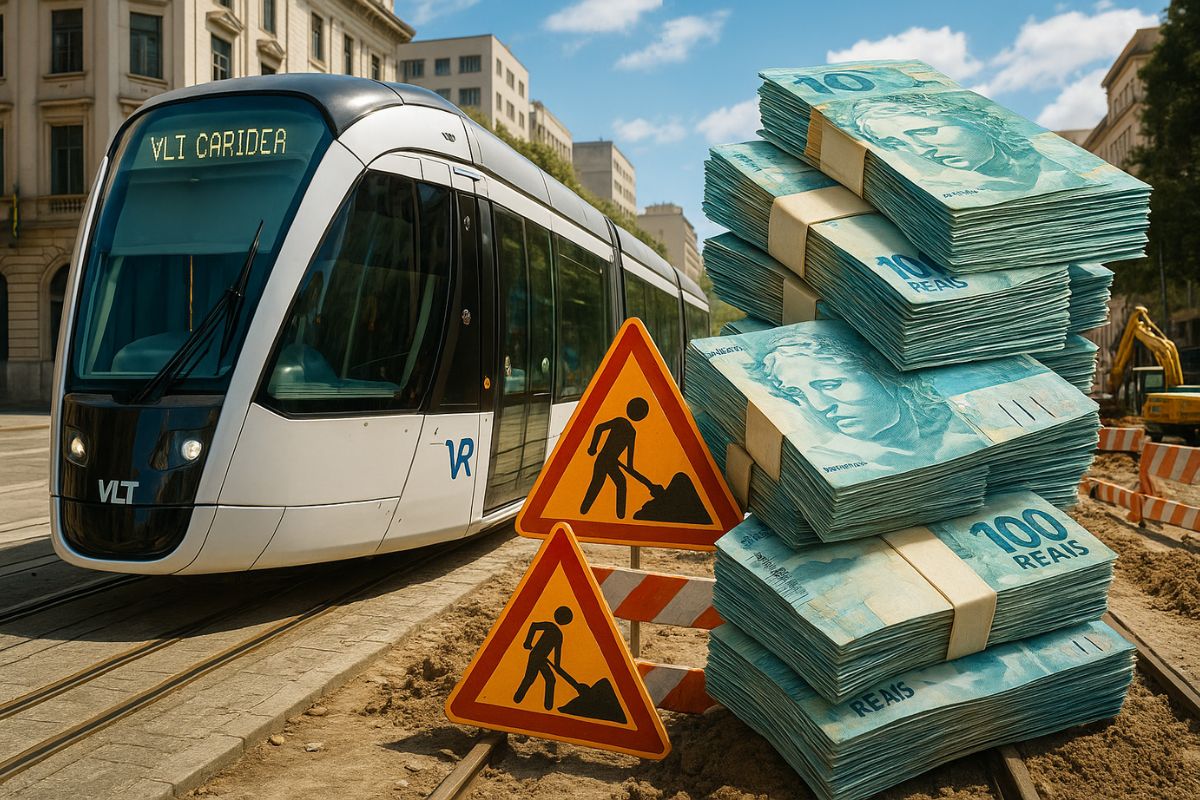
Rio City Hall Presents Project That Provides PPPs and Conversion of BRT Corridors to Light Rail Modal
The proposal for a new light rail line in Brazil, presented by Mayor Eduardo Paes and reported by O Globo, aims to expand the current light rail network, connecting the Port Zone to the São Cristóvão neighborhood in Rio de Janeiro. The plan has been submitted to the City Council and also includes the possibility of converting the Transcarioca and Transoeste BRT corridors to this new transportation system.
Although the route between the City Center and São Cristóvão is still in the conceptual phase, the proposal includes strategic stops such as Quinta da Boa Vista, Biopark, Quinta D’Or Hospital, and CENTER of Northeastern Traditions. In addition, the text mentions public-private partnerships (PPPs) to facilitate the project, indicating that the concession model would be “sponsored,” with public subsidies.
Who Will Operate the New Light Rail Line in Brazil?
The model suggested by the city hall is a sponsored concession, meaning that the operation will be carried out by a private company with financial support from the government — both to facilitate construction and to ensure operation through subsidies or fare transfers.
-
A megaproject worth R$ 89 billion is advancing in Iraq and promises to change the game in global trade by creating a new corridor between Asia and Europe, reducing traditional routes and repositioning the country as a logistics powerhouse.
-
Goodbye bedside table: floating shelves become a trend in 2026 by freeing up space in the bedroom, improving circulation, bringing visual lightness, and integrating technology without taking up floor space.

-
Israel, Greece, and Cyprus signed an agreement in 2020 to transport gas from the Mediterranean to Europe via a 1,872 km pipeline, but Turkey claimed sovereignty over part of the maritime route, and the project never materialized.
-
Israel, Greece, and Cyprus signed an agreement in 2020 to transport gas from the Mediterranean to Europe via a 1,872 km pipeline, but Turkey claimed sovereignty over part of the maritime route, and the project never materialized.

The project still depends on analysis and approval from the City Council, but has already received support from the president of the House, Carlo Caiado (PSD), who highlighted the previous experience of the Council in recovering the BRT system as a basis for enhancing the new plan with suggestions and amendments.
How Much Would the New Line Cost and Where Will the Money Come From?
In addition to the VLT expansion project, the Rio city hall has also submitted a request to contract a new loan of R$ 882 million, part of which could be directed toward transportation infrastructure. There is not yet an exact figure for the new light rail line, but the loan amount will also be used for drainage of the Acari River, urbanization of Rocinha, and land regularization in the Alemão Complex.
The specific cost estimate for the light rail should be detailed later, as technical studies and concession modeling progress.
Where Exactly Will the Route of the New Line Be?
The new light rail line would depart from the current network on Avenida Francisco Bicalho, passing through areas such as the old Leopoldina Station, which will be revitalized, and heading towards São Cristóvão. The route includes tourist spots and points of public interest, such as:
- Luiz Gonzaga Center for Northeastern Traditions
- Quinta D’Or Hospital
- Quinta da Boa Vista
- Rio Biopark
The goal is to integrate with the São Cristóvão station, a connection point between the subway and SuperVia trains, increasing the reach of transportation in the central and northern regions of the city.
Why Does the City Hall Want to Replace BRTs with LRTs?
According to the document sent to the Council, the proposal also provides for the gradual conversion of the Transcarioca and Transoeste corridors to the new modal. The justification is that the LRT, due to traveling on tracks and having lower emissions, can offer greater regularity, comfort, and lower maintenance costs in the long term compared to articulated buses.
The plan is a type of course correction, as stated by councilman Paulo Messina (PL) from the opposition, who assessed that the city hall erred by not adopting tracks from the beginning of the BRT projects.
Is It Worth Switching BRTs for LRT?
Experts point out advantages and disadvantages. On one hand, the LRT has quieter, more predictable operations with lower environmental impact, in addition to attracting urban investment in the areas served. On the other hand, the implementation of the system is expensive, takes more construction time, and operates at a lower average speed than BRTs, especially on longer routes.
In the case of Rio, the experience of the LRT in the Port Zone has been positive in terms of urban integration, but still faces challenges of safety and fare evasion, which must be considered in any expansion.
Do you think the LRT is the solution to improve transportation in the city? Does replacing the BRTs make sense, or should the focus be elsewhere? Leave your opinion in the comments — we want to hear from those who experience urban mobility daily.









-

Uma pessoa reagiu a isso.