





 Portuguese
  English
  Spanish
  4 min of reading
  3 comments


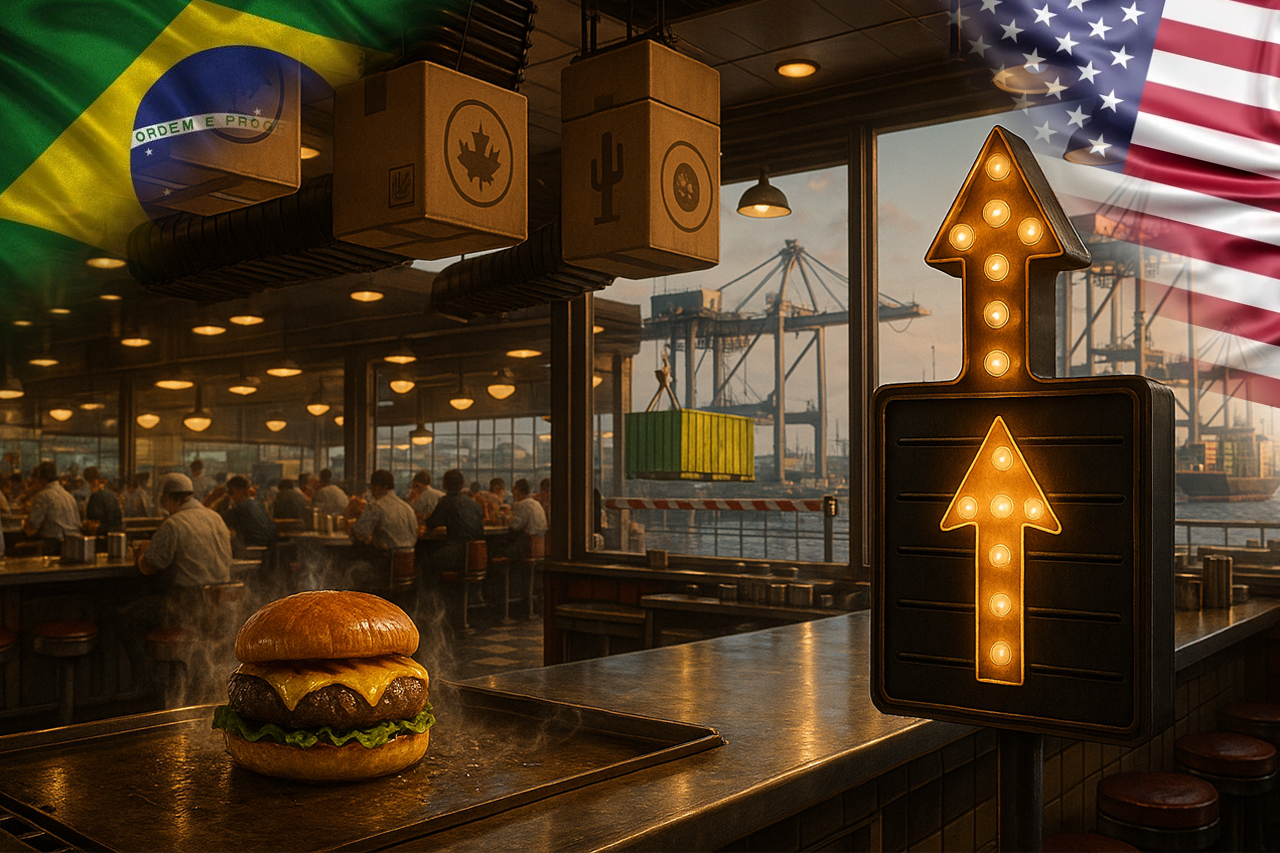


Tariff of Up to 50% on Brazilian Meat Tightens the Cost of Burgers in the USA and Pushes Fast Food Chains to Seek Alternative Suppliers. Australia, Canada, Mexico, and New Zealand Are on the Radar.
The decision by the United States to impose tariffs of up to 50% on a number of Brazilian products has increased the cost of importing proteins and raised alarms throughout the beef supply chain. According to Reuters, the Brazilian government announced a relief package to mitigate impacts on exports following the measure, confirming a changed scenario for those serving the American market.
The tariff shock meets a market already pressured by limited supply. According to USDA/ERS, 2025 began with adjusted production and greater reliance on imported meat to make the burger blend, a situation that tends to worsen when a significant supplier suddenly raises prices.
On the consumer side, signs are already showing in price indexes. According to the BLS, the beef sub-index in the CPI in July rose on the month and over 12 months, while “food away from home” also advanced, forcing chains to decide how much to absorb and how much to pass on.
-
Havan will leave the shopping mall in Blumenau to inaugurate something that the chain has never done before: a megastore in half-timbered style in the Historic Center of the city, which is expected to be completed in May and change the landscape of local retail.

-
Brazilian city gains industrial hub for 85 companies that is equivalent to 55 football fields.
-
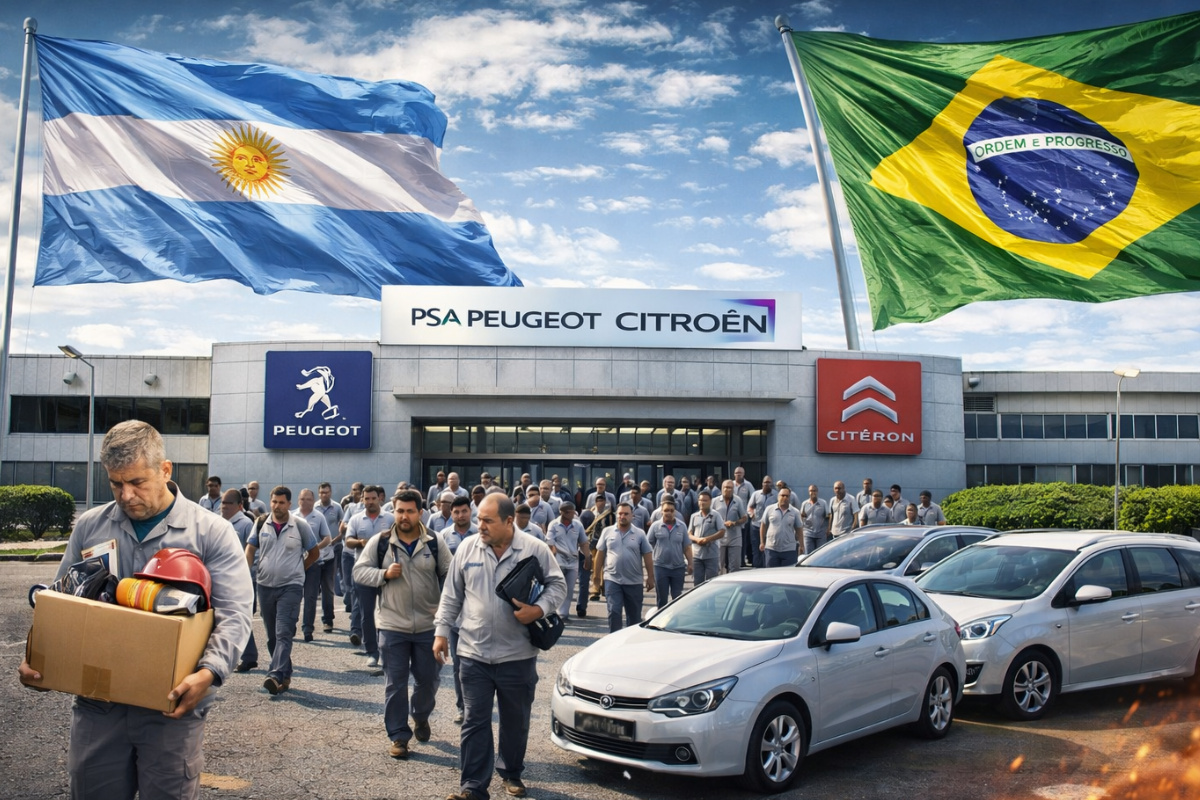
Peugeot and Citroën factory in Argentina cuts production by half and opens a layoff program for more than 2,000 employees after Brazil drastically harmed purchases of Argentine vehicles.
-
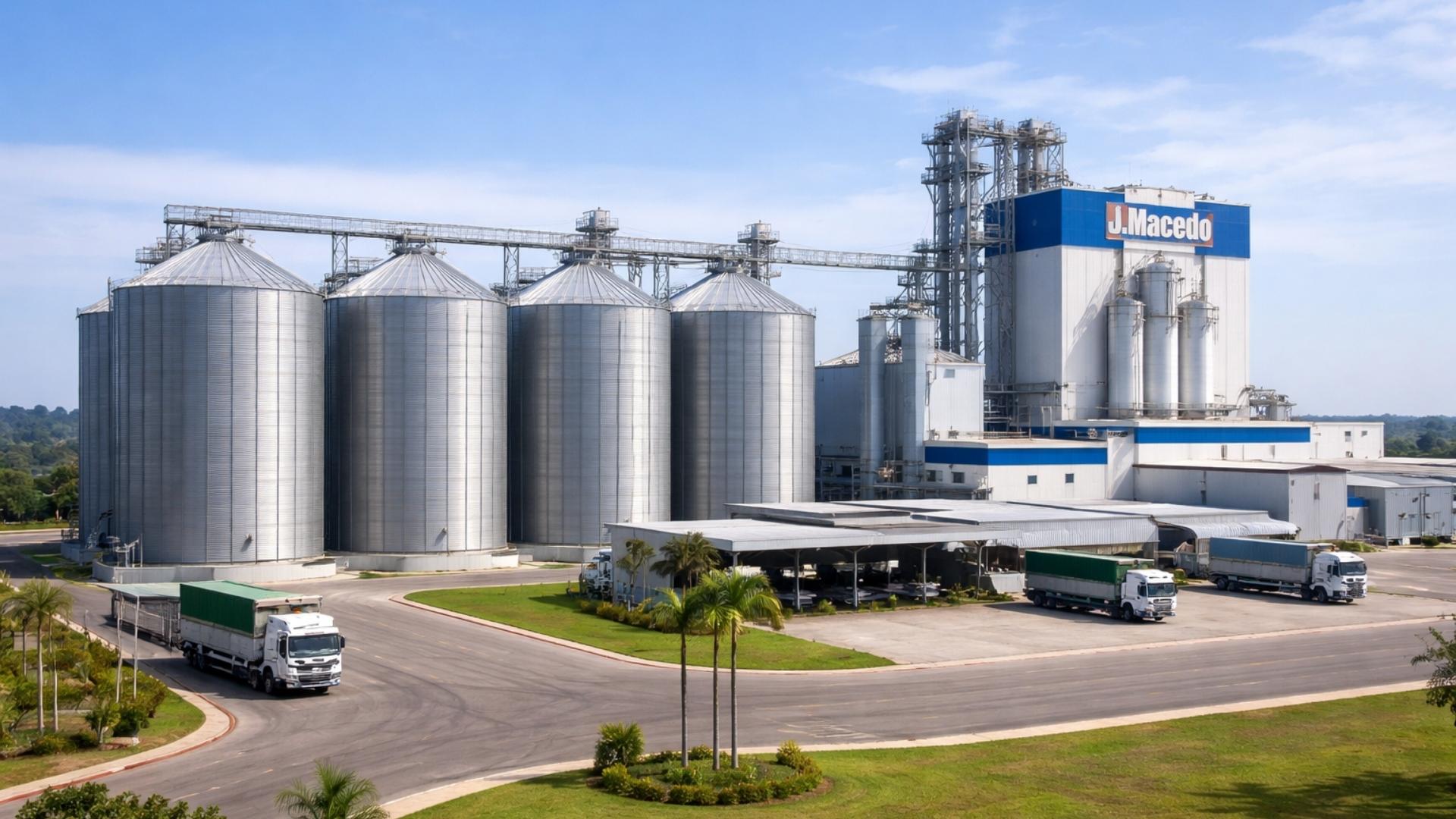
A Brazilian city gains a factory worth R$ 300 million with the capacity to process 200 thousand tons of wheat per year, a mill of 660 tons per day, silos for 42 thousand tons, and an industrial area of 276 thousand m².

In the short term, the effect is simple: if the imported meat supplying part of American demand becomes more expensive, the raw material for burgers increases in cost and margins tighten. This combination tends to accelerate the search for alternative suppliers and tactical menu adjustments.
The Race for Suppliers: Australia, Canada, Mexico, and New Zealand on the Radar
To compensate for the loss of competitiveness of part of the Brazilian supply, major chains and distributors are turning to traditional lean beef partners. Data compiled by Meat & Livestock Australia based on USDA shows that in 2024, Australia, Canada, Mexico, and New Zealand accounted for significant shares of U.S. meat imports, with Brazil gaining ground until mid-2025.
The replacement, however, does not happen without cost. Reports from the imported market and entry bulletins of meat into the American system indicate limits on slaughter capacity, logistics, and exchange rates from these origins, which may sustain price premiums while the flow reorganizes.
In practice, the “gap” left by Brazil in cuts and trimmings for burgers tends to be filled gradually, which keeps cost pressure on chains. While equilibrium is not achieved, the most likely scenario is menu adjustments by location and promotional period.
How Much Will It Cost the Consumer: Promotions, Drinks, and Passing on Costs at the Counter
With more expensive proteins, chains are intensifying mix and perceived value strategies. According to market analyses cited by the specialized press, there is a movement to focus on higher-margin drinks to ease pressure on ticket prices while maintaining competitiveness on combos.
The snapshot of consumer prices confirms the tightening: “food away from home” advanced 0.3% in July and has an annual increase above supermarket inflation. This signals limited room for aggressive price increases, especially in fast food, which grew less than full service in the month.
Recent cases of chains discussing pricing policies show that communication with customers needs to be surgical. The challenge is to maintain the perception of value without eroding margins in a sensitive income environment and intense competition among brands.
In summary, while imported supply does not fully recover, the partial pass-through is likely to continue, bolstered by targeted promotions and redesigning of combos to protect profitability.
And in Brazil? Redirecting Shipments and New Markets in Asia
On the Brazilian side, the immediate strategy has been to redirect volumes and open doors in Asian markets. According to ABIEC, with confirmation from Mapa, the Philippines has officially opened for bone-in beef and offal, expanding access to higher-value items and helping to absorb part of the production that would lose its destination in the USA.
The Brazilian presence at the WOFEX fair in Manila reinforced this institutional and commercial advance, with public-private delegations promoting the quality and diversity of the product to importers. According to ABIEC itself and sector entities, this is a significant step to consolidate participation in Southeast Asia.
Meanwhile, Brasília has implemented a credit and guarantee plan for affected exporters. According to Reuters, the package aims to provide financial breathing room and prevent sharp production and job cuts in the sector, while diplomatic and technical solutions are sought to reduce the tariff impact.
The combination of new destinations and domestic support tends to maintain the pace of total shipments from Brazil, but with a change in mix and margins by market. For the USA, this means that the recovery of supply from other origins may be more expensive for a longer time.









Bem feito. Quem precisam da gente é mais eles. Querem pagar de cabulosos. Ontem mesmo o Brasil fechou exportação para indonésia e outro país. Enquanto os americanos defiam. Graças ao Trump e ao Bolsonaro, “o estúpido”. Estou só assistindo de camarote, comendo um pipoquinha e comendo um churrasco bovino. Kkkkkkkk😂😂😂😂😂
Não se iluda. Esses mercados são infinitamente menores. E não, não são eles que precisam mais de nós, pois assim como podemos vender para outros, eles também podem (e já estão) comprando de outros. E diferentemente da gente, o americano médio consegue receber algum repasse de preço por um tempo, já aqui, no médio prazo vai ficar mais caro pois os custos de produção sobem, e nosso mercado consumidor é frágil.
Simplesmente assim, no caso específico da carne bovina, os americanos precisam muito de nós, não se substitui 30 % de importação do dia para noite, vai levar muito tempo pra eles se organizarem, enquanto isto o consumidor americano vai continuar mais caro para comer seu bife, enquanto que pra nós, podemos ter até uma possível queda nos preços, que assim seja.