





 Português
  Inglês
  Espanhol
  3 min de leitura


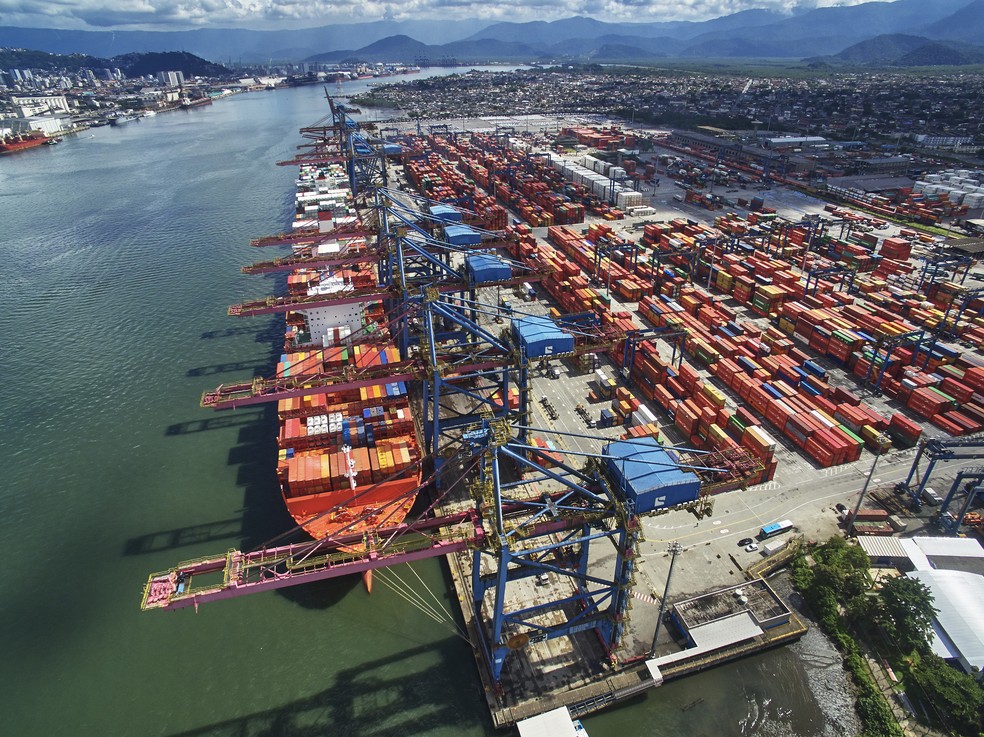
With the Implementation of the New Blockchain Technology in the Maritime Sector, A Significant Improvement in Quality, Reduction of Costs, and Less Time Loss in Processes Is Anticipated.
A new moment is expected for maritime cargo transportation and port activities in Brazil, as the sector prepares to adopt blockchain technology, which will ensure cost reduction, greater efficiency in processes, saving time and generating higher efficiency for the port sector.
The gains will be possible according to the technology blockchain, which has already been used, primarily in monitoring commercial navigation. It is estimated that within the next 10 years, these tools will become a reference and be used throughout the maritime segment.
In meetings last Thursday (12), American experts spoke to businesspeople from the Port of Santos and authorities from Brazil’s port system about the significant impact this technology can have on the port and navigation sectors.
-
Haiti’s capital is experiencing an energy and construction crisis, facing blackouts, a blocked port, and buildings at risk after years of instability and a significant earthquake.

-
Government unlocks R$ 554 million for a highway that has been requested for decades and accelerates the duplication of BR.
-
Without bricks, without cement, and without endless construction: the cardboard house that is assembled in modules and can be moved.

-
Billions of barrels on the equatorial margin could lead Amapá to double its oil production in Brazil — the state aims to enter the route of companies in the Campos Basin, attract investments, and boost jobs and businesses in the oil and gas sector.


The group of businesspeople is part of the delegation from Porto & Mar 2019, which recently conducted technical visits to the Port of Houston and, last Thursday (12), visited the technology hub in Austin. The Brazilian authorities are closely observing two systems based on blockchain technology.
How the System Develops
The technology involves analyzing vast amounts of information on objects (e.g., cargo) and processes (maritime transport) securely and with zero risk of data being compromised, as each modification made in the system is recorded, generating a new version with each change.
In the past 3 years, IBM has been developing a blockchain system to reduce time and costs in international container maritime transport. The principle of the idea is to digitalize the documents required for cargo import and export services, for example, and include them in a secure and transparent digital environment. This system displays the time each stage of the activity requires to be completed. Initially, this project was named Tradelens and was supported by one of the leaders in container maritime transport, Maersk.
According to the first tests conducted, it was possible to verify a reduction of 10% to 20% in service time and a 5% to 7% reduction in operational costs.
Attention to Workers
The visit to the Port of Houston serves as a reminder for Brazilian workers to prepare for the new phase and take advantage of opportunities in the segment.
Observation made by the president of the Chamber of Santos, Rui De Rosis, who, alongside Santos businesspeople and a representative of the Federal Government in recent days, witnessed the port’s facilities and the technology center in Austin (a city near Houston).
The president of the Legislative Assembly of Santos emphasized the importance of technological development and how its application in infrastructure allows for the growth of operations at the Port of Houston, Texas.
“A port is always a strategic tool for the development of its region. We saw this here in Houston, and we know this in Santos. However, to realize this potential, support from all of society and the authorities is necessary,” he stated.
Offshore Jobs in Brazil Are Announced by the Multinational DOF









Seja o primeiro a reagir!