





 Portuguese
  English
  Spanish
 5 min of reading
  0 comments


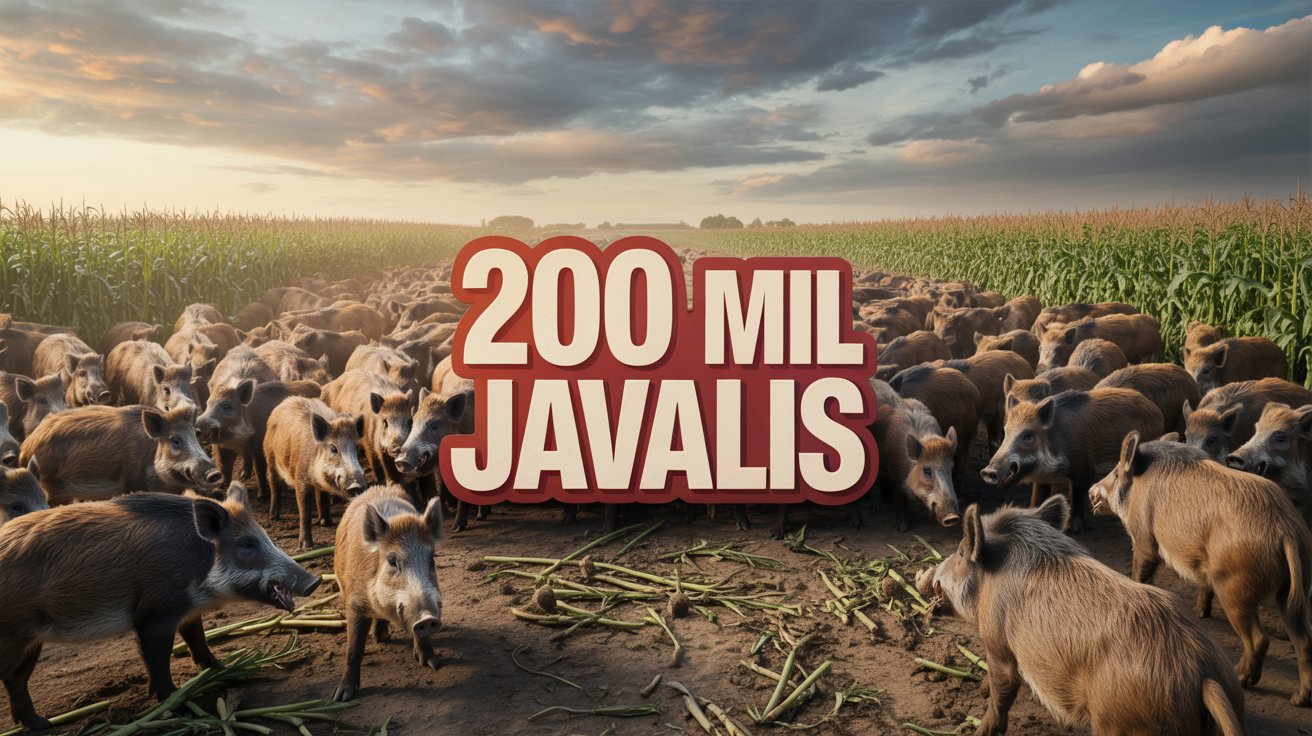
Estimates Indicate More Than 200,000 Wild Boars in Santa Catarina, with Attacks Devastating Entire Crops in Just a Few Hours and Causing Growing Losses to Producers, While Agribusiness Leaders Push for More Effective Control Measures.
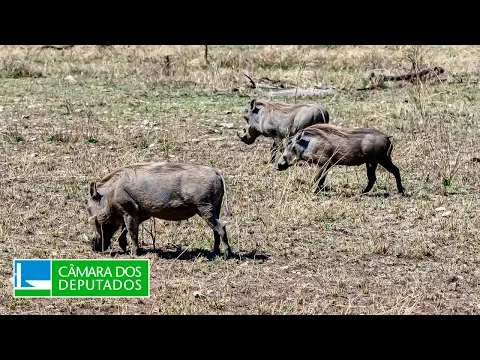
The expansion of wild boars in Santa Catarina has raised alarm in the agricultural sector.
Estimates cited by the State Federation of Agriculture and Livestock (Faesc) indicate more than 200,000 animals in 236 municipalities, with reports of entire fields destroyed in just a few hours and successive losses to producers.
In an article released this Monday (1st), the president of Faesc and Senar/SC, José Zeferino Pedrozo, stated that the situation “is almost out of control“, advocating for quicker and more coordinated management actions.
-
China banned the export of 22 tons of meat from Argentina.
-
While Russia dominates the global wheat market, Brazil emerges as an unexpected competitor in the Cerrado, offering grain available in July and August when stocks in the Northern Hemisphere are at their lowest point of the year.

-
China returned almost 20 Brazilian ships with soybeans, but now everything could change: the country that buys 80% of the grain is considering relaxing regulations after impurities held up shipments of thousands of tons and caused million-dollar losses.

-
The drought of the cerrado was considered an enemy of wheat, but Brazilian scientists turned the lack of rain into a competitive advantage by creating a grain with quality that is already attracting the attention of international mills around the world.

Impact on Crops and Territorial Expansion
In addition to the volume, the movement of animals worsens the situation.
During periods of food scarcity in refuge areas, herds migrate to rural properties in the highlands, midwest, and western Santa Catarina.
Crops of corn, beans, soybeans, wheat, and pastures, along with gardens and even poultry and swine farms, appear among the most affected targets.
In a single night, producers report losses of several hectares, with traces of disturbed soil and uprooted plants.
The region of Lages and the vicinity of the National Park of the Araucarias, in Ponte Serrada and Passos Maia, are cited by entities and environmental agencies as areas of higher concentration.
In the federal park, which spans 12,841 hectares, the wild boar finds shelter, and as food supply varies, it encroaches upon cultivated areas nearby.
The result is waves of attacks in neighboring municipalities and increasing difficulty in response in rural areas.

Accelerated Reproduction Complicates Control
The operational challenge arises, above all, from reproductive potential.
Under favorable conditions, females can have up to two litters per year, with litters that vary on average from 6 to 10 piglets.
This dynamic sustains population growth even with frequent control efforts.
Between 2019 and 2024, according to Faesc, more than 120,000 animals were culled in Santa Catarina.
Still, the current population remains high.
It is not only about economic losses.
Technicians highlight risks to the safety of residents and rural workers due to the aggressive behavior of some groups when threatened, and sanitary concerns due to possible diseases transmissible to domestic animals and native wildlife.
Incidents intensify during planting and pre-harvest periods, when crops provide food availability and cover.
What the Law Says and Who Can Manage
The State regulated the topic at the end of 2023.
The Law No. 18,817/2023 authorizes population control and sustainable management of the European wild boar (Sus scrofa) in Santa Catarina, covering animals in the wild and their hybrids.
In practice, control may include pursuit, capture, and culling, provided the requirements of competent authorities are met.
The state decree that regulates the norm details procedures and conditions for carrying out the actions, such as the need for authorization from the property owner and the use of permitted means.
At the federal level, the management of invasive exotic species follows the regulations of Ibama, which establishes guidelines, authorizations, and registration systems.
To operate in the field, specific management authorizations are required, along with registration and expected documentation.
The guidance is that operations adhere to safety protocols, animal welfare, and traceability, under environmental supervision.
Background: Declaration of Nuisance Since 2010
The clash with the wild boar is not new in the State.
In 2010, the State Secretary of Agriculture issued a decree declaring Sus scrofa a nuisance species to agriculture in Santa Catarina and authorizing culling indefinitely, a measure aligned with Ibama’s regulations on nuisance synanthropic fauna.
Since then, the issue has gone through different phases of coordination and oversight, with variations in the intensity of actions and support for field teams.
The current state legislation sought to consolidate these measures into a more stable framework, allowing integration among environmental agencies, security forces, and agribusiness entities.
Still, reports from the countryside indicate that the number of animals exceeds the response capacity in certain regions, especially when planting extends over large contiguous areas.
Operational Bottlenecks in Day-to-Day
Although management is permitted, rural producers claim to face practical barriers.
The participation of authorized management agents, with training and up-to-date documentation, is a requirement for field operations.
The process includes compliance with specific rules, logistics of teams, and, when necessary, support from the Environmental Military Police.
In the assessment of sector leaders, the number of operational teams is still insufficient compared to the density of herds in several municipalities.
The article signed by José Zeferino Pedrozo asserts that, in addition to reinforcing management fronts, it is necessary to increase monitoring and regional coordination to reduce losses during critical windows of the agricultural calendar.
According to him, isolated measures have a limited effect when reproductive pressure remains high and there is constant movement of animals between areas of native vegetation and crops.
Where to Concentrate Efforts and Why
Experts advocate, as a priority, continuous actions in edge zones between forest remnants and properties with more attractive crops, such as corn and soybeans.
Working in these strips tends to reduce the frequency of incursions and mitigate the overall damage from herds, especially during local drought periods when foraging in natural environments becomes more difficult.
Another recurring point is pre-harvest planning, with risk assessment by municipality, organized management authorization in advance, and communication with neighbors.
In areas with a history of attacks, a quick response at the first signs of tracks and soil disturbance prevents exponential losses the same night.
Reinforcing teams at strategic dates in the production cycle, in turn, increases the effectiveness of operations.
What Sector Entities Say
Faesc and Senar/SC advocate for intensifying management efforts, expanding the training of new authorized agents, and sharing data among producers, municipalities, and environmental agencies.
The entity emphasizes that the problem goes beyond individual properties and requires territorial coordination.
“The situation is almost out of control,” wrote Pedrozo, stressing that the rate of reproduction and the dispersal of packs require continuous actions, with legal basis and technical support.
Meanwhile, rural communities continue to report incidents and request operational reinforcement in the most affected regions.
The expectation is that, with alignment between legislation, enforcement, and the field, the State can stabilize the damage curve and reduce pressure on crops and livestock.
For you, what priority should come first: increase management teams, invest in integrated monitoring, or reorganize the action calendar in the most critical areas?








Seja o primeiro a reagir!