





 Portuguese
  English
  Spanish
  5 min of reading
  0 comments


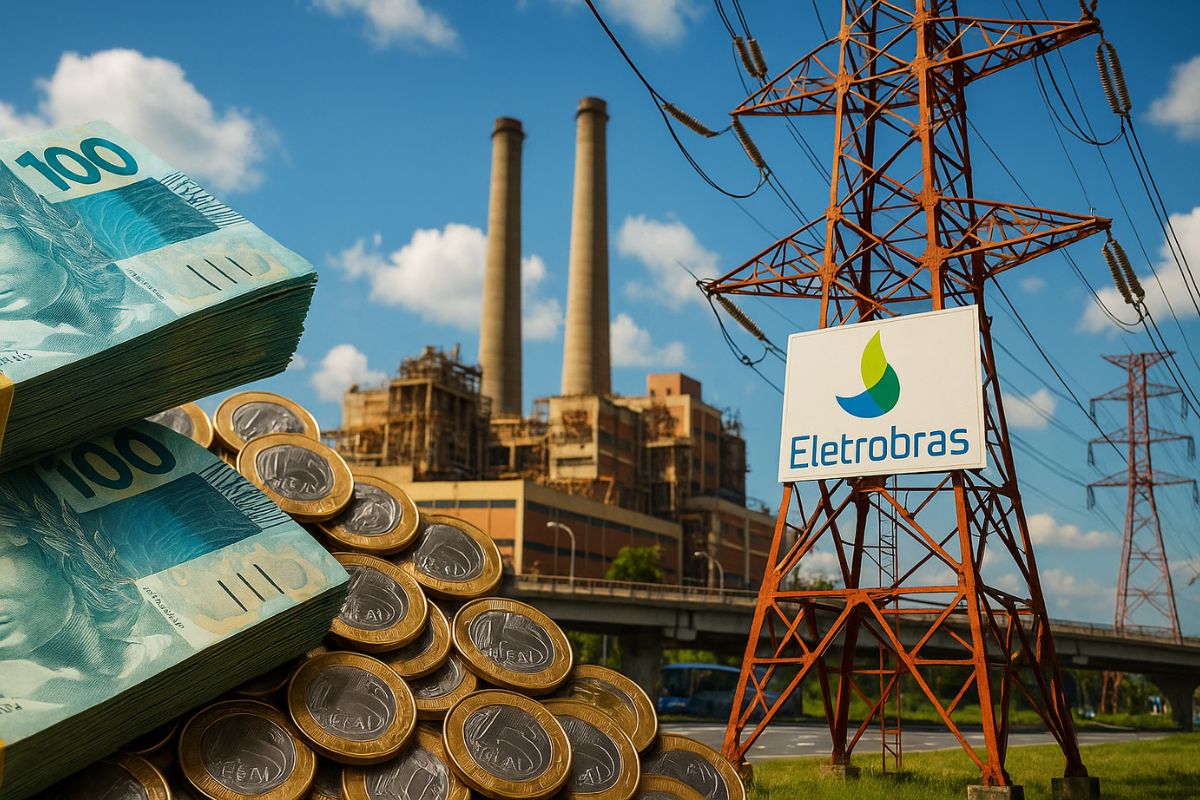
Efficiency Bet After Privatization Includes Cost and Personnel Reduction, Sale of Non-Core Assets and New Management Focused on Market Discipline, with Profit Increases and Goals of Up to R$ 30 Billion in Divestments, According to Reports and Interviews Published by Folha de S. Paulo
The privatization of Eletrobras is beginning to show concrete results: the company cut operational costs by 18%, reduced its workforce by 17%, and doubled its profit compared to the year of the offering, according to data and interviews compiled by Folha de S. Paulo. The thesis is simple: shrink inefficient structures, sell what is not part of the core and create governance that withstands short-term pressures.
At the same time, the utility is accelerating a divestment program estimated at over R$ 30 billion to unlock value and reposition the portfolio. According to Folha, the strategy includes the divestment of gas-fired plants already sold to Ambar, new sales of minority stakes, and agreements to reduce legacy obligations, while the market prices in expectations of a more predictable, transparent, and profitable Eletrobras.
What Changed After Privatization: Efficiency, Governance, and Focus
Since 2023, the new administration has adopted private sector management standards: contract reviews, a remodeled headquarters in Rio with open offices and productivity goals.
-
50 viaducts, 4 tunnels, 28 bridges, and 40 kilometers of bike paths: BR-262 in Espírito Santo will receive 8.6 billion reais for the largest engineering project in the state’s history, inspired by the Immigrant Highway in São Paulo.

-
Brazil produces too much clean energy and doesn’t know what to do with it: over 20% of solar and wind capacity was wasted in 2025 while investors flee and 509 renewable generation projects were abandoned in the last year.

-
Piauí will produce a new fuel that replaces diesel without needing to change anything in the truck’s engine and reduces pollutant gas emissions by half: truck drivers from all over the Northeast are already celebrating the news that will arrive later this decade.

-
A new Brazilian shopping center worth R$ 400 million will be built in an area equivalent to more than 4 football fields, featuring 90 stores, 5 cinemas, a supermarket, a college, and parking for 1,700 cars, potentially generating 3,000 jobs.


The message is one of discipline: less bureaucracy, more accountability, and integration between the holding and subsidiaries.
Results are showing up in the DRE: the company reported R$ 10.4 billion in profit for 2024, compared to R$ 3.6 billion in 2022, the year of the offering, according to Folha de S. Paulo.
The efficiency thesis also involves accounting standardization and processes that previously required fragmented manual labor.
For analysts interviewed by Folha, Eletrobras has become “more transparent, predictable, and attractive.”
Divestments and Capital Allocation: The Plan for R$ 30 Billion
According to interviews published by Folha, the company has mapped minority stakes and non-essential assets valued at over R$ 30 billion.
Eduardo Haiama (CFO) stated that, “if it were up to him, he would sell everything,” but high interest rates make it difficult to achieve fair valuations.
It’s about making room on the balance sheet for modernization and for businesses with returns adjusted for risk.
The report also points to relief from obligations such as the agreement that removes Eletrobras from financing Angra 3, a project estimated by the government to cost around R$ 20 billion and mentioned in a Fitch report.
By reducing non-core capex, the company concentrates capital on what generates recurring cash and improves the risk profile of the overall portfolio.
Market, Energy Price, and Commercial Strategy
The report describes a sector scenario pressured by wind and solar, which have flattened wholesale prices in recent years.
Eletrobras’s response was tactical: to avoid locking in long contracts at the bottom of the cycle and to leave a significant portion of uncontracted energy (the company estimates 32% to 43% in 2027), betting on better prices ahead.
This positioning carries volatility risk, but if the curve reacts, it can capture additional margins.
For investors mentioned, success depends on commercial discipline, well-calibrated hedging, and execution without regulatory shocks.
Dividends, FGTS, and the Thermometer of Retail Investors
370 thousand people participated in the 2022 offering via FGTS, with R$ 6 billion allocated, which increased scrutiny over dividends.
However, management itself considers: the R$ 4 billion recently distributed should not be seen as a new normal; the balance between remuneration and investment will be considered on a case-by-case basis, avoiding short-term decisions that harm the modernization cycle.
For long-term investors, cash predictability and the divestment schedule tend to convey more than a single substantial payment.
The report also notes firms like UBS BB projecting fair price of R$ 59 in 12 months, below the previous target of R$ 70, reflecting current capital costs and execution risks.
Shares, Governance, and the “State Shadow”
According to Folha, the shares have resumed trading above R$ 42 from the offering, after years below that level.
Still, the pricing carries a governance discount: the government holds about 45% through a share structure with specific rights and recently increased its influence on the board.
Analysts interviewed by Folha state that the rating of “privatized company” is still not fully priced in.
To unlock this premium, a drop in interest rates, continuation of strategy, and governance stability would be necessary. In summary: consistent execution is the antidote to the “state shadow.”
Operation, Data, and Technology: The Role of the Atmos Platform
The report highlights that Eletrobras launched the internal meteorological platform Atmos to forecast demand and plan maintenance.
This type of tool is increasingly crucial in systems with greater penetration of renewables and volatile weather patterns. The logic is simple: better forecasting, better dispatch and contracts.
By integrating analytics into the commercial and operational core, the company enhances decision quality and reduces opportunity costs in asset usage.
If the data front delivers as promised, incremental efficiency is likely to appear in the margins.
What to Watch Going Forward
Three vectors will decide valuation, according to the consolidated reading by Folha:
(1) speed and price of divestments,
(2) commercial discipline in a more volatile market, and
(3) governance stability to sustain the strategy.
The combination of these factors can consolidate the “turnaround” or reopen the discount if there are setbacks.
The current snapshot shows measurable advances (costs, profits, asset sales) with known risks (interest rates, politics, pricing cycle).
For those following the thesis, the focus should be on recurring cash flow, capital allocation, and quarterly deliverables consistent with the plan.
The privatization has put Eletrobras back on the efficiency track and opened up space for R$ 30 billion in divestments, but the full governance premium still depends on execution and stability. If the strategy is maintained, the company is likely to return to the level of an energy giant.
Do you agree that privatization has turned the page and that divestments will be the engine of repricing? How to balance dividends, debt, and investment in a sector increasingly exposed to renewables and price volatility? Share your thoughts in the comments — we want to hear from those living this in practice.









-

-

-

-

-

28 pessoas reagiram a isso.