





 Português
  Inglês
  Espanhol
  7 min de leitura
  0 comentários


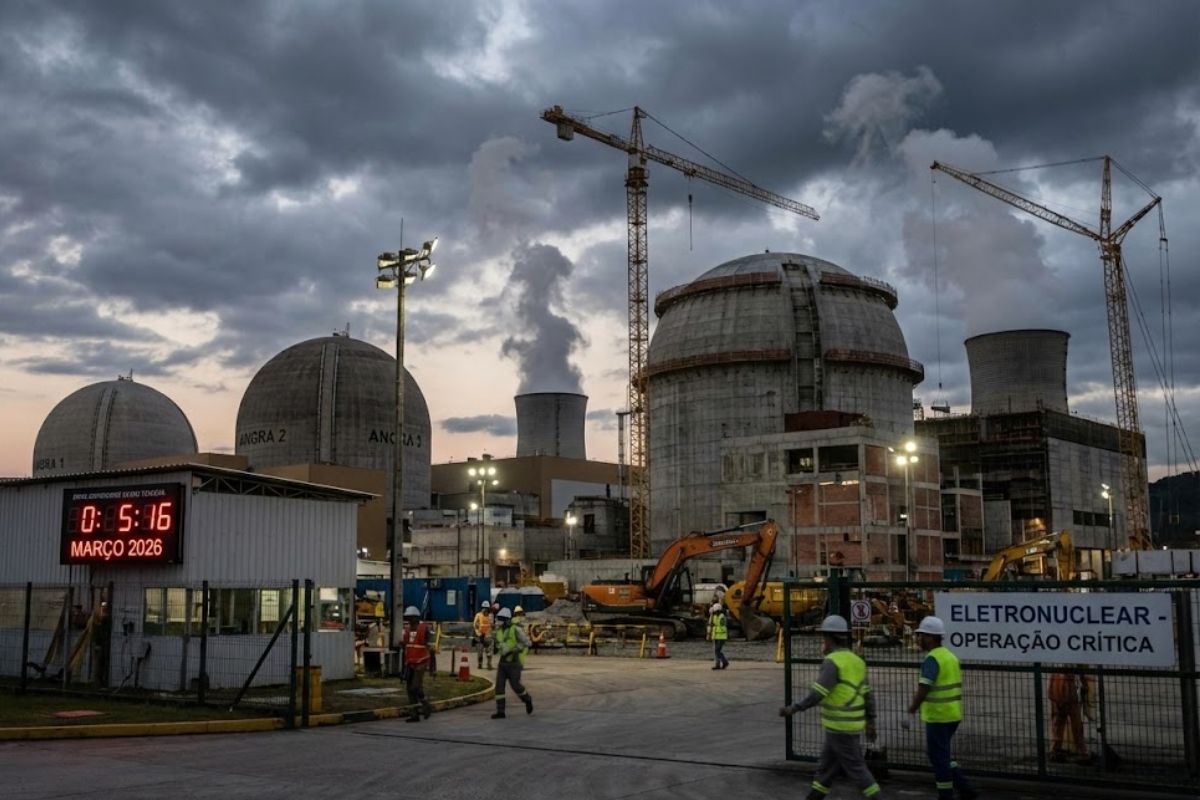
While Eletronuclear Tries To Close Until March The Raising Of R$ 2.4 Billion With Ambar Energia, State Company Remains In Crisis, Requires Withdrawal Of R$ 2 Billion From The Nuclear Fund, Carries Angra 3 Stopped For 40 Years, Keeps Costs Above The Tariff And Sees The Future Cash Flow Pressured
Eletronuclear entered a race against time after the Federal Supreme Court (STF) approved on Thursday the agreement between the Union and Axia, former Eletrobras. With this approval, the state-owned company that operates Angra 1 and Angra 2 is attempting to conclude by February or March a debt securities issuance that could secure R$ 2.4 billion in new resources in a private operation with its partner Ambar Energia, a company in the J&F group.
The crisis, however, has been ongoing for a long time. Amid annual costs around R$ 1 billion just to maintain the construction site of Angra 3, which has been under construction for about 40 years, Eletronuclear has already requested a contribution of R$ 1.4 billion from the Treasury, under “risk of collapse,” and is now trying to combine private financing, tariff adjustments, and billion-dollar withdrawals from a regulated nuclear fund to avoid complete collapse and keep Angra running in the coming years.
Financing Of R$ 2.4 Billion Hurries To Exit Until March

Eletronuclear’s immediate plan is to conclude a financing of R$ 2.4 billion through the issuance of debt securities that will be contributed by Axia or Ambar Energia, the J&F group’s electric sector operator.
-
A megaproject worth R$ 89 billion is advancing in Iraq and promises to change the game in global trade by creating a new corridor between Asia and Europe, reducing traditional routes and repositioning the country as a logistics powerhouse.
-
Goodbye bedside table: floating shelves become a trend in 2026 by freeing up space in the bedroom, improving circulation, bringing visual lightness, and integrating technology without taking up floor space.

-
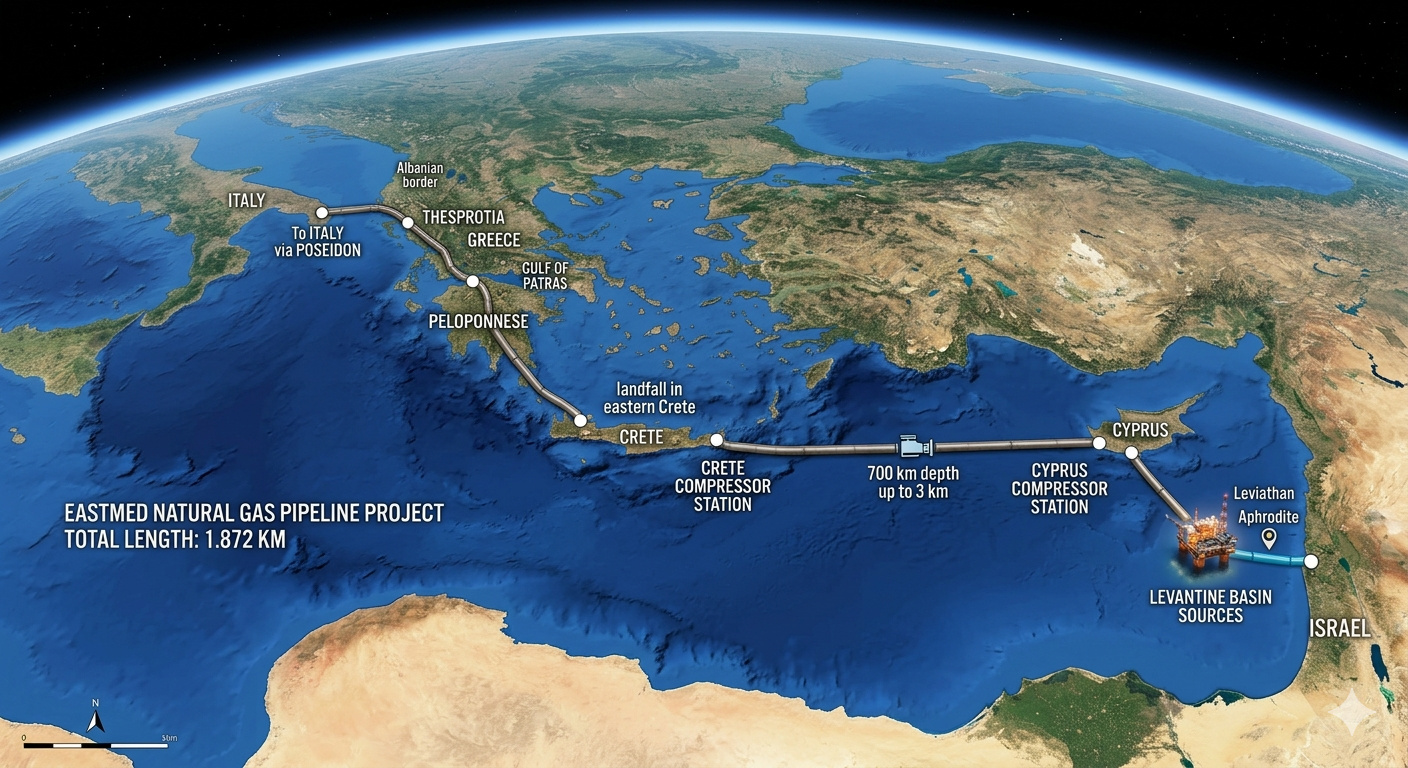
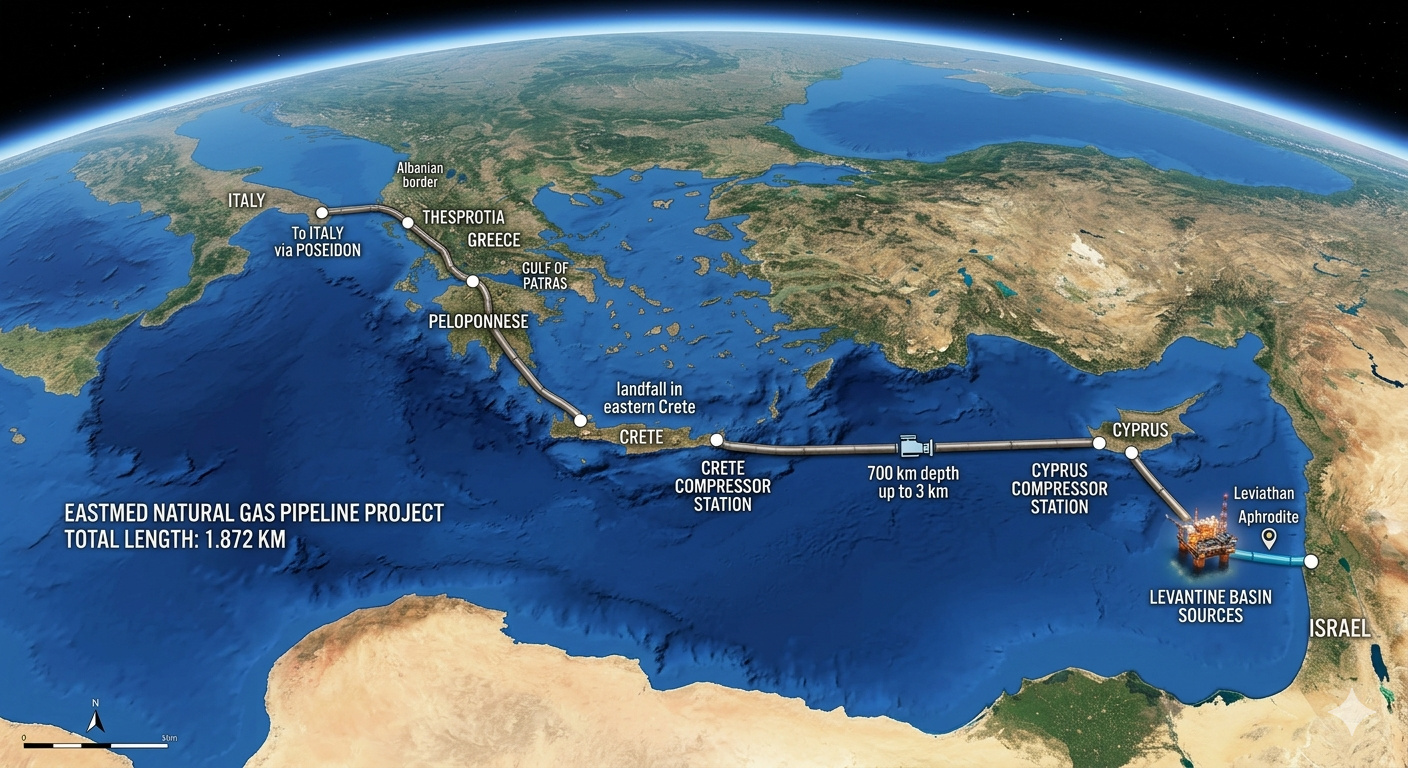
Israel, Greece, and Cyprus signed an agreement in 2020 to transport gas from the Mediterranean to Europe via a 1,872 km pipeline, but Turkey claimed sovereignty over part of the maritime route, and the project never materialized.
-
Israel, Greece, and Cyprus signed an agreement in 2020 to transport gas from the Mediterranean to Europe via a 1,872 km pipeline, but Turkey claimed sovereignty over part of the maritime route, and the project never materialized.

Ambar is in the process of purchasing the remaining stake of former Eletrobras in the nuclear state-owned company.
According to the Acting President of the company, Alexandre Caporal, the operation is considered simple because it involves only the private shareholder and is completely closed.
There will be no registration at B3 or market offerings, as the papers will be traded directly between the parties, following the rules of the Securities and Exchange Commission (CVM) for private operations.
Caporal took office less than a month ago, after serving since April 2024 as financial director appointed by the private partner, then the former Eletrobras.
He admits that the new financing is an important relief, but does not solve the structural imbalance of Eletronuclear, as all resources will be allocated to the works extending the useful life of Angra 1 for another 20 years, a project estimated at R$ 3.5 billion.
In practice, the R$ 2.4 billion will be released gradually to modernize Angra 1 and prevent the state-owned company from diverting scarce cash resources for this investment.
The money prevents Angra 1 from halting due to lack of works, but does not close the gap in other accounts, nor does it solve Angra 3 or the tariff imbalance.
Angra 3 Stopped For 40 Years Continues As A Major Focus Of Pressure
The first major problem pointed out by management is Angra 3, work initiated in the mid-1980s and marked by successive delays, economic crises, and corruption scandals, including cases revealed by Operation Car Wash.
An update of the economic-financial study conducted by BNDES estimates R$ 24 billion as the amount needed just to complete the plant.
Adding this amount to the settlement of debts with BNDES itself and with Caixa Econômica Federal, the total account could exceed R$ 30 billion.
Abandoning the project is also not cheap. Studies indicate that giving up on Angra 3 could cost between R$ 22 billion and R$ 26 billion in fines, settling debts, and other obligations. In other words, Eletronuclear is stuck with a plant that does not generate energy but consumes billions, whatever the decision.
The National Energy Policy Council (CNPE), comprising various ministries, discussed the resumption of Angra 3 in meetings earlier this year but decided to postpone any definition about the future of the project.
Meanwhile, the work remains in an expensive limbo with no clear horizon for a solution.
Costs Above The Tariff And Need For Operational Restructuring
The second central problem is operational. Caporal states that even after a voluntary dismissal plan, spending cuts, and efficiency gains, Eletronuclear’s costs are still about 25% above the financial breakeven point this year.
For 2026, the internal projection is that costs will decrease but still remain about 10% above the sustainable level given the current tariff of Angra 1 and Angra 2.
In other words, the company continues to spend more than the revenue recognized by the tariff, which pressures cash flow and makes it inevitable to discuss adjustments and new restructuring.
Eletronuclear expects a response from the National Electric Energy Agency (Aneel) in 2026 regarding a request for tariff adjustments for the plants.
The approval of this increase is seen as a key piece to reduce the operational deficit. Without this realignment, the state-owned company will continue to burn cash even with the financing of R$ 2.4 billion and any withdrawals from the nuclear fund.
Nuclear Fund Of R$ 3 Billion Becomes Central Piece Of Strategy
To simultaneously face the impasse of Angra 3 and the cost imbalance, Eletronuclear is targeting a sensitive target: the nuclear fund maintained to cover the future dismantling of nuclear plants. This fund, provided for in specific regulation, currently has around R$ 3 billion invested in the financial market.
According to Caporal, technical calculations show that it would be possible to withdraw around R$ 2 billion from this fund without compromising the safety of decommissioning operations in the future. Last year, the state-owned company had already withdrawn R$ 374 million, an operation initially questioned by the Federal Court of Accounts (TCU) but later approved.
With this authorization, Eletronuclear withdrew approximately R$ 800 million from the fund between 2024 and 2025. Now, management is requesting another R$ 1 billion, raising the total planned withdrawals to R$ 2 billion.
For Caporal, it does not make sense to keep resources locked up while the company is at risk of financial collapse, as long as there is a gradual recomposition plan over the years.
Dispute With Nuclear Regulator And Impasse Over Future Safety
The use of the fund, however, is highly controversial. The money was created to ensure, decades from now, the safety and decontamination of the areas of the plants after the end of operations, and any early withdrawal raises questions about the ability to meet those obligations in the future.
Caporal argues that the TCU’s approval would already allow the intended withdrawals, but the final word rests with the National Nuclear Safety Authority (ANSN), a newly created agency to regulate nuclear activity.
The ANSN, however, is opposed to the broad release of funds, believing that this could weaken long-term radiological protection.
Another point of friction is fiscal. Eletronuclear questions the fact that the Federal Revenue is charging taxes on the financial gains of the fund’s investments, while the regulation does not allow using the fund itself to pay these taxes.
In practice, the state-owned company must use its own cash, already tight, to pay taxes on money it cannot move freely.
In the view of the acting president, Brazilian rules for this type of fund are stricter than those in other countries, such as the United States.
Caporal argues that with adjustments in regulation, it would be possible to plan withdrawals in sufficient volume to avoid new contributions from the Treasury, without compromising the future stages of dismantling the plants.
Haddad Puts Eletronuclear Among The State-Owned Companies That Most Concern
The situation of Eletronuclear has already caught the direct attention of the economic team. In an interview, the Minister of Finance, Fernando Haddad, stated that Correios and Eletronuclear are the two state-owned companies that inspire the most concern, signaling the degree of worry about the financial situation of the nuclear plant operator.
Despite this, Haddad avoided talking about new direct contributions from the Treasury to the company. The prevailing assessment is that Eletronuclear needs to deepen cost reductions, increase efficiency, and define the future of Angra 3 before asking for more public money.
In this context, the pressure to release billion-dollar withdrawals from the nuclear fund is seen by some government interlocutors as a way to buy time while structural decisions remain postponed.
Caporal, on the other hand, has been using a tough speech to try to persuade authorities and regulators.
He questions whether it makes sense to leave R$ 3 billion idle in an untouchable fund while the company is at risk of bankruptcy and argues that authorization to withdraw part of this amount would be an almost obvious way to avoid an imminent collapse.
Eletronuclear Between The Risk Of Immediate Collapse And The Future Dismantling Account
At the center of this dispute is a dilemma of difficult resolution. On one side, the urgency to prevent Eletronuclear from falling into financial collapse in the coming years, which could affect the operation of Angra 1 and Angra 2 and compromise the country’s energy security.
On the other hand, the need to ensure sufficient resources for the dismantling and decontamination of the plants in the long term, a commitment that involves the environment, public health, and regulatory credibility.
While the financing of R$ 2.4 billion is still in the structuring process, the request for tariff adjustment is awaiting a decision from Aneel and the request for new withdrawals from the nuclear fund is still under analysis by TCU and ANSN.
In this scenario, Eletronuclear lives under constant cash flow monitoring, with weekly meetings to manage payments and prioritize essential expenses, while awaiting moves from Brasília and regulatory bodies that could determine its future.
In your opinion, should the government authorize the billion-dollar withdrawal from the nuclear fund to save Eletronuclear now, even running the risk of lacking money for the decommissioning of the plants in the future?










Seja o primeiro a reagir!