





 Portuguese
  English
  Spanish
  3 min of reading
  0 comments


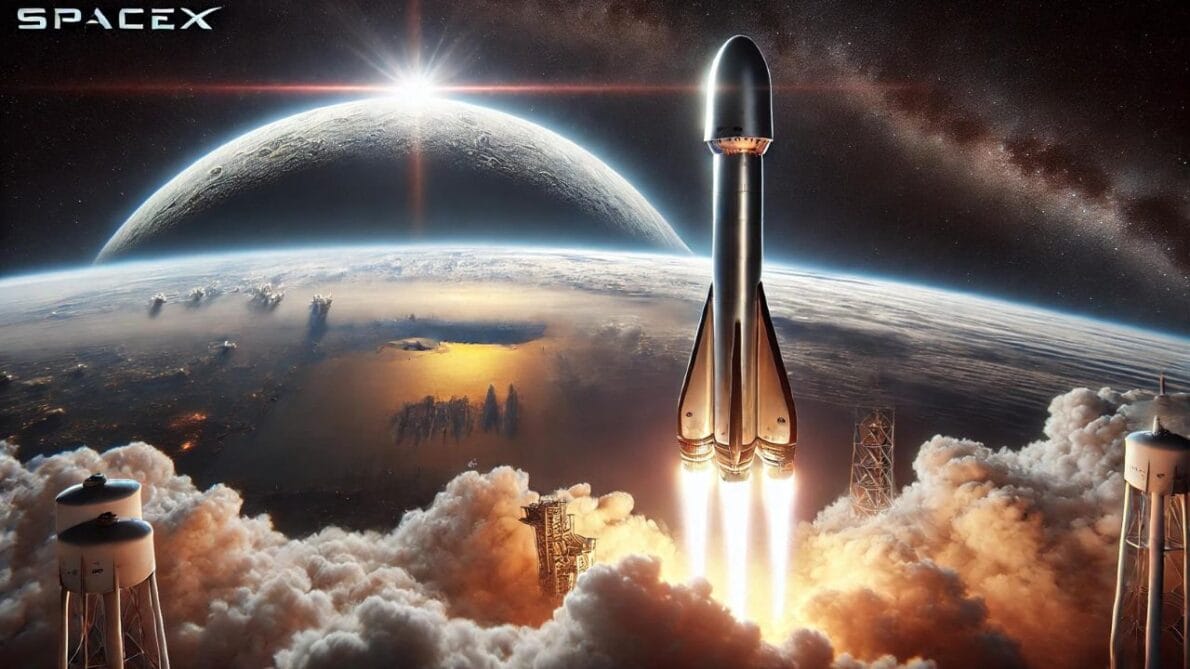
The SpaceX Raptor 3, Recently Revealed by Elon Musk, Is a True Revolution in Aerospace Engineering, Simplifying and Enhancing Rocket Engine Design Like Never Before.
Elon Musk continues to surprise! With the recent launch of the SpaceX Raptor 3, the company is set to take a giant leap into space with a new engine that promises to redefine industry standards. This engine is not only more powerful but also simpler, reflecting years of technological advancements aimed at taking us back to the Moon and even beyond.
To begin with, this new engine features a visually cleaner and simplified design. While previous versions, like the Raptor 1 and 2, were filled with piping and complex components, the SpaceX Raptor 3 looks like it came straight out of science fiction. The removal of unnecessary “clutter” is not just an aesthetic matter but a strategy to reduce weight and increase reliability.
New Engine Underwent Extreme Optimization


Looking at the images released by Musk, it is clear that the new engine has undergone extreme optimization. Previously fragmented piping has been integrated into a single continuous piece. This not only improves performance but also minimizes the chances of failures during flight. Practically speaking, fewer exposed pipes mean less risk of leaks and a lower chance of damage caused by excessive heat or debris.
-
Man builds functional 5-meter submarine in his garage using gas cylinders, PVC pipes, and a refrigerator motor, and navigates with the vessel on a lake in Colombia.

-
Millions of people have been eating yam for centuries without knowing that this humble tuber contains a compound called diosgenin, which scientists have now discovered can improve memory and help control blood sugar levels.

-
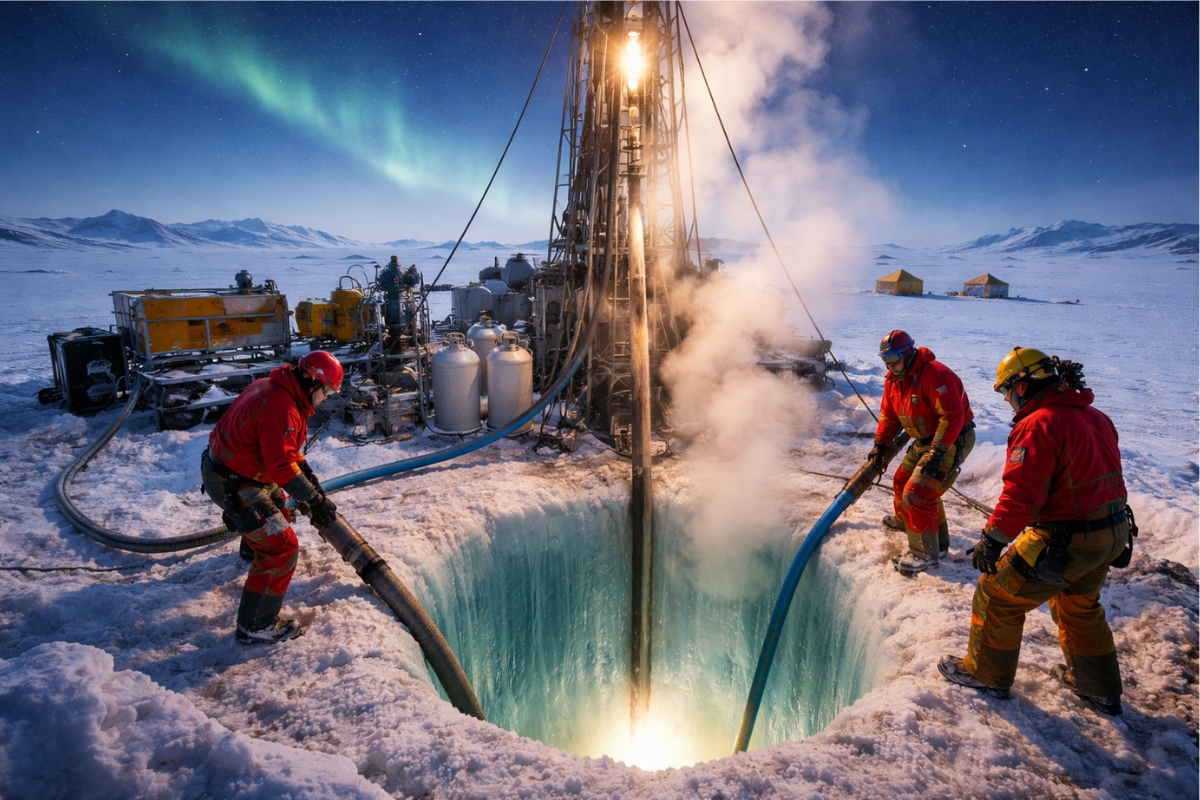
Scientists from an international project drill 1,800 meters of ice in Antarctica using hot water and discover details about one of the most intriguing places on planet Earth.
-
Seen from space, a colossal volcano nearly 5,000 meters high in Russia has released 1,600 km of smoke over the Pacific, forming “devil’s horns” of lava and revealing the brutal force of the Ring of Fire.


But How Did SpaceX Manage to Do This?
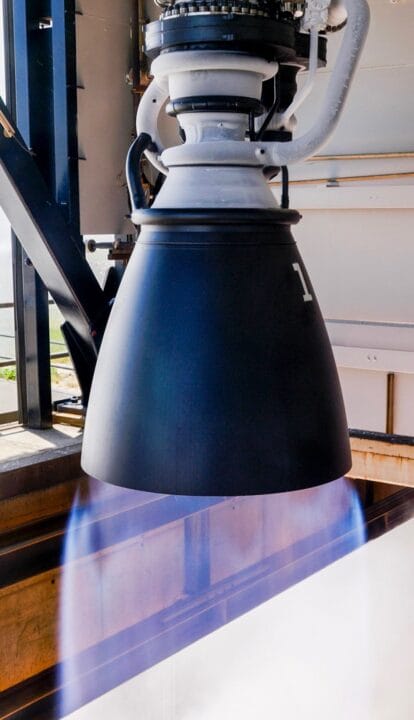
The secret lies in ultra-high precision 3D printing, which allowed the company to integrate these pipes into the body of the engine in a way that would be impossible with traditional machining methods. The result is an engine that at first glance seems “easy” to build but actually represents a monumental leap in engineering.
In addition to the visual simplification, the SpaceX Raptor 3 is also more powerful. While the Raptor 1 had a thrust of 185 metric tons, and the Raptor 2 reached 230 metric tons, the new engine achieves an impressive 280 metric tons of thrust. This means that the Starship, SpaceX’s rocket, will be able to carry even more weight, getting closer to the goal of 100 metric tons of payload capacity.
But It’s Not Just Power That Defines an Engine
Reliability is crucial, and the SpaceX Raptor 3 excels in this regard. Fewer external components mean fewer things that can go wrong, a critical point when it comes to space travel. The first flights of the Starship encountered issues with leaks and fires caused by poorly protected pipes. Now, with the new configuration, SpaceX hopes to minimize these incidents.
Another advantage of this simplified approach is the speed of production. SpaceX has already shown that it can manufacture an engine per day, an impressive rate for the aerospace industry. And, according to Musk, the focus is to keep improving. If something doesn’t work, they discard it and move forward with what’s new and efficient.
The Future of SpaceX Raptor 3
The SpaceX Raptor 3 is already being produced en masse and will soon be integrated into the next flights of the Starship. The version 2 of the Starship, by the way, is expected to utilize this engine in its initial tests. With more power and reliability, the Raptor 3 is SpaceX’s bet to make space travel safer, more efficient, and perhaps, common in the future.
The SpaceX Raptor 3 is more than just an engine; it is a symbol of SpaceX’s capability to innovate at a breakneck pace. Combining simplicity in design with cutting-edge technological advances, it represents a significant step in humanity’s journey towards the stars. If the future of space depends on engines like this, we can expect great things in the coming years.
Now, we just have to wait and hope to see this engine in action, taking us back to the Moon, Mars, and beyond! So, what do you think of the new SpaceX Raptor 3? What are your thoughts on this radical simplification?







Seja o primeiro a reagir!