





 Portuguese
  English
  Spanish
  5 min of reading
  0 comments


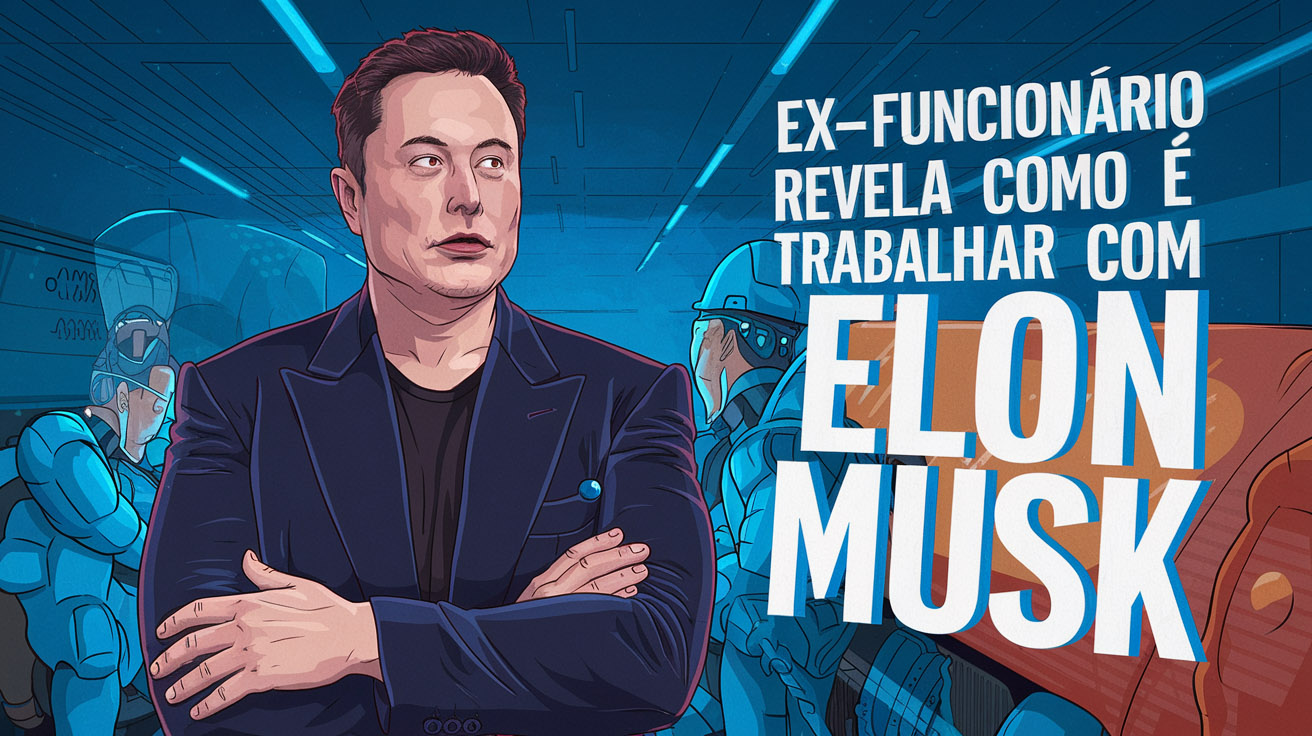
Elon Musk Is One of the Richest Men in the World, But How Does He Really Lead His Companies? Discover the Behind-the-Scenes at Tesla and SpaceX with Insights from a Former Employee Who Worked Directly with Musk.
What happens when you put the richest man on the planet in charge of one of the most innovative companies in the world?
For many, Elon Musk is the symbol of the future, a visionary leader capable of transforming entire industries.
However, those who truly work alongside Musk reveal a darker and more surprising side of his leadership style.
-
The government requests the Federal Revenue Service for a new system to automate the income tax declaration, reducing errors, time, and bureaucracy for millions of Brazilians.

-
Friends have been building a small “town” for 30 years to grow old together, with compact houses, a common area, nature surrounding it, and a collective life project designed for friendship, coexistence, and simplicity.

-
Pix in installments, international Pix, and contactless payment without internet: the Central Bank revealed the new features coming to the tool that is already used by almost every adult in Brazil.
-
This small town in Germany created its own currency 24 years ago, today it circulates millions per year, is accepted in over 300 stores, and the German government allowed all of this to happen under one condition.


Get ready to learn the secrets of what it’s like to work under the command of the CEO of Tesla and SpaceX, with revelations from a prominent former employee.
Musk’s Leadership Style: An Unconventional Formula
Elon Musk, at first glance, seems like the perfect model of an eccentric genius. According to Andrej Karpathy, former head of AI and computer vision at Tesla, Musk’s leadership does not follow any traditional norms of large corporations. Karpathy, who worked directly with Musk for five years, describes a leadership style that challenges conventions and deviates from corporate rigidity.
Musk does not fit the expectations of a standard CEO, and this is evident from the moment he puts his management philosophy into practice.
For him, the key to the success of Tesla, SpaceX, and other initiatives is to keep teams small, specialized, and fully autonomous.
Managing large teams and bureaucracy, with many hierarchical layers, is far from the formula Musk follows.
Against Bureaucracy: Musk’s Formula for Efficiency
In his experience, Karpathy shares that the first major lesson was about the organization of teams.
While many companies prefer to expand with well-defined departments and roles, Musk has always been against the idea of adding layers of bureaucracy.
According to Karpathy, at Tesla, decisions were made quickly, with a lean structure where he himself had to constantly ask to hire new employees. If someone was not delivering as expected, termination was almost immediate.
This approach may seem ruthless, but Musk firmly believes that it is the reason for the company’s rapid pace of innovation. Instead of relying on middle managers, Musk preferred that engineers become the main source of information and decisions. This approach aimed to ensure that teams were fully aligned with Tesla’s technical goals, without unnecessary management overload.
Musk Did Not Tolerate Stagnation: Speed as a Principle
The relentless pursuit of innovation and speed is in Musk’s DNA. He does not believe in complacency or stagnation, as Karpathy explains.
Therefore, large and unnecessary meetings were quickly eliminated, and teams were encouraged to step away from meetings they were not actively involved in. This reflects how Musk manages his time and demands agility in everything.
According to Karpathy, while many companies offer superficial perks and bonuses, Musk believes that productivity should be measured by the real impact a employee generates.
This focus on real outcomes is reflected not only in the daily lives of those who work with him, but also in Musk’s own expectations.
For him, perfection is not an option — it is a constant goal. And the obsession with pushing limits is at the core of everything Tesla does, whether in developing electric cars, autonomous vehicles, or artificial intelligence technologies.
The CEO Who Gets Involved in Everything
What truly sets Musk apart from other CEOs is his level of direct involvement in the company’s technical issues.
While many bosses delegate decisions to senior managers, Musk has a reputation for diving headfirst into the more complex issues at Tesla and SpaceX.
Karpathy reports that Musk often spends more than 50% of his time with engineering teams, something rare for any executive of his caliber.
This level of involvement is so intense that, in a striking example, Musk was able to directly intervene in a GPU (graphics processing unit) shortage by contacting suppliers and even calling the CEO of Nvidia.
Karpathy highlights that this kind of direct action, while somewhat atypical for a CEO, shows how Musk is aligned with the technical needs of the company.
Ambitious Promises, Complex Results
However, not everything is perfect in Musk’s world. His critics point out that his tendency to make grand promises does not always translate into immediate results.
An example of this was the promise of fully autonomous vehicles capable of traversing the United States without human intervention, something that has yet to materialize within the established timelines.
However, what Musk possesses most strongly is the ability to make quick adjustments and continue the process of continuous improvement.
This obsession with constant innovation is what keeps Tesla ahead of competitors in the field of driver assistance technologies and other technological advancements.
The Impact of Musk on Corporate Culture
Musk’s legacy goes beyond his technological innovations. His leadership style has had a profound impact on Tesla’s corporate culture.
The idea of cutting bureaucracy, maintaining a lean and dynamic team, and getting directly involved in technical processes has transformed the way many companies think about efficiency and innovation.
Karpathy, even after his departure from Tesla, still shows respect for Musk’s unique approach, acknowledging that it was this boldness that allowed Tesla to stand out in highly competitive markets.
Musk, despite his flaws and controversies, remains one of the most fascinating figures in today’s corporate landscape.
Today, Elon Musk can be seen as an misunderstood genius, a relentless leader, or a bold entrepreneur.
However, the truth is that his leadership style is shaping the future of large corporations. He challenges norms, demands perfection, and does not tolerate mediocrity.
The question that remains is: Would you be able to work for a boss like Musk, or would you prefer a more traditional, comfortable environment?








-

-

4 pessoas reagiram a isso.