





 Portuguese
  English
  Spanish
  3 min of reading
  13 comments


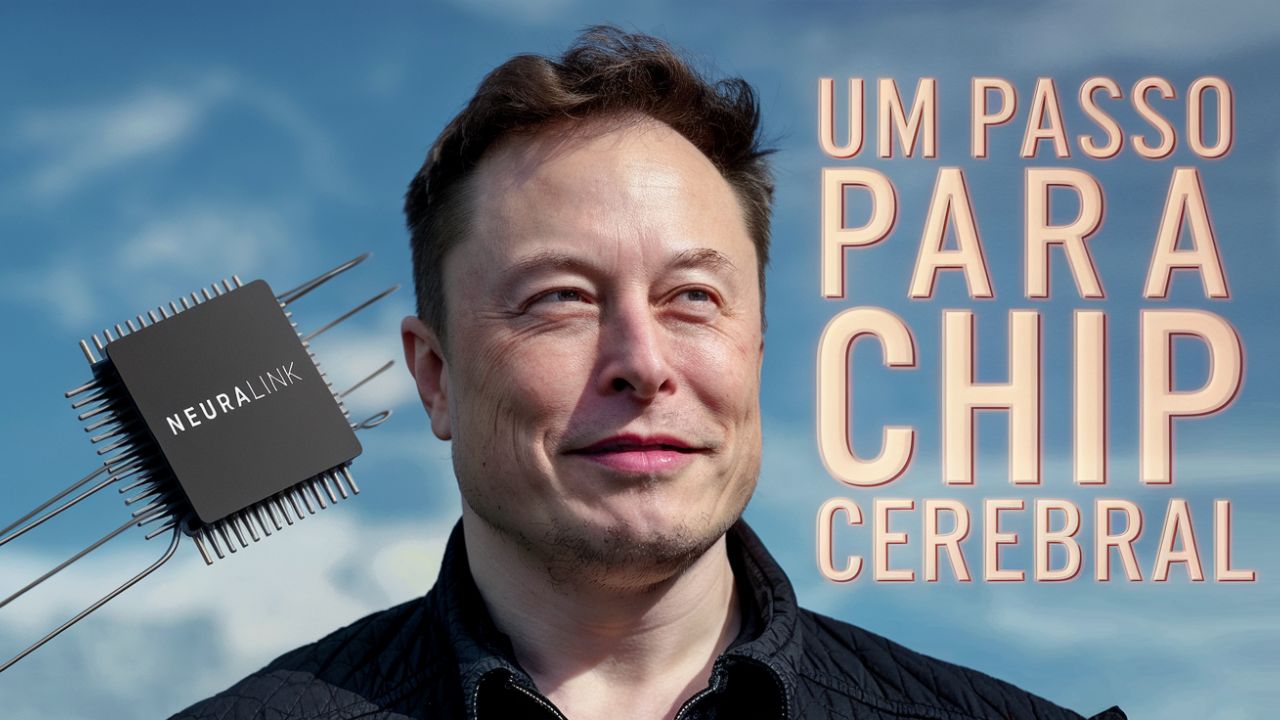


Neuralink, Elon Musk’s Company, Has Already Performed Brain Implants in Humans and Promises to Revolutionize Human Cognition, Allowing Control of Devices with the Mind and Storing Memories; Experts Debate Ethical and Social Risks.
Control a computer just with your thoughts? This vision, seemingly straight out of a sci-fi movie, may become reality sooner than you think. Elon Musk, the mogul behind Neuralink, believes that within the next five years, over a million people will have brain chips implanted. But are we ready for such a transformation?
What Are Neuralink’s Brain Chips?
Neuralink is a startup focused on developing brain-machine interfaces. Essentially, brain chips act as a bridge between the human brain and technological devices, allowing direct communication between the two. In 2023, the company made significant strides, including the success of the first implants in humans.
These chips promise to revolutionize the way we interact with technology. Recently, Elon Musk’s Neuralink revealed tests where patients control robotic arms solely with the power of thought. It’s not just incredible, but also a game-changer for people with physical limitations.
-
China accelerates global science and may surpass the United States in 2 years with increased public investment, continuous growth, and direct impact on the global technological competition.
-
Scientific studies indicate that drought may be strengthening a much greater silent threat: more resistant superbugs.

-
Man builds functional 5-meter submarine in his garage using gas cylinders, PVC pipes, and a refrigerator motor, and navigates with the vessel on a lake in Colombia.

-
Millions of people have been eating yam for centuries without knowing that this humble tuber contains a compound called diosgenin, which scientists have now discovered can improve memory and help control blood sugar levels.


Promises from Elon Musk and Technology Potentials

Elon Musk does not hold back on promises. According to him, the chips can increase the speed of brain signal transmission to unprecedented levels, significantly improving human cognition. He even suggests that one day, these technologies could “cure” conditions like autism and schizophrenia – a statement that sparks heated debates in the medical community.
Additionally, Musk believes these innovations could transform ordinary people into “digital superhumans,” with capabilities like storing and retrieving memories instantly. Imagine never forgetting where you left your car keys or learning a new language in a matter of minutes.
Cognitive Revolution or Just Hype?
Of course, Elon Musk’s ideas are fascinating, but to what extent is this feasible? As science advances, some experts question whether we are ready to integrate such technology into everyday life. After all, dealing with real life is already complex; adding a brain interface could complicate things further.
Still, the progress made so far shows that Neuralink is on the right track to revolutionize how we use our brains – something as transformative as the invention of the personal computer.
Elon Musk’s claims about “miraculous cures” and superhuman abilities raise a number of ethical questions. Is it fair to allow only a portion of society to access these technologies? Wouldn’t this further increase social inequalities?
There are also concerns about privacy. If our thoughts can be linked to a chip, who guarantees they won’t be hacked or manipulated? Not to mention the biological and regulatory challenges that Neuralink still needs to overcome before deploying these devices on a large scale.
The Future of Brain Chips and Humanity
If Musk is correct, society may face a technological divide: those with access to Neuralink technology will have a significant advantage in processing information and intelligence. Will we be able to maintain equality in a world where some people have “turbocharged” brains while others do not?
It’s essential to balance innovation and ethics. Technological advancements need to be accompanied by in-depth discussions about their impact on humanity.
Elon Musk is a visionary, and Neuralink’s promises are, at the very least, intriguing. But, like any great innovation, these ideas come with ethical, regulatory, and social challenges. Is humanity ready for this technological revolution? Or are we playing with fire by trying to integrate the human brain with machines?
The future is closer than we think, and it is up to all of us to decide how we want to shape it. After all, as Musk himself says, “technology is only worthwhile if it improves people’s lives.”








Cinceramente isso e farsa para mim toda essa mentirada e somente para colar o chip no celebro e poder pegar o controle da humanidade daqui uns tempos so quem tera acesso esses chips podera comprar si cuidar viajar. E os que nao morrera isto e um **** para ver ate onde os seres humanos aceitam tudo ate viratem escravos das logiciais vigia povo de DEUS
O Diabo vai atacar!.
É tudo como descreve a Bíblia Sagrada, se cumprindo!.
Sensacional. Se precisar de *cobaias*, estou à disposição.