





 Portuguese
  English
  Spanish
  5 min of reading
  0 comments


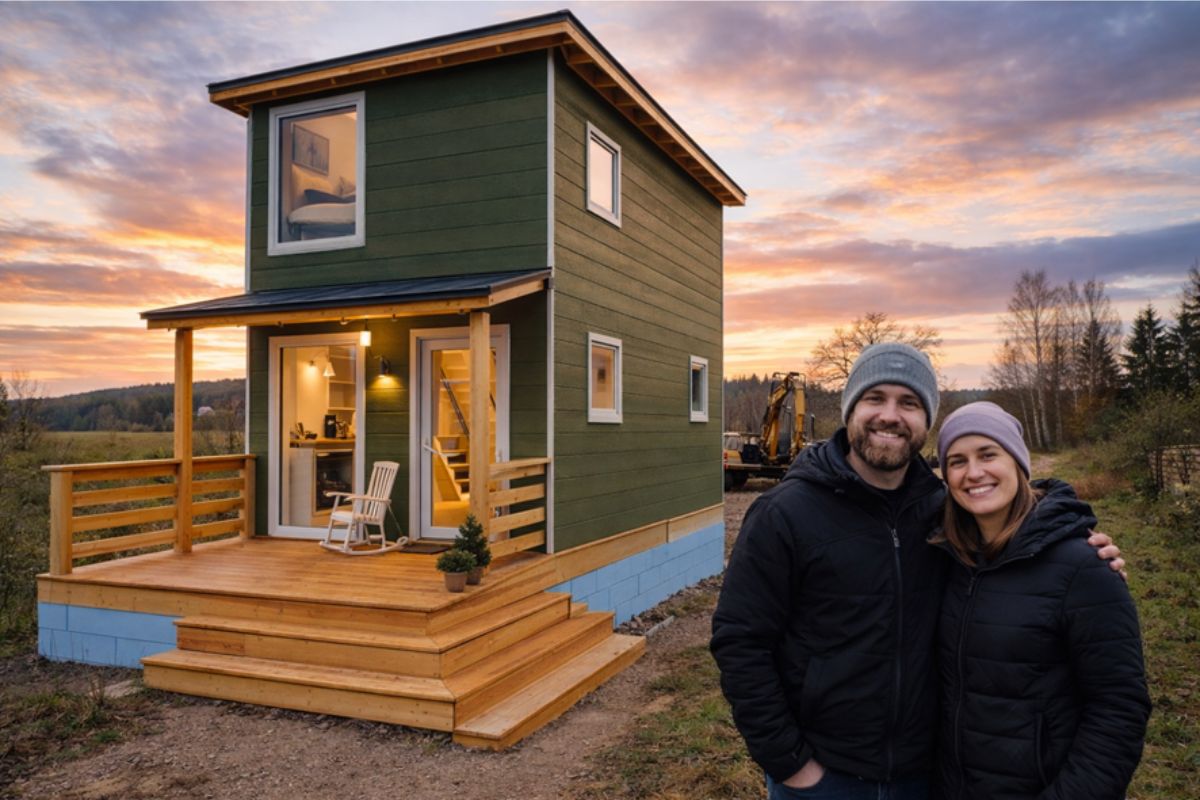
From An Abandoned Lot, The Couple Completed A Project In 9 Months To Turn Their Dream House Into Reality, Triggering A Total Change On The Lot And Catching The Public’s Attention
What was just tall grass, uneven ground, and a lot that seemed “condemned” turned into a compact two-level house, with a finished interior and prepared outdoor area. In just 9 months, a couple decided to start from scratch and document each phase of the construction — and the result caught attention precisely because of the contrast: from abandoned lot to a house ready for use.
The change did not happen by chance. What is most impressive about the process is that everything followed a simple yet powerful logic: one stage opening up space for the next, at the right time, avoiding rework and allowing the construction to progress with rhythm.
From Tall Grass to Construction Site: The First Step Was To Make The Lot “Work”
At first, the lot didn’t seem ready for anything. Tall vegetation, uneven ground, and points of wet soil turned any construction attempt into a challenge. Still, the couple started with the basics — and essentials: cleanup and access.
-
Friends have been building a small “town” for 30 years to grow old together, with compact houses, a common area, nature surrounding it, and a collective life project designed for friendship, coexistence, and simplicity.

-
This small town in Germany created its own currency 24 years ago, today it circulates millions per year, is accepted in over 300 stores, and the German government allowed all of this to happen under one condition.

-
Curitiba is shrinking and is expected to lose 97,000 residents by 2050, while inland cities in Paraná such as Sarandi, Araucária, and Toledo are experiencing accelerated growth that is changing the entire state’s map.

-
Tourists were poisoned on Everest in a million-dollar fraud scheme involving helicopters that diverted over $19 million and shocked international authorities.

They opened strips on the lot, cut the grass, and created pathways for heavy equipment to enter without getting stuck. And when the machinery arrived, the transformation became evident: dump trucks, excavators, and bulldozers began to circulate in the area, marking the land with trails and effectively forming a “construction corridor.”
At this stage, the detail that stands out is simple but makes all the difference: access could never stop. Between dry soil, mud, and wet spots, the priority was to keep the lot usable for loading, unloading, and circulation. That was what supported everything else.
The Turning Point Begins With Excavation: When The Rectangle Appears, The Project Becomes Reality
After the cleanup, came the stage that truly changes the scenery: the excavation.
A large excavation was opened, with well-defined earthen walls and a clear rectangle on the ground. It’s that moment when construction goes from intention to form. And, from there, the foundation began to grow layer by layer.
The perimeter was constructed with gravel, fabric, and concrete blocks, layer by layer, with constant alignment. Stretched lines and rebar helped to maintain plumb and square. Visually, the “hole” that once seemed like just dirt transformed into an organized structure, with level references and space ready to receive what would come above.
Another point that caught attention at this stage was the organization: materials stacked on pallets, free areas for maneuvering, and cleaner circulation. It seems like a detail, but it is exactly this that reduces wasted time and avoids back and forth during construction.
When The Wood Goes Up, Everything Changes: The House Begins To Really Take Shape
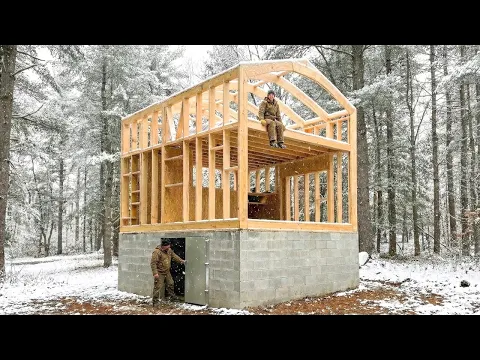
If the foundation provides security, it is the wood that gives identity. The construction changes rhythm when the structure starts to rise.
Studs and cross-beams form the walls, diagonal bracing appears reinforcing the structure, and, little by little, the volume grows until it is clear that it is no longer just a construction site — it is a house being built. The fixations with perforated metal plates and screws reflect a repeated process, almost like assembly: position, fix, check, advance.
One of the most striking moments of this stage is when a large wooden panel is lifted up an improvised ramp with boards. It’s the part that requires coordination and care with weight — and at the same time shows how the construction is “gaining body” with practical solutions.
When the second level becomes evident, the impact is immediate: the house stops being just a structure and begins to show openings, heights, internal circulation, and the real difference between “inside” and “outside.”
Panels, Tape, And Windows: The Day The House Stops Looking Like A Construction Site

The strongest visual change comes when the exterior enclosing begins. Suddenly, the walls gain skin.
Green panels cover the structure, blue panels appear at the base, and, at the seams and corners, the tape comes into play. It’s a repeated pattern that gives a sense of rapid progress: panel, adjustment, tape, verification.
Next come the frames. Windows and doors stop being openings and become installed components — and that changes everything. The construction looks more protected, more “house-like,” and the interior finally becomes ready to progress with less exposure.
Even details like the ramp of boards at the entrance become part of the rhythm: facilitating the transport of tools and materials means less wasted time and more consistency in the work.
Inside, The Transformation Is Different: From Exposed Structure To Finished Rooms
If outside the house begins to look ready, inside the most surprising leap occurs.
The internal stage is the one that changes the atmosphere of the environment. Wires descend, fabrics appear on the ceiling, tarps, and insulation. The floor becomes a cutting area, boxes accumulate, and scraps spread — it’s the kind of phase that looks chaotic but defines comfort and finishing.
Then comes the closure: drywall and pink panels take over, cutouts appear around windows and openings for conduits, and the space changes shape rapidly. When the panels rise, the house stops being “structure” and turns into rooms.
And this is where the less glamorous part comes in — but it’s critical: mud, corner correction, fine adjustment. Kneel, apply, correct, sand, repeat. It’s this repetition that delivers a finished appearance.

Floor, Deck, And The Final Detail: When The Construction Becomes A Home Routine
In the final stretch, the focus shifts to fitting, alignment, and finishing.
The floor begins to be installed in sequence, with a base mat laid out and measuring tools accompanying each cut. The pieces enter an almost automatic rhythm: position, adjust, close the joint, continue.
Outside, the deck appears as the “cherry on top.” Joists and beams form the base, and then, the boards are screwed down one by one near the glass door. What was once mud and construction circulation turns into usable area.
And then comes the moment that wraps up the story: cleaner surfaces, furniture in place, bed set up, shelves with items, wall lighting. It’s when the brain understands: it’s done. Now it’s a home.
What This Case Teaches (No Mystery)

The entire process leaves a very clear message: the most important factor was not “a secret technique,” but rather a well-executed sequence.
From soil to gravel. From the foundation to the blocks. From wood to bracing. From panels to tape. From drywall to mud. From the floor to the deck.
Even in a compact construction, site organization, repetition of stages, and fine adjustments can transform an abandoned lot into a two-level house ready to live in — all within a cycle of 9 months.
And for you: which stage impresses you the most?
The foundation with blocks and gravel, the rise of the wooden structure, the closure with panels and tape, or the finishing with flooring and deck?










-

-

5 pessoas reagiram a isso.