





 Portuguese
  English
  Spanish
  5 min of reading
  0 comments


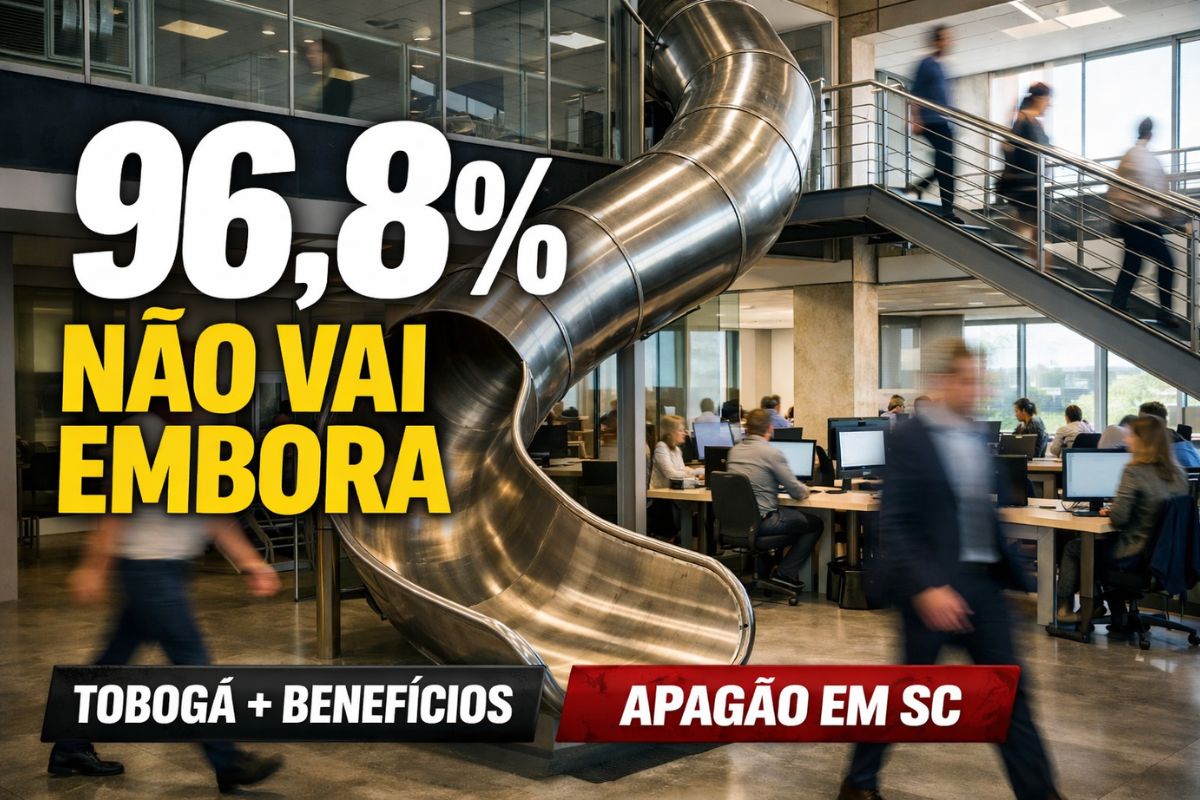
Amidst The Labor Shortage in Santa Catarina, Heli Brasil, A Division of Grupo KMR in Itajaí, Boasts a Retention Rate of 96.8% with 20 Benefits Ranging from Flexible Hours to an Office Waterslide, Micro Market, Family Support, and Internal Development Programs to Retain Key Talents
In August, when Itajaí led formal job creation in Santa Catarina with a positive balance of 918 new positions, the competition for qualified professionals highlighted the current labor shortage in the state. In an environment where companies compete for each position, Heli Brasil, the forklift division of Grupo KMR, decided to double down on people management to avoid losing talent precisely at the peak of market demand.
Today, while much of the industry is still trying to figure out how to retain experienced personnel, the operation based in Itajaí showcases a retention rate of 96.8% and a turnover rate of only 3.2% among its 230 employees, spread across the Santa Catarina headquarters, São Paulo, and regional leadership positions. The strategy involves a somewhat unconventional combination: strong culture, aggressive benefits, an office waterslide, and an explicit focus on well-being.
Itajaí Stands Out Amidst The Labor Shortage

The strong performance of the Brazilian industry in the job market has been accelerating the competition for professionals, and areas of high employability like Itajaí are feeling this effect strongly.
-
50 viaducts, 4 tunnels, 28 bridges, and 40 kilometers of bike paths: BR-262 in Espírito Santo will receive 8.6 billion reais for the largest engineering project in the state’s history, inspired by the Immigrant Highway in São Paulo.

-
Brazil produces too much clean energy and doesn’t know what to do with it: over 20% of solar and wind capacity was wasted in 2025 while investors flee and 509 renewable generation projects were abandoned in the last year.

-
Piauí will produce a new fuel that replaces diesel without needing to change anything in the truck’s engine and reduces pollutant gas emissions by half: truck drivers from all over the Northeast are already celebrating the news that will arrive later this decade.

-
A new Brazilian shopping center worth R$ 400 million will be built in an area equivalent to more than 4 football fields, featuring 90 stores, 5 cinemas, a supermarket, a college, and parking for 1,700 cars, potentially generating 3,000 jobs.


In August, the municipality led formal job creation in Santa Catarina, with a positive balance of 918 new positions, which increases pressure on companies that need to maintain specialized high-performance teams.
In this context, the forklift division Heli Brasil, A Division of Grupo KMR, turned people management into a competitive advantage.
The company, which is part of a group with over 150 distributors of machines, parts, and after-sales services throughout the country, needs to maintain a stable internal base to support nationwide service. Thus, retaining talent has become a strategic metric, as important as selling and delivering equipment.
Culture That Starts with Well-Being and Health
To tackle the labor shortage and reduce the turnover of experienced workers, the company structured a robust benefits package linked to health and quality of life.
All employees, regardless of position, have health insurance that extends to dependents and dental insurance, which is still uncommon in many industrial operations.
The group also offers chiropractic assistance, a partnership with the Totalpass program, which grants access to gyms and physical activities, and consultation with an ergonomics specialist to adjust workstations and reduce physical issues.
The message is clear: taking care of body and mind is a central part of the retention strategy, not just an internal marketing bonus.
Flexibility, Career, and Direct Support for Development
Another aspect of the response to the labor shortage lies in support and professional growth policies. Heli Brasil has adopted flexible hours, allowing the team to adjust their schedules according to personal demands and peak work times, which reduces burnout and improves the perception of work-life balance.
In financial terms, the company operates a profit-sharing program (PPR), linking compensation to team and business performance.
Additionally, there is education assistance, which includes even business-oriented English courses, strengthening the qualifications of those who need to deal with international suppliers and clients.
Specific programs, such as support for pregnant employees, reinforce the idea that the bond with the company should span different phases of life.
Work Environment Designed as an Experience, Not Just an Office
If the competition for talent is fierce, the physical environment has become an important factor. Heli Brasil’s headquarters in Itajaí invests in a convenience and relaxation structure that breaks from the traditional industrial pattern.
There is a micro market OKEO inside the office, allowing employees to buy snacks and basic items without leaving the building, and planned areas for breaks throughout the day.
The most visible symbol of this proposal is a waterslide installed inside the headquarters, connecting environments and reinforcing the idea of a less rigid space, where coexistence and relaxation are part of daily life.
For leadership, what many see as “naive kindness” is, in practice, a management method: the greater the daily engagement, the lower the chance of losing talent to competitors in a labor shortage environment.
Retention as an Indicator of Operational and Financial Efficiency
According to the founder and president of Grupo KMR, Kelly Rech, investing in environment and benefits is not just a matter of organizational climate.
The retention rate of 96.8% is treated internally as an indicator of operational and financial efficiency, as constantly replacing experienced professionals with new ones incurs high costs with recruitment, onboarding, and learning curves.
This reasoning is supported by research from MIT Sloan Management Review Brasil in partnership with Unico Skill, which shows that about 70% of Brazilian professionals consider the benefits package a decisive factor for staying with a company.
In a scenario of labor shortage, ignoring well-being, flexibility, and family support means opening space for competitors to take away precisely the most qualified workforce.
Labor Shortage as a Test for the Future of Management
The case of Heli Brasil illustrates a silent change underway in Brazilian industrial management: those who want to survive the labor shortage will need to treat people as a central asset of the strategy, and not just as a cost on the payroll.
Comprehensive benefits, relaxation spaces, flexible hours, and clear career plans cease to be “frills” and become survival tools.
By transforming organizational culture into the main policy for attraction and retention, the company sends a message to the market: investing in people can be cheaper than dealing with chronic turnover, loss of know-how, and constant replacement difficulties.
And you, amid the labor shortage in your field, would you switch companies for a benefits package and work environment like this?









-

-

-

6 pessoas reagiram a isso.